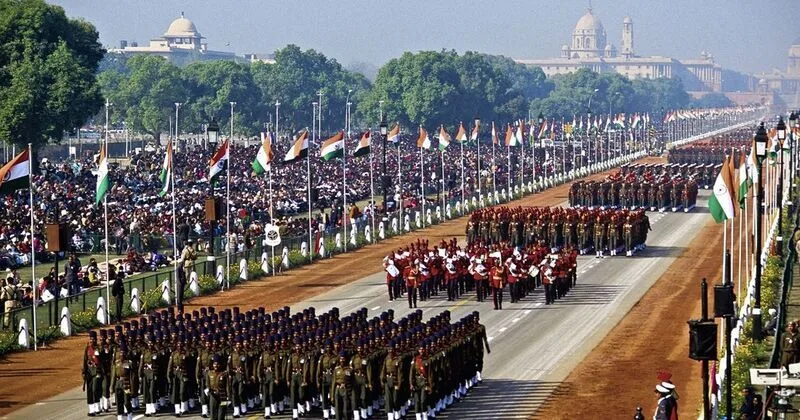
New Delhi: India’s Republic Day parade on January 26 will mark a historic shift, being the first since Operation Sindoor, with a groundbreaking approach to showcasing the country’s military capabilities. For the first time, the parade will feature a dynamic phased battle array, reflecting real-world combat sequencing rather than traditional static displays.
The festivities on Kartavya Path will blend a vivid depiction of modern warfare with India’s rich cultural heritage. This year’s parade also commemorates the 150th anniversary of ‘Vande Mataram’, with tableaux, performances, and a narrative linking military readiness to national identity.
“Parades are sometimes stereotypical. The goal is to make them more engaging and participatory for the audience,” said Defence Secretary Rajesh Kumar Singh. The 90-minute procession will illustrate the progression of a battle, from reconnaissance and logistics to the deployment of long-range systems, backup support, and the integration of air power.
The phased battle array is the centerpiece of the military segment. Units will be deployed to mirror real combat operations, starting with reconnaissance, followed by logistics, artillery, mobile missile systems, and infantry, all accompanied by personnel in full battle gear. Officials emphasize that this approach goes beyond ceremonial display, offering spectators insight into modern military operations.
The parade will showcase the Indian Army’s newly elevated Bhairav Light Commando Battalion, highlighting the armed forces’ focus on agile, specialized formations. Mechanized columns will feature indigenous systems such as the Advanced Towed Artillery Gun System (ATAGS), Dhanush artillery, Shaktiban, BrahMos, Akash, and the Medium Range Surface-to-Air Missile (MRSAM) system.
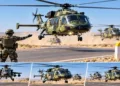
The Indian Air Force (IAF) will also play a key role, presenting an operational formation inspired by Operation Sindoor. This will demonstrate coordinated airpower, combining support aircraft and frontline fighters. The flypast will include transport aircraft C-130 and C-295, fighter jets like the Rafale, Su-30 MKI, and MiG-29, as well as helicopters, including the Apache, LCH, ALH, Mi-17, and P-8I in multiple configurations.
Operation Sindoor, launched in May 2025 in response to a terror attack in Pahalgam, J&K, was a high-precision tri-services mission targeting terror camps across the Line of Control and beyond.
In addition to the military display, the parade will feature 30 tableaux highlighting national unity, culture, and history, 17 from states and union territories, and 13 from ministries and services. The event is expected to host prominent international dignitaries, including the presidents of the European Commission and the European Council, underscoring India’s diplomatic engagement. Breaking from tradition, seating enclosures will be named after Indian rivers instead of using VVIP labels, reflecting a more inclusive approach to the celebrations.