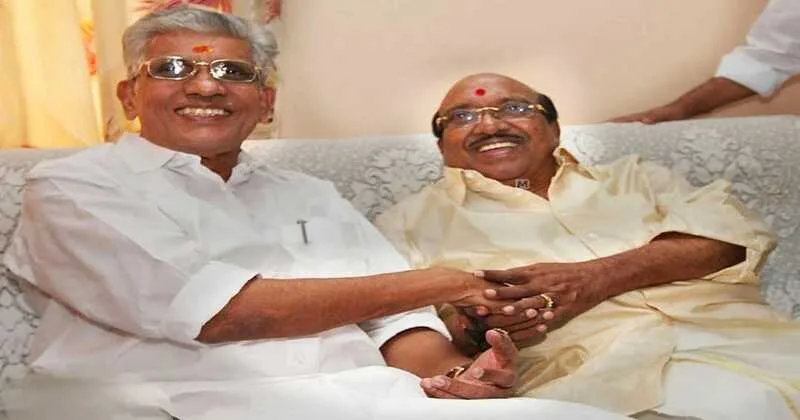
NEW DELHI: SNDP Yogam General Secretary Vellappally Natesan has indicated a significant shift in approach, stating that the SNDP is no longer prepared to engage in confrontation with the Nair Service Society (NSS) leadership and is instead willing to move forward in a cooperative spirit. Vellappally said that prolonged conflict with the NSS had yielded no tangible gains, including during disputes over reservation, and therefore, cooperation was the more pragmatic path.
He clarified that he would be willing to visit Perunna, the NSS headquarters, if formally invited. According to him, past clashes with the NSS leadership had not benefited the SNDP or the Ezhava community in any meaningful way. A meeting of the SNDP leadership will be convened on the 21st, where the issue will be discussed in detail before a formal decision is taken. Vellappally said the time had come for broader social unity, stressing that not only the NSS but communities ranging from Nayadi to Nasrani (Dalits to Christians) needed to stand together. He said the Christian community was facing serious difficulties but was largely remaining silent, adding that many Christians were living in fear. He noted that his earlier formulation of unity from Nayadi to Namboothiri (Dalits to Brahmins) had now been consciously changed to Nayadi to Nasrani, reflecting the need for wider solidarity in the present situation.
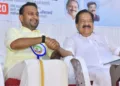
The conciliatory stance from the SNDP leadership has received support from NSS General Secretary G Sukumaran Nair, who said he was willing to hold discussions with SNDP Yogam General Secretary Vellappally Natesan, adding that if Vellappally formally sought talks, the NSS leadership would deliberate and take a decision aimed at unity, he told the media. He pointed out that it was inappropriate and undignified to criticise a long-standing community leader in a derogatory manner. He reiterated that the NSS follows a consistent approach towards all political forces and that Vellappally Natesan, as a senior community leader, deserved basic respect in political discourse. Responding to media queries, Sukumaran Nair stated that political leaders should maintain a certain standard of decency when engaging with social and community organisations.
Vellappally attacks Congress’s opposition leader V D Satheesan
Vellappally, meanwhile, launched a sharp attack on Congress’s Opposition Leader V D Satheesan, accusing him of being hostile towards the Ezhava community. He alleged that Satheesan held the view that individuals from backward communities should not be accorded dignity or proximity to positions of power, citing objections raised over his presence in the Chief Minister’s vehicle as an example. Vellappally questioned whether it was being portrayed as a grave political error that the Chief Minister had offered him a ride while he was walking, and criticised what he described as an elitist mindset underlying such reactions. He remarked that if Satheesan considered this such an unforgivable act, it reflected more on Satheesan’s own prejudices than on any wrongdoing by him.
Continuing his criticism, Vellappally referred to Satheesan’s role within the Congress party and questioned his treatment of K Sudhakaran during his tenure as KPCC president. He alleged that while weaker leaders were tolerated, stronger figures were sidelined and eventually removed, suggesting an inconsistent, opportunistic leadership style. Vellappally maintained that he had no intention of provoking or challenging anyone politically but emphasised the need for both political and communal decency. He warned against treating the Ezhava community as expendable or symbolic, asserting that such an attitude would be unacceptable and counterproductive.
He further accused Satheesan of indirectly shielding communal forces by accommodating them for political gain, arguing that this was driven by personal ambition and the pursuit of future positions of power.
Turning to broader political dynamics, Vellappally claimed that if the UDF were to return to power, real authority would rest with the Muslim League.
He also referred to the Marad riots, pointing out that they occurred during a previous UDF government, and alleged that some elements were now attempting to rekindle communal tensions. According to him, the continued focus on his Malappuram speech was part of this effort. Vellappally reiterated that his remarks in Malappuram had been misrepresented and insisted that he had not spoken against any community.
Overall, the developments signal a potential realignment in relations between two of Kerala’s most influential Hindu community organisations, even as political tensions continue to simmer ahead of crucial electoral battles.