The term Gen-Z has been the buzzword in the global discourse market for half a decade. This term was an outcome of the psycho-historical analysis of the age-wise sociological calculus of American society, which was made popular by the research postulations like that of the Strauss-Howe generation theory. Upon its arrival in popular parlance, Gen-Z was taken as a fancy innocent term capturing the specific temperaments of a generation of Americans born between mid 1990s and early 2010s. The major distinguishing factor dividing the Gen-Z from previous generations was normalisation of the internet in routine life and its consequent information explosion. Logically speaking, the term should have stayed within the borders of American domestic discourse.
The nature of experiences encountered by the Bharatiya generation born in the corresponding phase shaped them differently from the youth in North-Western semi-hemisphere of the world. But, thanks to deep penetration of the discursive powers of the Western Media, the term Gen-Z earned a great traction in Bharat. Unfortunately, some sections of Bharatiya media, both conventional and non-conventional, University campuses and other mind-making institutions caught this term with commendable alacrity as it is expected from a docile passive consumer of fancy-looking shallow knowledge. Gen-Z is not the first such term creeping its way into the Bharatiya discourse in this manner. Terms like Post-Truth and Wokeism are already part of the active political discourse in Bharat. Astonishingly, these terms have nothing to do with Bharat’s own socio-economic or political experiences.
Ramifications of Bangladesh’s Upsurge
Nevertheless, the sad news is the fact that today Gen-Z is no longer an innocent term. In recent times, it has been shrewdly given a political colour by political actors commanding global footprints. The political upsurges in Bangladesh (August 2025) and Nepal (September 2025) have been popularly attributed to the disenchantment of Gen-Z from the political dispensations. However, upon a closer look, one gets a clear picture that none of the two cases stand true to the surface level descriptions and attributions being made in the global media. In fact, now it can be conclusively seen that Bangladesh’s upsurge was a highly communal uprising which targeted not only its elected Government but also launched ceaseless attacks on the Hindu citizens of Bangladesh. It produced a makeshift Government in Bangladesh which is hesitant on democracy but dances perfectly to the tunes of its Western handlers. The highlight of the upsurge in Nepal was the violent nature of protests leading to an extent where an elderly lady Rajyalaxmi Chitrakar, wife of a former Prime Minister of the country, was burnt alive. Bangladesh and Nepal are the templates. Bharat is the actual ground zero.
Potential of Bharatiya Youth
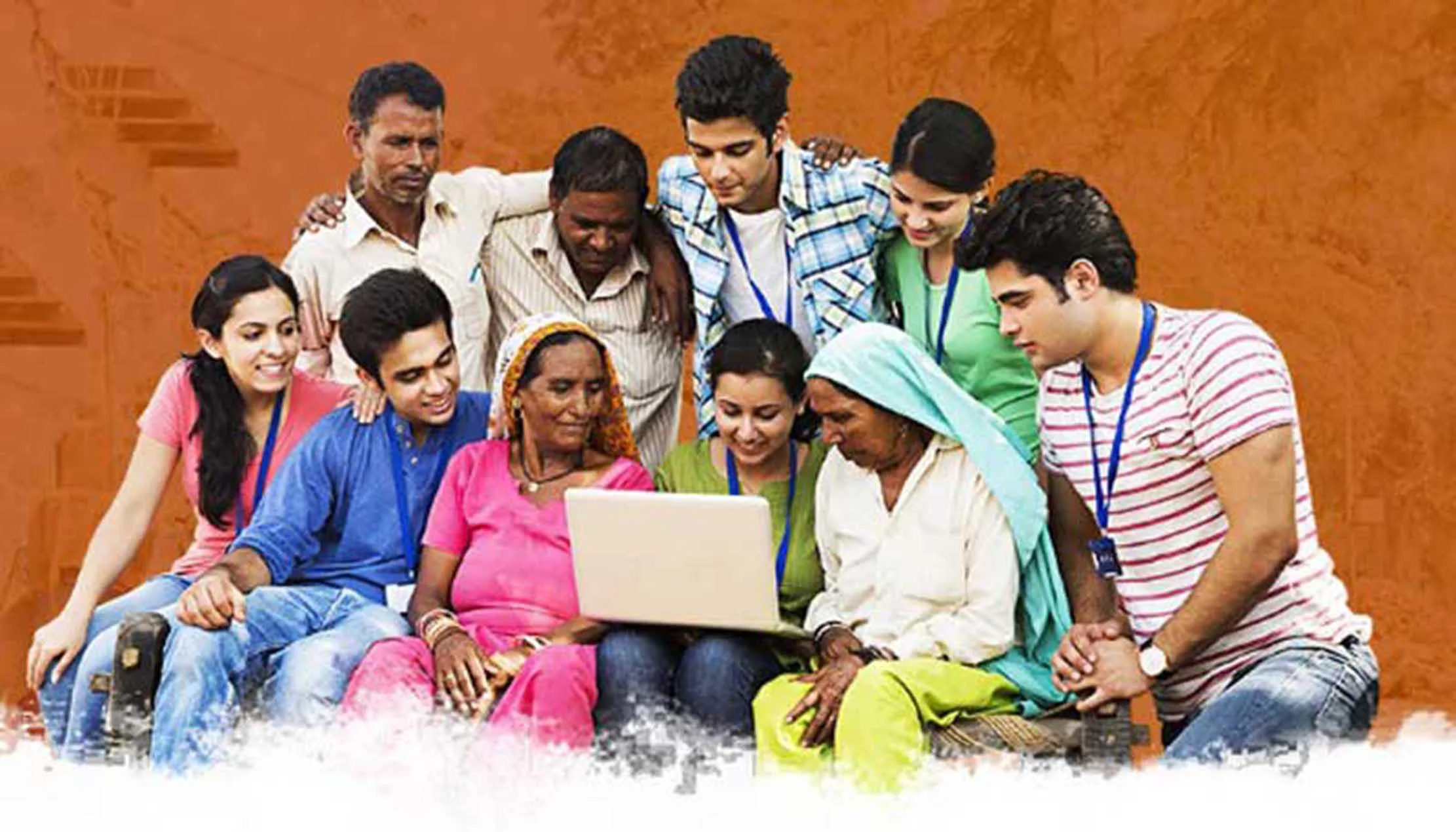
Bharat has one of the youngest populations in the world. According to recent statistics, nearly 65 per cent of Bharatiyas are below the age of 35. This demographic advantage gives Bharat a unique opportunity for rapid growth. If properly harnessed, this young population can transform Bharat into a global powerhouse.
- Entrepreneurship and Startups: Bharat’s startup ecosystem is largely driven by young entrepreneurs. With the government’s support through Startup India and Make in India, young innovators are creating jobs, boosting exports, and promoting self-reliance.
- Employment Generation: Youth-led initiatives in agriculture, manufacturing, and technology are creating employment opportunities, especially in rural areas, helping to reduce migration and unemployment.
- Youth in Politics and Governance: For any democracy to thrive, active participation of youth in politics and governance is essential. Their engagement brings new ideas, transparency, and accountability to the political system.
- Youth and Technology: The youth have been at the forefront of Bharat’s digital transformation. With increased internet access and smartphone penetration, young Bharatiyas are driving the country’s transition toward a digital economy
- Innovation and Startups: Young tech entrepreneurs are building solutions for real-world problems, from digital payments to healthcare and education
- Global Recognition: Bharatiya youth are leading international technology firms and research projects, showcasing Bharat’s intellectual potential
We have seen political leaders in Bharat loudly pressing on their nefarious desires of Gen-Z taking the streets against the democratic institutions of Bharat. Doubtlessly, the term Gen-Z has been relegated to the category of those political tools which can be used to destabilise Governments and societies. The internal collaborators, especially their political fronts, in their incessant fatigue of being rejected repeatedly in elections, have seen a gleam of hope in the political weaponisation of Gen-Z. Therefore, the winds of provocations are raging high on the information spaces of Bharatiya youth instigating them to grow defiant and violent against the democratically sanctioned political order of the day. Losing power at the ‘booth’ is attempted to be undone through the upsurge of a violent ‘youth’.
Failure to Provoke Youth
Fortunately, none of the provocations are working. Before we delve into the question of why the attempts to provoke the Bharat’s youth to turn against the democratic and constitutional institutions are falling flat on their face, let’s for a moment recapitulate the modalities of those provocations.
The modes through which provocations are being catered involve bombardment of phone screens with subtle propaganda and sometimes it’s an open doom’s day call for the youth to jump into reckless action. For example, the protests against the Citizenship Amendment Act (CAA), 2019 were based on the logic that it would disenfranchise the Muslims in Bharat. By all standards of sanity, this logic was laughable because this law had nothing to do with the Muslims in Bharat. But the untiring propaganda machinery of disruptive forces kept recycling the same lie to entice the Bharatiya youth to join anti-Government protests. They were partially successful as well. But the Bharatiya youth saw the actual goal of this propaganda when the anti-CAA protests culminated into the pre-planned horrific Delhi riots which occurred right on the day when the US President was in the city of Delhi. Another example is the protest against the three farm laws passed by the Parliament in 2020. Protests against farm laws were based on the argument that the Government is erasing the system of Minimum Support Prices (MSP) for the crops. Again, this was something which was made-up.
The efforts to instigate the Bharatiya youth to rise in rage against the political order of the day are continuing even today. The issues may change, but the avenues of misinformation and propagandism are regularly outpouring the contents aimed to provoke the youth.
Now we shall discuss why the so-called Gen-Z in Bharat is not getting provoked. First, the expectations of proverbial Gen-Z behaviour from Bharatiya youth are a gross underestimation of their intelligence and maturity. Practically speaking, the Bharatiya youth has successfully dodged enough spins, propagandas and misinformation campaigns that they have become careful towards the provocatory literature and contents. It is growing difficult for the propaganda machineries to make the Bharatiya youth react to something in an uncivilised manner. For a youth in Bharat, living in the family, adds different ways of looking at an issue at hand. The intra-family conversations show those dimensions of a subject to a young eye which could be discovered only when seen from an experienced perspective of elders in the family. Family life is a great moderator of information and values for a growing kid. those societies to Bharat is a futile exercise.
The Bharatiya youth is not going to behave like the proverbial Gen-Z because still the cut-outs of Swami Vivekanand are most popular among the students in Bharat. The world hasn’t seen a bigger spokesperson of youth power than Vivekanand. He symbolises not only youthful energy, but he also symbolises Dharma. Over a century and a quarter ago, when Vivekanand appealed to the Bharatiya youth to gather the wisdom of the East, he bestowed the Bharatiya youth with a great responsibility. Today, when we see that Bharatiya youth wish ‘Happy Anglo/Roman New year’ on January 1, we know that the message of Vivekanand is still with us. The youth knows that January 1 is not their New Year, and that’s why they add prefixes like Anglo or Roman before calling it a New Year. Chaitra Shukla Pratipada as the Bharatiya New Year day is becoming more popular among youth. The Bharatiya youth celebrate January 1 too, but by queuing at the Mandir for Darshan. These queues are growing longer year after year. Now, no one can say that pilgrimages are for elderly people. The average age of pilgrims to Ayyappa or Kedarnath is coming down further.
In Sync with Dharma
Bharatiya youth has re-discovered Dharma in the age of information explosion. The knowledge about the medieval barbarities has come to the open spaces, the colonial blindfolding of our eyes is loosening. The information explosion after the arrival of the internet has played a big role in sensitising the youth about their past and present. The mere hint of the taste of Dharma has rekindled the roots for the youth. They may not necessarily be understanding the essence of Dharma as of now, but they have certainly deflected the atrocious attempts of dismantling and erasing Dharma from the Bharatiya soil. Bharatiya youth is certainly oriented to know and understand Dharma for unleashing their creative channels with the aim of achieving a united, disciplined, happy and meaningful corporate life for each and every citizen of Bharat..The Dharma-rootedness of Bharatiya youth is an impenetrable shield against all the modes of provocation. As long as the shield is held in the powerful young arms of the youth, no fantasy of proverbial Gen-Z misadventures can be dictated to them.