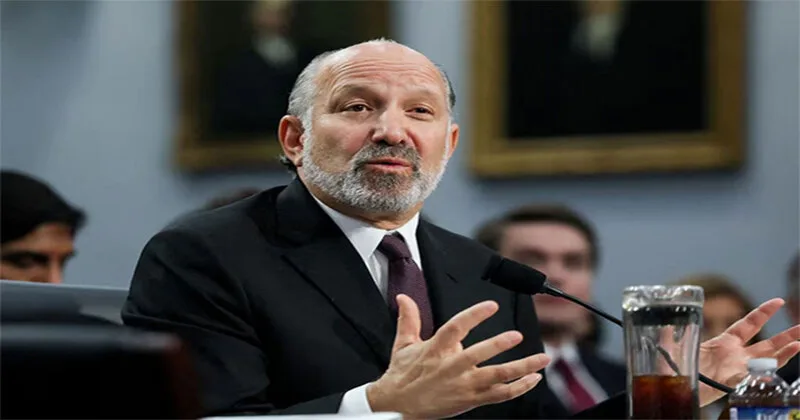
NEW DELHI: US Commerce Secretary Howard Lutnick has made a big assertion, which reveals the fact that Trump needs more visible wins than fair deals. Trump aspires for a trade deal that does not need to fulfil the economic credentials of the United States but has to fabricate and fuel the ego, hegemonic ambitions and hyper transactionalism of the US President Donald Trump. However, India doesn’t heed to such biased geopolitical predispositions. New Delhi aims and works for a fair, reasonable and mutually beneficial trade deal, one which nurtures the economic security and prosperity of both the stakeholders.
Apparently, this was the very reason why the India-US trade deal hasn’t materialised yet. This fact was reflected in the latest statements of the US Commerce Secretary Howard Lutnick. A trade deal between New Delhi and Washington DC didn’t consolidate not because of the economic bottlenecks but predominantly, because New Delhi and Prime Minister Modi didn’t acknowledge the self-centered and opportunistic attitude of the US President Donald Trump. On the other hand, irked by the strategic firmness of India, Trump imposed irrational tariffs that scales upto 50 per cent as of now.
Commerce Secretary Lutnick exclaimed that White House gave a deadline of three Fridays to New Delhi to swiftly ink a trade deal. As the latter didn’t reciprocate, massive tariffs were exerted as a punishment. “We told India you had three Fridays. You put them on a shot clock. Well, they have to get it done because what happens is I have lots of other countries and when those other countries do their deal, the staircase goes up”, reiterated Lutnick while explaining about the staircase model instrumentalized by Trump to quickly seal the trade deals. The strategy involves more favours and concessions in the trade deal for the countries that approach President Trump for a trade deal, i.e for those who come at the first step of the staircase. As the steps progress, the number of restrictions imposed and the compromises that have to be delivered by the stakeholder on the trade deal will be huge. “The first step gets the best”, Lutnick claimed.
The US President adopted this strategic tool to evoke urgency and create hesitation for being late in the trade deal. Despite unleashing such hegemonic strategies, India didn’t walk up to the White House and kept firm and solid on its national security priorities for signing a trade deal. “He’s (Trump) the (deal) closer. He does the deal. So I said, You’ve got to have Modi. It’s all set up. You have to have Modi call the president. But, they (India) were uncomfortable doing it. So, Modi didn’t call, that Friday left” said Commerce Secretary Lutnick while exclaiming that the three Fridays deadline given to India ended without a deal. This statement by Lutnick echoes apprehension that whether the Trump administration was willing to sign a deal if PM Modi had called Trump and indulged in appeasement, irrespective of the economic jigsaws that existed to reach a deal.
.@howardlutnick responding to a question on why the US Trade deal with India did not happen, says, President wanted Modi to call on a given timeline. “Modi did not call”. Then we moved away to other nations. Watch. #India #US #Modi #Trump #TradeDeal pic.twitter.com/MQfGgjREjI
— Rohit Sharma 🇺🇸🇮🇳 (@DcWalaDesi) January 9, 2026
As India didn’t kneel down to the demands of the United States, the ramifications are higher and riskier, said Secretary Lutnick. India has to face higher tariffs in the form of punishment. “What happened is, India, just as you know, was on the wrong side of the see-saw. It was just they couldn’t get it done when they needed to. So what happens is, all these other countries kept doing deals and they’re (India) just further in the back of the line. So, now the problem is that the deals came out at a higher rate, right? Are you ready for the train that left the station three weeks ago”, claimed the US Commerce Secretary while mocking India for coming late to the deal table, after the three Friday deadline collapsed.
Meanwhile, Britain was the maiden country to seal a trade deal with the Trump administration. Also, the Philippines, Japan, Vietnam, Malaysia and a series of other countries ended up with a trade deal with the United States, before the Washington imposed deadline ended.
Not political hesitation, but priority for national security
Meanwhile, India being a sovereign nation with an independent foreign policy playbook, will not walk upto the hegemonic doctrines of other nations. India’s strategic propositions with respect to a trade deal are rooted in economic security and national prosperity that fulfills the needs of its consumers. New Delhi thus will not run to the White House before the deadline expires. As mentioned earlier, a trade deal should be sealed between two equal stakeholders and the agreement must be fair and mutually beneficial in the strategic calculus.
As asserted by the US Commerce Secretary, India was not on the “wrong side of the see-saw” during the time limit imposed by the US President, but India was on the side of national interest and strategic autonomy, rather than accomplishing the ultra-conservative impulsiveness of the US President. A trade deal cannot be completed by a phone call, it needs intense negotiations and deliberations between all the stakeholders on an equal footing. If the trade deal is only a phone call away as said by the US Commerce Secretary, then it nourishes only the ambitions of Trump, but not the respectful and beneficial trade deals that are rooted in solid economic dimensions.
India debunks Lutnick’s statements as “not accurate”
Reacting to the statements of the US Commerce Secretary Howard Lutnick, the Ministry of External Affairs asserted them as “not accurate”. “We have seen the remarks. India and the US were committed to negotiating a bilateral trade agreement as far back as February 13 last year. Since then, the two sides have held multiple rounds of negotiations to arrive at a balanced and mutually beneficial trade agreement. On several occasions, we have been close to a deal. The characterisation of these discussions in the reported remarks is not accurate”, said Randhir Jaiswal, spokesperson of the Ministry of External Affairs.
India currently faces 50 per cent tariffs on its exports to the United States, which also includes 25 per cent additional tariffs for purchasing Russian oil. With respect to the trade deal, the US demands more concessions and access to the agricultural market and dairy sector of India. However, India denies such a compromise in the trade deal as it affects the interests of Indian farmers and MSMEs. Thus, loud negotiations are underway and New Delhi unlike Trump’s open, loud and illogical statements, is adopting a path of strategic patience and diplomatic leverage to sign a trade deal and secure the national interests.