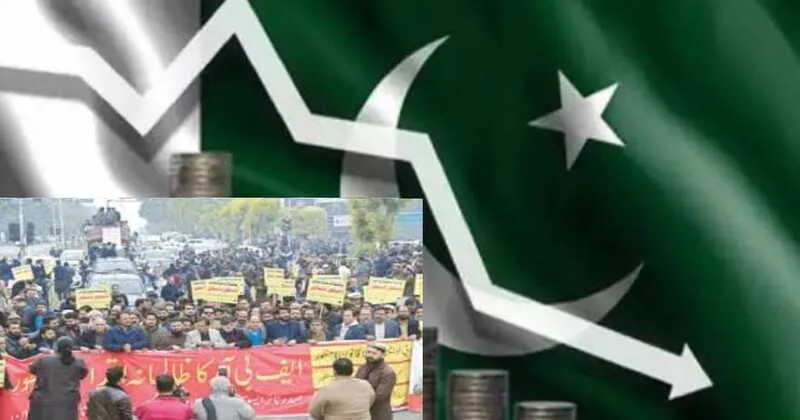
Pakistan’s government has been pushed onto the defensive as widespread protests by traders threaten to escalate into a nationwide shutdown. Multiple trade bodies have warned that the country could be plunged into a paralysing agitation if a newly introduced law affecting crores of traders is not withdrawn immediately. The call for agitation has been issued by All Pakistan Anjumani Tajran and the Traders Action Gathering, both of which have announced plans for a countrywide strike beginning January 16 if their demands are ignored.
At the heart of the protest is a government decision mandating the installation of Point of Sale (POS) machines in all commercial establishments. The traders’ organisations have branded the regulation a “black law,” arguing that it places an unfair burden on small and medium businesses already struggling to survive amid Pakistan’s deepening economic crisis. While POS machines are globally used to facilitate cashless transactions and improve tax compliance, traders in Pakistan say the policy ignores ground realities and opens the door to widespread abuse.
According to protest leaders, the mandatory use of POS systems would allow tax officials to monitor every single transaction carried out by shopkeepers. In a system where corruption is perceived to be rampant, traders allege that such surveillance powers will be misused for intimidation, harassment, and extortion. They argue that instead of broadening the tax base through trust-building measures, the authorities are seeking to tighten control over already compliant segments of the economy.
Anger over the decision spilled onto the streets earlier this week when traders organised a large protest march to the offices of the Federal Board of Revenue (FBR). Demonstrators accused tax officials of using inspections and enforcement drives as tools to extract bribes rather than ensure transparency. Many traders claim that the compulsory installation of POS machines in small shops is less about reform and more about creating new avenues for rent-seeking.
Leading the agitation, Ajmal Baloch, president of the Traders Action Gathering, issued a blistering attack on the country’s governance and accountability mechanisms. He demanded legislation that would impose the death penalty for those found guilty of large-scale corruption. Baloch alleged that corruption worth as much as 53 lakh crore Pakistani rupees takes place annually, draining the economy and impoverishing ordinary citizens. He also accused tax officials of living far beyond their declared means, with assets exceeding legal limits, children studying abroad, and the use of luxury foreign vehicles imported without paying due taxes. Baloch further alleged that goods seized during inspections are often never returned to their rightful owners, reinforcing the perception that enforcement actions are driven by personal gain rather than legal compliance. With the traders’ strike unfolding at a time of severe economic distress, the protests have added to the pressure on an already embattled government struggling to stabilise prices, control inflation, and secure external financing.
Mounting terror threat deepens national crisis
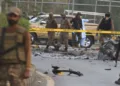
The unrest among traders comes against the backdrop of a grave internal security situation. Pakistan is facing an elevated threat environment, with explosions and attacks occurring unpredictably across the country. The year 2025 witnessed the deadliest wave of terrorist violence in the past decade, underscoring the scale of the challenge confronting the state.
According to data compiled by the South Asian Terrorism Portal, as many as 3,967 people were killed in terror-related incidents across Pakistan in 2025, making it the bloodiest year since 2015. By December 27, there had been 1,070 attacks nationwide, including bombings and targeted shootings. Most of these attacks have been attributed to the Tehreek-e-Taliban Pakistan (TTP).
Pakistani authorities allege that the TTP operates with the support and sanctuary of the Taliban regime in neighbouring Afghanistan, a charge that Kabul has consistently denied. Islamabad points to the increasing sophistication of militant attacks as evidence, noting that TTP fighters are now using drones, advanced sniper rifles, and night-vision equipment left behind during the US withdrawal from Afghanistan. Security estimates suggest that around 8,500 TTP militants are active along the Pakistan–Afghanistan border.
Despite repeated military operations, Pakistan has struggled to neutralise the threat fully. The situation has been further complicated by deteriorating relations with Afghanistan, which have turned openly hostile in recent months. These tensions have had a direct economic fallout, with Pakistan’s exports to Afghanistan collapsing from $115 million last year to just $9.54 million. Mediation efforts by Turkey and Qatar in November 2025 failed within weeks, offering little respite. Beyond the western border, attacks by Baloch separatist groups continue to undermine internal stability and erode the state’s writ in key regions. The convergence of economic distress, mass protests by traders, and relentless militant violence has created a volatile mix.