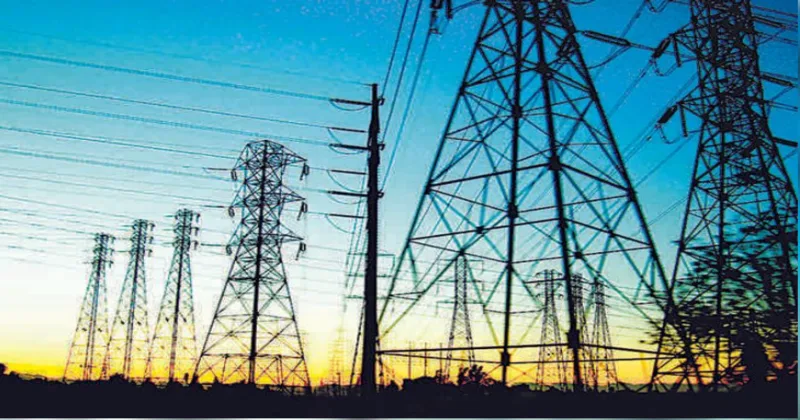
JAMMU: Jammu and Kashmir’s power sector is facing a financial crisis, with a likely revenue gap of over Rs 4,200 crore for the current financial year (2025-26). This spike has largely resulted from importing 3,000 MW of power from outside to meet the shortfall. The shortfall is due to a decline in electricity generation in hydropower generation plants located on the Chenab and the Jhelum within the Union Territory (UT) of J&K. The reduction in power generation is a permanent annual feature due to reduced flows recorded in the rivers from October to March for six months every year, and import from outside is the only option. Incidentally, the hydropower projects in J&K are run-of-river (RoR) under the Indus Waters Treaty (IWT) restrictions. When the river flows decline, so does power production.
A revenue gap of Rs 4,200 crore translates into a loss of Rs 350 crore per month or Rs 11.50 crore per day, a very large sum, and has not been addressed so far. Power purchase costs, including transmission charges, now constitute the single largest expense of around Rs 6,000 crore for the current financial year (2025-26). The UT thus needs Rs 500 per month to ensure that electricity is available to ordinary citizens and important services. Chief Minister Omar Abdullah is the Power Minister of the UT, and he has inherited a corrupt system from his predecessors, including his fathe,r Dr Farooq Abdullah
Rampant theft, under-billing, corrupt staff, and unmetered areas all make for an explosive mix threatening J&K’s financial health. It bears mention here that despite marginal improvements, transmission and distribution (T&D) losses in the UT are the highest, around 48 per cent, nearly three times the national average of 15 to 20 per cent. Distribution losses remain among India’s worst, projected to decline marginally by 1.5 percentage points from 48 per cent to 46.50 per cent. This means that for every 100 units purchased, only 52 units get billed, with the remainder lost to technical inefficiencies, theft and billing gaps.
Political Pandering
When terrorism started big time in late 1989, early 1990, in the Kashmir region, to begin with and spread southwards to the Jammu region, revenue collection on account of electricity supply nearly dipped to zero. This non-payment of electricity dues has become an ingrained habit, particularly in the Kashmir region, where the installation of smart meters has been slow. In the Kashmir region, demonstrations against smart meters and women gathering in large numbers to smash and break these meters have been reported several times. Booking such women under relevant laws and holding them accountable for damaging government property is unheard of because of political pandering.
The region’s power generation from locally-owned and NHPC-operated hydroelectric plants is estimated to has gone down by nearly 70 per cent. This has led to the import of approximately 3,000 MW of electricity from outside the UT (via the Northern Grid). This creates a heavy burden on the UT’s resources but no corrective steps have been taken to restore some sense of sanity in the power sector.
The department’s Annual Performance Review for FY 2024-25 and Aggregate Revenue Requirement for FY 2025-26 projects total revenue requirements at Rs 6,827.18 crore. However, revenue realisable at existing tariffs, assuming 93 per cent collection efficiency, stands at merely Rs 2,688 crore, leaving a gap of Rs 4,200 crore. The revenue gap remains a serious concern for the power sector in J&K, officials say.
T& D Losses 48 per cent
Despite efforts to improve operational efficiency and reduce T&D losses, the rising cost of power purchases and inadequate cost recovery under existing tariffs continue to put tremendous pressure on the system. Efforts to reduce AT&C losses, improve collection efficiency, and optimise power purchases have not yielded the desired results due to non-cooperation from consumers. Any upward revision of tariffs in the UT will actually amount to rewarding thieves and punishing those people who pay their bills honestly.
Distribution losses remain among India’s worst, projected to decline only marginally from 47.79 percent to 46.41 percent in FY 2025-26—nearly three times the national average of 15-20 per cent. This means that for every 100 units purchased, fewer than 54 units are actually billed and collected, with the remainder lost to technical inefficiencies, theft, and billing gaps.
The collapse in local generation stems from multiple factors, including severe seasonal water flow variations, prolonged maintenance shutdowns at key generating stations, ageing infrastructure, and reduced water availability due to changing precipitation patterns. Several planned capacity additions have also faced delays due to environmental clearances and funding constraints.
Small Improvements
Despite financial stress, the department has proposed capital expenditure of Rs 519.10 crore for FY 2025-26—up from Rs 330.67 crore previously—focusing on network strengthening, smart meter implementation, and IT infrastructure upgrades. Operation and maintenance expenses are projected at Rs 713.76 crore, with employee costs alone accounting for Rs 648.58 crore.
The petition is currently under review by the Joint Electricity Regulatory Commission (JERC), which must balance consumer affordability against the utilities’ financial sustainability. Without significant tariff rationalisation, aggressive loss reduction, or substantial government subsidies, experts warn that the crisis threatens the region’s power supply reliability and broader economic development prospects.
The completion of some hydropower generation units, like 850 MW Ratle and 1,000 MW Pakal Dul, may help in the coming years, but only marginally. Fixing the social fabric and instilling the habit of paying for electricity that needs to be inculcated among the masses is a challenge no political party is willing to undertake.