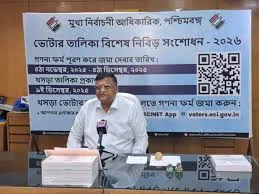
The Centre has significantly strengthened security arrangements for the Chief Electoral Officer of West Bengal, Manoj Kumar Agarwal, by providing Y-plus security cover and deploying central armed forces at the CEO’s office in Kolkata. The move follows a series of internal assessments and security inputs that raised concerns about the safety of the CEO and other senior election officials.
According to sources in the Election Commission, the decision was taken after repeated incidents of protests and aggressive demonstrations around the CEO’s office over the past month.
Election Commission sources quoted in media revealed that central security agencies had recommended full Y-plus security cover for Agarwal, citing potential risks arising from heightened political activity and unrest. During a meeting with central security officials, the CEO reportedly expressed reservations about the scale of the protection.
He is said to have questioned the need for extensive security, reportedly remarking, “What will I do with so much security?” However, central officials informed him that the deployment was being carried out on explicit instructions and based on threat perception assessments.
Sources added that Agarwal suggested the security arrangement could be reviewed during his district visits and pointed out that he already receives protection from the Kolkata Police.
As part of the enhanced security plan, central armed personnel have been stationed on the third floor of the Bama Lorri Building, where the CEO’s office is currently functioning. Their primary role includes regulating and monitoring the entry and exit of individuals to prevent unauthorised access.
Officials said that when the CEO’s office shifts to a new building in the coming days, central forces will be positioned at the reception area to control access. These arrangements were finalised following detailed discussions between Election Commission officials and central security agencies.
Election Commission sources cited multiple incidents of unrest as the primary reason behind the heightened security. According to officials, the CEO and other senior election functionaries have faced gheraos and aggressive protests on several occasions, particularly during politically sensitive exercises such as voter list revision, electoral roll verification, and election preparedness activities.
During some of these protests, senior officials were allegedly prevented from leaving the office for extended periods. There were also reports of heated confrontations, physical pushing, and attempts by protestors to force their way into the premises.
While no serious injuries were officially reported, these incidents were flagged internally as serious breaches of security, especially given that the CEO holds a constitutional position.
They emphasised that the deployment of central forces and the granting of Y-plus security are preventive measures aimed at ensuring the uninterrupted functioning of the Election Commission. Officials stressed that the move is intended to safeguard institutional independence and protect election officials from intimidation or disruption.
The Election Commission has maintained that free, fair, and peaceful conduct of electoral processes requires a secure working environment for its officials, particularly during sensitive administrative exercises.
The Centre’s decision to intervene directly by deploying central armed forces reflects heightened vigilance amid a charged political atmosphere in West Bengal. With key electoral processes underway, officials believe the enhanced security will help prevent further disruptions and allow election authorities to carry out their constitutional responsibilities without fear or pressure.