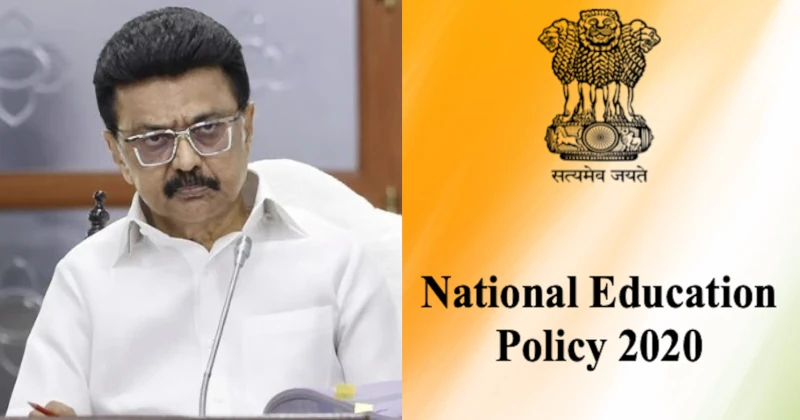
Since the DMK came to power in Tamil Nadu in 2021, the government in Tamil Nadu has presented itself as the most uncompromising political opponent of the National Education Policy (NEP) 2020. The policy has been publicly denounced as an ideological imposition, incompatible with the state’s social justice ethos and federal spirit. Assembly debates, public statements and official resolutions have all reinforced one message: “Tamil Nadu will not implement NEP 2020”.
Yet, recent administrative developments tell a very different story.
The state government’s recent proposal to establish Industrial Training Institutes (ITIs) within government high and higher secondary schools popularly referred to as the “School-ITI” model reveals that Tamil Nadu is not resisting NEP in substance. It is merely resisting the ownership of NEP. This contradiction is no longer subtle. It is structural.
Policy in motion, ideology in denial
A recent high-level meeting involving officials from the School Education Department and the Employment and Training Department discussed the feasibility of introducing ITIs within government school campuses. Following this meeting, Chief Educational Officers (CEOs) across districts were instructed to identify schools with adequate land, unused infrastructure and proximity to industrial clusters. Officials were asked to submit feasibility reports within a short timeframe, indicating that this was not an exploratory idea but a policy in motion.
The stated objectives are improving employability, reducing dropouts and making education economically relevant. Ironically, these are the exact goals that NEP 2020 places at the centre of India’s education reform agenda.
Early Vocational Education: An NEP blueprint executed
NEP 2020 unequivocally argues that vocational education must begin early but not as a last resort after academic failure. Paragraph 4.4 of NEP-2020 recommends vocational exposure at the school level and paragraph 16.1 mandates the integration of vocational education into mainstream schooling.
By embedding ITIs within high and higher secondary schools, Tamil Nadu is implementing this idea almost verbatim. Students are expected to acquire trade skills alongside academic learning, breaking away from the outdated notion that skill training is only for school dropouts. If this principle is unacceptable under NEP, why is it suddenly progressive under a different name?
Ending the academic-vocational hierarchy
One of the most socially transformative ideas in NEP 2020 is its rejection of the rigid hierarchy between academic and vocational education. Paragraph 16.4 explicitly calls for eliminating the stigma attached to vocational learning by integrating it into regular schooling. The School-ITI model achieves precisely this. By placing ITIs inside school campuses, vocational education is no longer marginal but becomes mainstream.
This reform directly addresses a long-standing inequality in India’s education system, yet it is being implemented without acknowledging the policy framework that conceptualised it.
Flexibility without acknowledgement
NEP 2020 envisions education as flexible, choice-driven and non-linear. Paragraphs 4.9 and 11.1 promote multiple learning pathways and exits, allowing students to transition between education, employment and skill training.
Tamil Nadu’s School-ITI proposal provides these same pathways. Students can enter the workforce, pursue apprenticeships or continue higher education depending on their circumstances and aspirations. The resemblance is too precise to be coincidental.
Dropouts, Relevance and Reality
NEP 2020 does not treat dropout rates as a moral failing of students but as a systemic failure of the education system. Paragraph 2.1 identifies dropout reduction as a critical national priority. Paragraph 2.5 emphasises skill-based education as a tool to retain students from economically vulnerable backgrounds.
Tamil Nadu’s own justification for School-ITIs mirrors this reasoning. Officials have openly stated that the initiative is intended to prevent dropouts by making education relevant to real-world employment. The diagnosis and the prescription are identical. Only the credit is missing.
Industry Linkages: NEP’s practical core
Another pillar of NEP 2020 is its emphasis on industry collaboration. Paragraphs 16.5 and 16.6 advocate internships, apprenticeships and partnerships with local industries. The School-ITI model is designed around this logic with schools near industrial belts being prioritised and training aligned to local labour market needs. This is NEP’s vocational framework in full operation.
Infrastructure efficiency: Borrowed logic
Even the operational details echo NEP thinking. Paragraph 7.3 encourages the optimal use of existing educational infrastructure. The instruction given to Chief Educational Officers to identify underutilised school land and buildings for ITI workshops is a direct application of this clause. This is not ideological resistance. It is selective adoption.
The real issue: Political credit, not policy merit
The DMK’s opposition to NEP 2020 is increasingly difficult to defend on educational grounds. The state is implementing NEP-aligned reforms while publicly condemning the policy itself. This suggests that the resistance is not about protecting students, language or social justice but about protecting political narratives.
Acknowledging NEP would mean admitting that a centrally framed policy contains progressive, student-centric ideas. For a party whose politics thrives on opposing the Centre, that admission appears unacceptable. So, NEP is renamed. Its clauses are rebranded. Its philosophy is implemented quietly.
Education cannot be held hostage to ego
Educational reform should be driven by evidence, outcomes and honesty. Students benefit from good policy, not from ideological denial. If NEP-aligned reforms are good enough to be implemented in Tamil Nadu’s schools, they are good enough to be acknowledged openly. Rejecting NEP in speeches while executing it through administrative orders undermines public trust and policy credibility. Tamil Nadu’s students deserve clarity, not contradiction. They deserve reform with integrity, not reform in disguise.
Renaming NEP does not erase its ideas. It only exposes the politics that refuse to own them.