The Union government has announced an ambitious plan to expand the network of Jan Aushadhi Kendras to 25,000 outlets by March 2027, significantly scaling up one of India’s flagship public health initiatives. The target was disclosed by the Ministry of Chemicals and Fertilisers in Parliament, underscoring the government’s focus on ensuring that high-quality medicines remain within the financial reach of ordinary citizens.
The Jan Aushadhi initiative, officially known as the Pradhan Mantri Bhartiya Janaushadhi Pariyojana (PMBJP), has been a cornerstone of the government’s strategy to reduce the burden of healthcare costs, particularly for low- and middle-income households that often rely heavily on out-of-pocket spending for medicines.
From 80 stores in 2014 to over 17,600 today
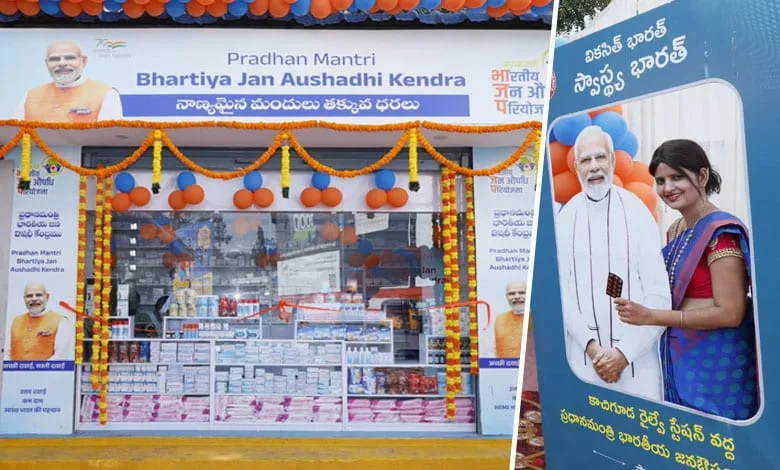
The scale of expansion achieved so far highlights the growing acceptance and relevance of the scheme. As of November 30, 2025, a total of 17,610 Jan Aushadhi Kendras were operational across the country, marking a dramatic increase from just 80 such stores in 2014.
This sharp rise reflects a combination of factors: increased public awareness about generic medicines, greater confidence in their quality, and improved financial viability of the Kendras themselves. Over the years, the Jan Aushadhi brand has gradually shed initial scepticism and positioned itself as a reliable alternative to costlier branded drugs.
The government believes that the proposed expansion to 25,000 Kendras will further consolidate this trust and ensure deeper penetration of affordable medicines, especially in semi-urban and rural areas.
According to data shared with Parliament, the growing demand for affordable generic medicines has translated into strong growth in both the number of outlets and overall sales. During the last financial year alone, the number of Jan Aushadhi Kendras increased by 37 per cent, while the maximum retail price (MRP) value of medicines sold under the scheme rose by 38 per cent.
These figures indicate robust momentum for the programme, suggesting that Jan Aushadhi Kendras are not only expanding in number but are also witnessing higher footfall and consumer acceptance. The rise in sales value is seen as a clear indicator that patients are increasingly opting for generic medicines over more expensive branded alternatives.
Officials point out that the cost difference between Jan Aushadhi medicines and branded drugs can be substantial, often leading to significant savings for patients, particularly those requiring long-term treatment
Ensuring Quality Alongside Affordability
A key pillar of the Jan Aushadhi scheme is the emphasis on quality. The government has consistently maintained that medicines sold through Jan Aushadhi Kendras meet stringent quality standards and are sourced from manufacturers that comply with regulatory norms.
By offering high-quality generic medicines at significantly lower prices, the scheme seeks to challenge the perception that affordability comes at the cost of effectiveness or safety. Over time, this emphasis on quality assurance has played a critical role in improving public confidence in Jan Aushadhi medicines.
The expanding product basket under the scheme, which includes a wide range of essential medicines, has further strengthened its appeal among patients and healthcare providers alike.
Beyond healthcare access, the Jan Aushadhi initiative has also emerged as a platform for promoting entrepreneurship. Jan Aushadhi Kendras are opened through applications invited from a wide spectrum of stakeholders, including individual entrepreneurs, non-governmental organisations, societies, trusts, firms, and private companies.
Applications are submitted online through the official Janaushadhi portal, making the process accessible to applicants across the country, including states such as Andhra Pradesh and other regions with varying levels of healthcare infrastructure.
By making the operation of Jan Aushadhi Kendras financially viable, the government aims to encourage greater participation from local entrepreneurs. This decentralised model not only creates employment opportunities but also ensures that Kendras are responsive to local healthcare needs.
Reducing out of pocket healthcare expenditure
One of the primary objectives of the Pradhan Mantri Bhartiya Janaushadhi Pariyojana is to reduce out-of-pocket expenditure on medicines, which constitutes a significant share of healthcare spending for Indian households.
For millions of families, especially those without comprehensive health insurance, the cost of medicines can be a major financial burden. By offering generic alternatives at lower prices, Jan Aushadhi Kendras provide tangible relief, helping families manage chronic illnesses and routine healthcare needs more sustainably.
Health policy experts note that the expansion of Jan Aushadhi Kendras complements broader government efforts to strengthen public healthcare delivery and financial protection mechanisms.
The details of the expansion plan were shared by Union Minister of State for Chemicals and Fertilizers Anupriya Patel in a written reply to a question in the Rajya Sabha. The response reaffirmed the government’s commitment to scaling up the scheme while ensuring its operational efficiency and financial sustainability.
By setting a clear numerical target and a defined timeline, the government has signalled its intent to institutionalise the Jan Aushadhi network as a permanent and integral component of India’s healthcare ecosystem.
As the government works towards its goal of 25,000 Jan Aushadhi Kendras by March 2027, the focus will likely remain on expanding reach without compromising quality or supply chain reliability. Ensuring consistent availability of medicines, maintaining regulatory oversight, and strengthening public awareness will be crucial to sustaining the scheme’s growth.
The steady rise in the number of Kendras and sales volumes suggests that the Jan Aushadhi model has gained a firm foothold. If the expansion continues as planned, the initiative could play a transformative role in reshaping how affordable healthcare is delivered in India, bridging gaps in access and easing the financial strain on millions of households.