





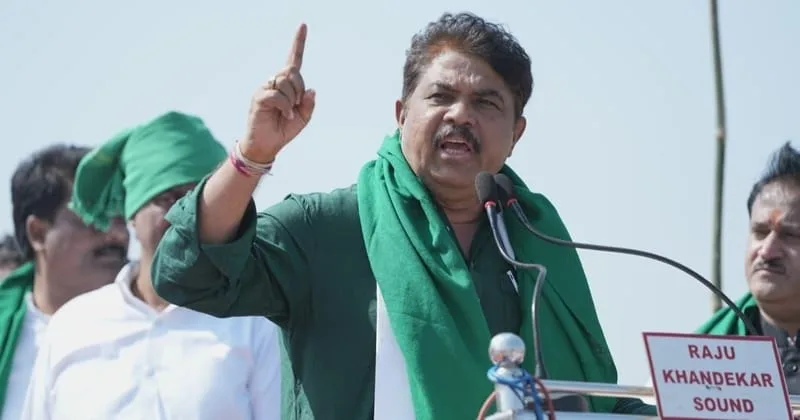
Bengaluru: Karnataka Chief Minister Siddaramaiah has once again come under fire from political opponents, with senior BJP leader and former minister R Ashoka sharply criticising the CM for misrepresenting banking terms and misleading the public on loan write-offs. According to Ashoka, Siddaramaiah’s repeated attempts to politicise the issue of bad loans reflect either a fundamental misunderstanding of financial mechanisms or a deliberate effort to misinform citizens.
Speaking to the media, Ashoka stated, “It is unfortunate that a leader who claims to have presented 16 budgets still does not understand the difference between a loan write-off and a loan waiver. A write-off is an accounting step to clean bank balance sheets; it does not absolve the borrower from repayment, nor does it provide any benefit to defaulters. Recovery continues unabated even after a write-off is recorded.”
It is unfortunate that the self-proclaimed economic expert, Chief Minister @siddaramaiah, who proudly claims to have presented 16 budgets, still does not understand the basic difference between a loan write-off and a loan waive-off.
A write-off is merely an accounting step… https://t.co/W6l1woYbYG
— R. Ashoka (@RAshokaBJP) December 9, 2025
Ashoka went on to highlight the historical context of India’s Non-Performing Asset (NPA) crisis. “The roots of the NPA problem lie squarely in the UPA era between 2008 and 2014. Indiscriminate lending, political interference, and evergreening of stressed accounts created a massive hidden bubble of bad loans. Instead of addressing the problem, the UPA government repeatedly postponed recognition, allowing losses to accumulate silently within the banking system,” he said.
According to the BJP leader, when the NDA government came to power in 2014, it inherited a mountain of concealed bad debt. “The first step was transparency. The Reserve Bank of India was directed to conduct a rigorous Asset Quality Review, which finally revealed the true scale of NPAs. It was not the NDA government that created NPAs, but the UPA that buried them,” Ashoka asserted.
He further pointed out the reforms undertaken post-2014, including the landmark Insolvency and Bankruptcy Code (IBC) in 2016, which provided a modern, time-bound, creditor-driven mechanism to resolve corporate defaults. Alongside SARFAESI, Debt Recovery Tribunals (DRTs), and other recovery measures, these initiatives empowered banks to seize assets and take defaulters to court, ensuring overdue dues were recovered.
Ashoka emphasised that these reforms have yielded measurable results. “India’s Gross NPA ratio, which shot up once UPA-era bad loans were recognised, has steadily declined to around 2.5 percent, the lowest in over a decade. This is due to recovery actions, stricter monitoring, improved credit discipline, and the dismantling of the UPA culture of evergreening,” he said.
The BJP leader also accused Siddaramaiah and the Congress party of attempting to mislead the public by portraying write-offs as a benevolent gesture. “Write-offs are not waivers; they are transparency measures and do not absolve borrowers. The liability remains, and recovery continues. Politicising these technical banking terms only undermines public understanding,” Ashoka added.
He urged the CM to acknowledge the systemic failures left behind by his party. “Before misleading people, Siddaramaiah must answer fundamental questions: Who allowed bad loans to accumulate? Who encouraged evergreening? Why was there no bankruptcy law before 2016? Why did NPAs start falling only after structured reforms?”
Political analysts have said that the episode underscores the larger issue of accountability and economic governance in the state. Ashoka warned that repeated attempts to politicise banking reforms would erode public confidence and divert attention from the financial discipline that India has achieved in recent years.
With the controversy gaining traction, BJP leaders are likely to continue pressing Siddaramaiah for clarity on financial policies, while highlighting the contrast between past mismanagement and present reform-driven progress in the banking sector.










Comments