





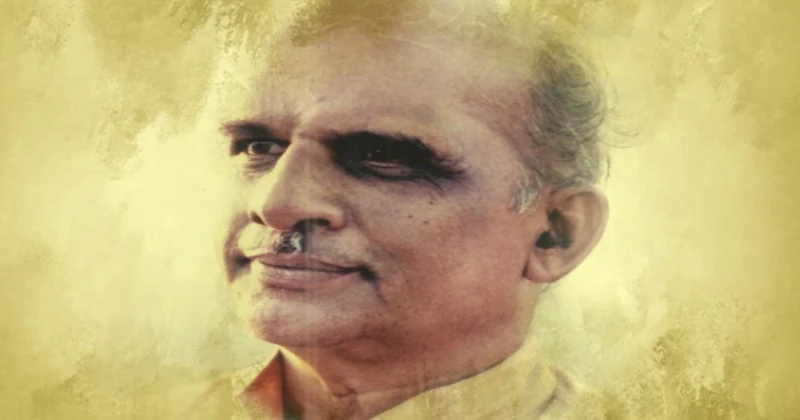
NEW DELHI: On the death anniversary of Prof Yashwantrao Kelkar revered academic, nationalist thinker, and the ideological architect of the Akhil Bharatiya Vidyarthi Parishad (ABVP) paid heartfelt tributes to the man whose ideas continue to shape one of India’s largest student movements.
अखिल भारतीय विद्यार्थी परिषद के शिल्पकार और लाखों कार्यकर्ताओं के प्रेरणास्रोत प्रा. यशवंतराव केलकर जी की पुण्यतिथि पर उन्हें कोटि-कोटि नमन। राष्ट्रोत्थान में युवाओं की भागीदारी सुनिश्चित करने और अभाविप को एक वटवृक्ष के रूप में विकसित करने में यशवंतराव जी का विशेष योगदान रहा है।… pic.twitter.com/fU45T1FlZ1
— ABVP (@ABVPVoice) December 7, 2025
Prof. Kelkar, often described as the guiding force behind ABVP’s evolution, is remembered not only for his academic brilliance but for the depth of his commitment to nation-building through the empowerment of students.
A distinguished Professor of English Literature associated with Bombay University, Prof. Kelkar combined intellectual rigor with a profound belief in India’s cultural and nationalist traditions. Deeply influenced by ideals aligned with the Rashtriya Swayamsevak Sangh (RSS), he envisioned a future in which students played a central role in national resurgence.
His philosophical approach placed students not merely as learners but as active participants in shaping India’s destiny. This conviction became the foundation upon which ABVP built its identity.
Although ABVP was formally founded in 1949, it was during the 1950s that Prof. Kelkar helped redefine its trajectory. His leadership provided the organisation with:
1. A Strong Philosophical Foundation
Prof. Kelkar infused ABVP with a clear ideological framework rooted in cultural nationalism. He emphasised values such as character, service, self-discipline, and pride in India’s heritage principles that became integral to ABVP’s functioning.
2. A Call for Active Student Engagement
He motivated students to rise above campus boundaries and engage with national issues, promoting activism grounded in responsibility, ethics, and leadership. His belief was straightforward: youth are not mere observers but potential architects of social change.
3. Institution-Building Across Campuses
Under his guidance, ABVP expanded rapidly across universities. Prof Kelkar played a crucial role in establishing organisational systems such as annual training camps, state-level conferences, and national conventions structures that helped the organisation grow into a cohesive and influential student network.
Prof Kelkar advocated for the unity of students across caste, creed, region, and background under a shared Indian identity. His inclusive call for national cohesion through youth participation remains a defining aspect of ABVP’s outreach even today.
To commemorate his lifelong dedication to youth development, ABVP instituted the Yashwantrao Kelkar Youth Award, a national honor bestowed annually upon young individuals demonstrating exceptional contributions in fields such as social service, public leadership, education, and innovation. The award stands as a continuing testament to his belief in the transformative power of young India.
















Comments