





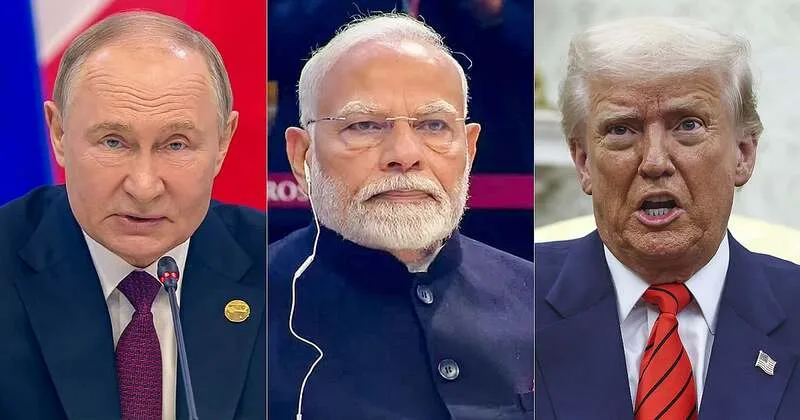
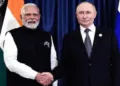
A former Pentagon official has inserted an unexpected twist into the evolving narrative of India–Russia relations by arguing that the real catalyst behind President Vladimir Putin’s exceptionally warm reception in New Delhi is not Moscow, but US President Donald Trump.
Michael Rubin, speaking to ANI, described Putin’s visit to India as overwhelmingly successful from the Russian perspective and suggested that Washington’s past policies under Trump inadvertently pushed New Delhi and Moscow closer together. He noted that the scale of honours and diplomatic warmth extended to the Russian leader was unlike anything Putin has received elsewhere, and argued that Trump’s conduct toward India played a decisive role in shaping that outcome. Rubin went so far as to suggest that Trump, rather than Putin, could claim credit for reinforcing India–Russia ties, arguing that the US president’s actions helped create the political conditions that made such closeness possible.
According to Rubin, reactions within the United States fall into two sharply divided camps. On one side are Trump supporters, who view India’s outreach to Russia as validation of his worldview and a confirmation that he had anticipated such realignments. On the other side, representing a majority of Americans who remain critical of Trump, the developments are seen as the direct consequence of poor judgement and strategic mismanagement. Rubin argued that many in Washington believe Trump weakened US–India relations by prioritising personal vanity and allowing foreign policy choices to be shaped by flattery or questionable inducements from countries such as Pakistan, Turkey and Qatar.
#WATCH | Washington, DC, USA | "Donald Trump deserves a Nobel Prize for bringing India and Russia together the way he did", says Former Pentagon official Michael Rubin on Russian President Vladimir Putin's visit to India.
He further says, "From Russia's perspective, the visit… pic.twitter.com/vYXcVTwP7M
— ANI (@ANI) December 5, 2025
Rubin said there is widespread disbelief within US policy circles over what he described as Trump’s systematic erosion of strategic alignment with India. In his view, these decisions amounted to a self-inflicted strategic loss that will continue to disadvantage Washington in the long term. He added that Trump is unlikely to acknowledge any responsibility, instead portraying India’s renewed engagement with Russia as evidence of his supposed foresight in global affairs. Turning to Putin’s assurance of uninterrupted energy supplies for India, Rubin criticised what he sees as a lack of realism in American commentary. He stressed that India’s leadership is answerable to national interests, not external pressure, and that as the world’s most populous country and an emerging economic powerhouse, India requires secure and affordable energy.
Rubin also accused Washington of double standards, pointing out that the US itself continues to purchase Russian resources when alternatives are scarce. Unless the US can offer energy supplies at prices and volumes that meet India’s needs, he argued, it has little credibility in lecturing New Delhi. In such circumstances, he said, India’s priority will inevitably remain its own security and economic stability.







Comments