





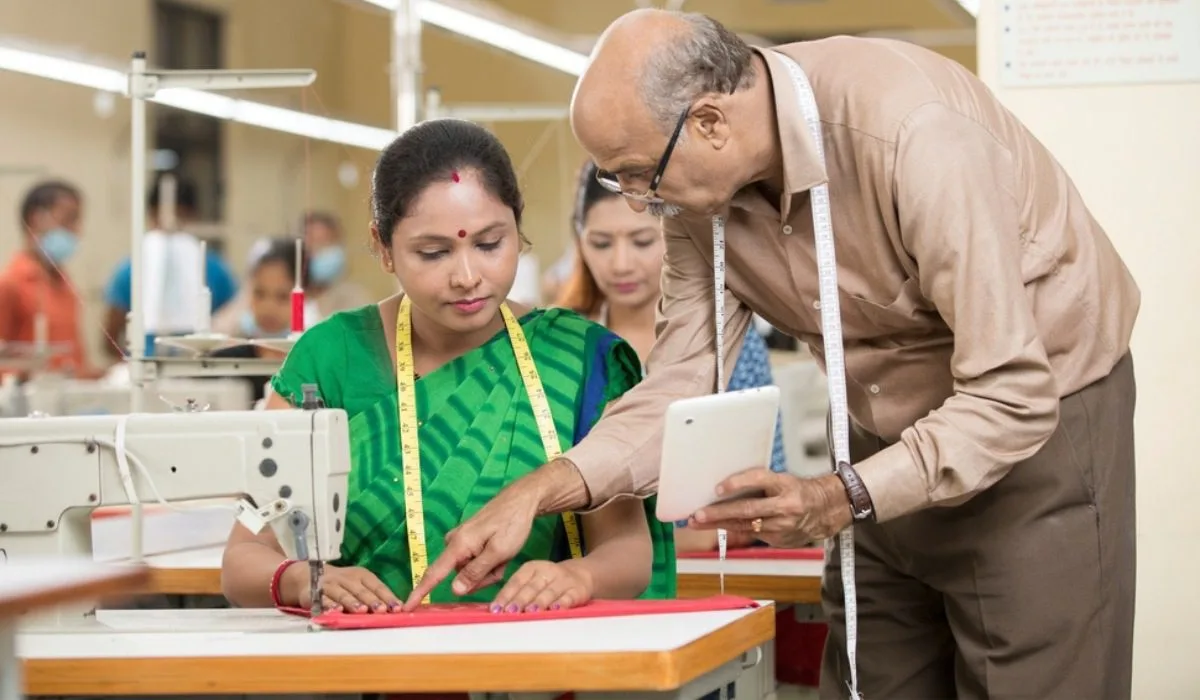
The Union Government has reiterated its commitment to empowering India’s minority communities through the Pradhan Mantri Virasat Ka Samvardhan (PM VIKAS) scheme, a flagship programme aimed at enhancing skills, preserving traditional culture, and widening livelihood opportunities. In a written reply to the Rajya Sabha, Union Minister for Minority Affairs Kiren Rijiju presented detailed insights into the vision and early implementation of the scheme, highlighting its multi-layered approach to socio-economic upliftment.
PM VIKAS has been conceptualised as a holistic intervention for six notified minority communities, Muslims, Christians, Sikhs, Buddhists, Parsis, and Jains. The scheme targets these communities through an integrated framework of modern skill training, entrepreneurship promotion, education support and the revival of traditional arts and crafts. The government has stressed that the scheme is not merely an employment initiative but a broader socio-cultural development model meant to provide dignity, stability, and identity to marginalised groups.
According to the Ministry of Minority Affairs, one of the core pillars of PM VIKAS is the provision of actionable, market-driven skill development opportunities. Implementing agencies are required to conduct skill training in need-based, locally relevant and industry-linked courses that can help beneficiaries secure sustainable livelihoods. These courses span a wide range of sectors, from modern trades like IT and electronics to conventional skills that continue to hold employment potential.
To ensure real and measurable outcomes, the Ministry has set stringent placement guidelines for implementing agencies. For non-traditional and modern skill courses, agencies are mandated to place at least 75 per cent of all trained candidates into employment, self-employment or apprenticeships. Additionally, at least 50 per cent of these placements must be in the organised sector, fulfilling national skill standards under the National Skill Qualification Framework (NSQF) and Common Cost Norms (CCN).
These conditions, as highlighted by Kiren Rijiju, are intended to block tokenistic training practices and push for high-impact results. They also align the scheme with the wider national skilling ecosystem, ensuring uniformity, quality assurance and integration with industry needs.
A significant component of PM VIKAS focuses on economic empowerment for women from minority communities. The government recognises that women often face multiple barriers, social, cultural and financial, that limit their participation in the workforce. To address this gap, PM VIKAS includes targeted interventions such as leadership training, entrepreneurship development sessions, and handholding support for women-led enterprises.
These programmes aim to equip women with the confidence, entrepreneurial mindset and business skills required to navigate and participate in the economic landscape. By supporting women in turning their skills, traditional or modern, into sustainable business ventures, the government hopes to bolster their financial independence and create multiplier effects within their families and communities.
While the scheme has a strong modern employment focus, it equally emphasises the preservation of intangible cultural heritage that belongs to minority communities. Many traditional art forms, handicrafts, and indigenous knowledge systems are on the brink of fading due to a lack of documentation, recognition and commercialisation.
PM VIKAS seeks to revive these traditions by supporting artisans, mapping traditional crafts, documenting dying art forms, and creating platforms to showcase them before national and global audiences. This cultural preservation effort is expected to achieve two purposes: sustaining India’s diverse heritage and creating livelihood opportunities for artisans who have depended on these crafts for generations.
In a bid to make the scheme inclusive and equitable, the Ministry has mandated that 3 per cent of all seats across components be reserved for persons with disabilities. This ensures that the scheme reaches some of the most marginalised sections within minority groups, enabling them to access specialised training and income opportunities suited to their abilities.
The government has already initiated the rollout of PM VIKAS, with allocation letters issued to agencies responsible for implementing different components of the scheme. These agencies have been assigned a target of training nearly 1.40 lakh beneficiaries across multiple sectors. A detailed component-wise and sector-wise breakup has been communicated to ensure systematic execution.
This early phase of implementation is expected to set the foundation for a wider impact in the coming years as more agencies come on board, more courses open up, and more communities begin to benefit from structured training and livelihood support.
In essence, the PM VIKAS scheme marks a significant shift toward capacity-building-based development for minority communities. By blending modern skills with cultural preservation, and by placing special emphasis on women’s empowerment and job placements, the government aims to create a self-reliant ecosystem for communities that have often remained on the fringes of economic growth.
Kiren Rijiju noted that the programme is designed to uplift individuals not only through employment but also through dignity, heritage preservation and social mobility. As implementation expands and more success stories emerge, PM VIKAS may evolve into one of the cornerstone schemes driving inclusive and sustainable development for India’s minority populations.











Comments