





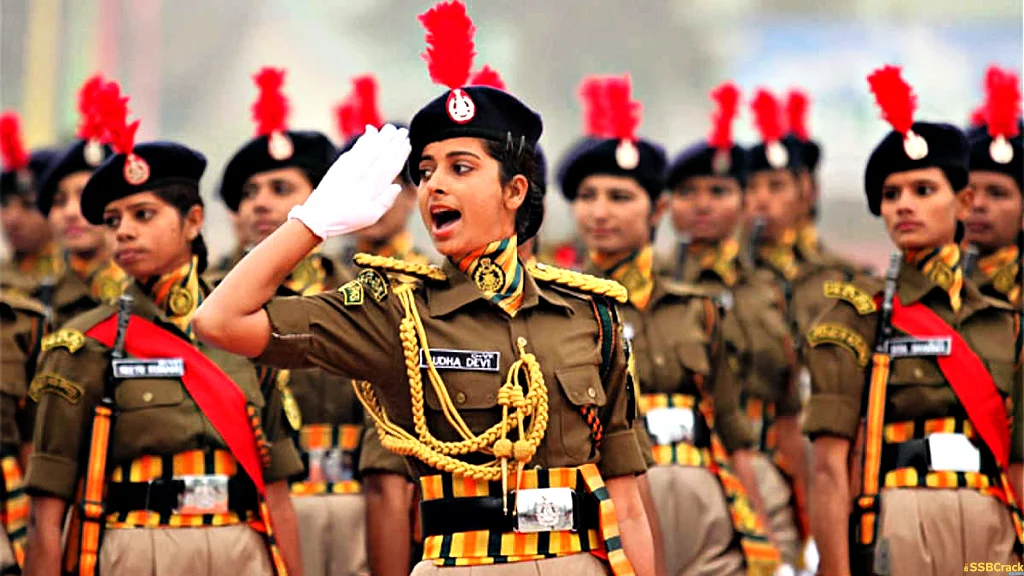
In a significant push toward gender inclusion in India’s paramilitary forces, the Ministry of Home Affairs (MHA) informed the Rajya Sabha on Wednesday that women’s recruitment in the Central Armed Police Forces (CAPFs) is set to increase sharply. Replying to an unstarred question, Minister of State for Home Affairs Nityanand Rai revealed that 3,239 women were inducted in the CRPF, BSF, ITBP, and SSB during FY 2024-25, while the government has set an ambitious target of 5,171 women recruits for FY 2025-26.
Rai highlighted that the recruitment surge follows reservation norms introduced in 2016, under which 33 percent of constable posts in CRPF and 14-15 percent of posts in BSF, ITBP, and SSB were earmarked for women. These structural provisions, he said, have laid the groundwork for expanding women’s roles across combat and non-combat formations within the CAPFs.
The recruitment data placed before the Upper House shows that the Border Security Force (BSF) registered the highest number of women inductees in FY 2024-25, with 1,680 personnel joining the force. The Indo-Tibetan Border Police (ITBP) followed with 1,093 recruits, while the Central Reserve Police Force (CRPF) inducted 294 women and the Sashastra Seema Bal (SSB) recruited 172.
For the upcoming fiscal year, the projected increases are even more substantial:
1) CRPF: from 294 to 1,192
2) BSF: from 1,680 to 2,513
3) ITBP: from 1,093 to 1,375
4) SSB: 172 to 91
Overall, the figures reflect a nearly 60 percent rise in proposed women’s recruitment, signalling what officials describe as a “strong, deliberate, and sustained policy push” towards balanced gender representation in India’s paramilitary forces.
Alongside recruitments, the MHA informed the Rajya Sabha that several structural reforms and safeguards are being implemented to ensure safe and gender-responsive working environments for women deployed in CAPFs. These reforms include:
1) Separate accommodation and barracks for women personnel.
2) Rest-cum-changing rooms and dedicated toilets at camps and field locations.
3) Crèche and day-care facilities for children of serving personnel.
4) Women-centric medical support and easy access to psychological counselling.
5) Women Help Desks within units to respond to gender-related complaints.
6) Confidential grievance mechanisms to address sexual harassment cases.
Officials emphasised that operational deployment policies have also been updated. Women personnel are now routinely deployed in section strength or buddy pairs to ensure safety, particularly during operations in remote or high-conflict zones. Flexible duty schedules are being adopted wherever operationally feasible.
To foster an inclusive environment, the ministry stated that regular gender-sensitisation workshops are being conducted across CAPF units. Training modules have been updated to make male personnel more aware of gender-sensitive practices while also equipping women personnel with leadership and operational skills required for frontline deployments.
The MHA reiterated that continued recruitment, infrastructure upgrades, and improved welfare mechanisms signal the government’s commitment to enhancing women’s participation in national security roles.








Comments