





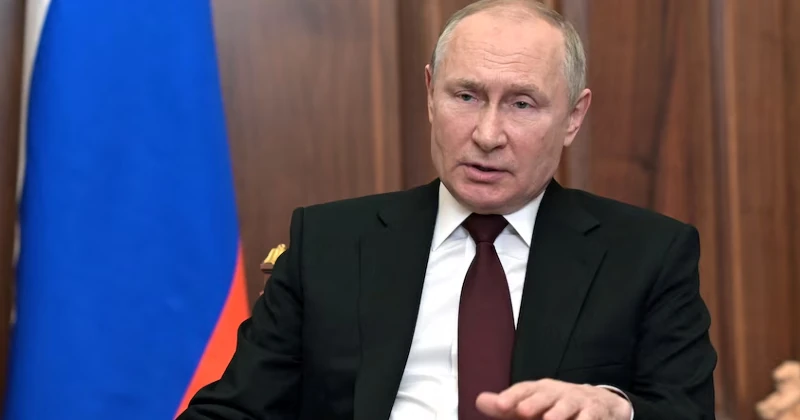
NEW DELHI: A rare joint opinion piece by the envoys of three major Western powers the United Kingdom, France and Germany published in a English daily on December 1 has triggered a diplomatic flare-up in New Delhi before Russian President Vladimir Putin arrives for a two-day India visit. Senior officials in the Ministry of External Affairs (MEA) have taken “serious note” of the article, calling both its timing and its messaging “very unusual” and “not an acceptable diplomatic practice.”
The op-ed, authored by British High Commissioner Lindy Cameron, German Ambassador Philipp Ackermann and French Ambassador Thierry Mathou, sharply criticised President Putin and blamed Russia for prolonging the Ukraine conflict. It accused Moscow of “indiscriminate attacks” and suggested that Russia “doesn’t seem serious about peace,” while reaffirming continued “ironclad support” from the three NATO countries for Ukraine.
Top MEA officials expressed discomfort with the public criticism of a third country in an Indian publication on the eve of a high-profile bilateral summit. “The timing is very unusual. It is not acceptable diplomatic practice to give public advice on India’s relations with a third country,” officials said, according to media.
Former Foreign Secretary Kanwal Sibal described the op-ed as a “vicious piece” that violated diplomatic norms and amounted to “a diplomatic insult to India,” arguing that it sought to “fuel anti-Russia sentiments in pro-European circles within India.”
“It is interference in our internal affairs… questioning the morality of our ties with a friendly country,” Sibal wrote on X. The joint article, titled “World Wants the Ukraine War to End, But Russia Doesn’t Seem Serious About Peace,” paints a stark picture of the ongoing conflict.
It accuses Russia of launching daily missile and drone strikes on civilian areas, saying these are “not the actions of someone that is serious about peace.” The envoys argued that Europe had made diplomatic efforts, while Russia had “systematically chosen” a path of aggression.
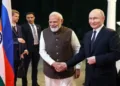
The published piece appeared just days before President Putin is scheduled to land in Delhi for the annual India–Russia summit, hosted by Prime Minister Narendra Modi.
Two days later, on December 3, The Times of India carried a counter-article from Russian Ambassador Denis Alipov, who blasted the Western envoys’ piece as a “grossly distorted account” aimed at “misleading the Indian public.”
Alipov countered that it was Europe not Moscow that had derailed peace efforts, beginning with what he called the “Western-backed” ouster of Ukrainian President Viktor Yanukovych in 2014. He accused NATO members of sabotaging the Minsk process, encouraging Kyiv to escalate tensions, and blocking near-settlements in 2022 and 2025 to pursue “geopolitical ambitions.”
The diplomatic exchange comes at a sensitive moment. Ahead of his travel to Delhi, President Putin stated that Russia hopes to take cooperation with India and China to a “qualitatively new level,” highlighting upcoming projects in energy, space, industry and agriculture.
India has maintained a careful balancing act since the Ukraine conflict began in 2022 refusing to join Western sanctions, continuing oil purchases from Russia, while also strengthening ties with the US and European partners.
Prime Minister Modi has consistently stated that “this is not an era of war,” calling for dialogue, even as New Delhi defends its strategic autonomy.
External Affairs Minister S Jaishankar has earlier pushed back against Western criticism, remarking that the West must “grow out of the mindset that Europe’s problems are the world’s problems.”







Comments