





In the bustling lanes of the geographical heart of Bharat, Nagpur, a visionary industrialist established his first industrial venture – The Empress Mills. This marked the start of what today is known as the Tata Group of Industries. In 1877, Jamsetji Tata decided to compete with British manufacturers, Bharat’s principal suppliers of finer fabrics, a vision which led to a revolution in Bharat.
The engine which was first fueled by Tata, even today weaves the clusters of production into the very fabric of national self-reliance or Atmanirbharta. Traditional crafts to advanced manufacturing hubs here, boosted with fresh investments, are helping indigenise production, stabilise regional economies and minimise dependence on external supply chains.
The city’s significance is not just geographic location but is rooted in its proven growth trajectory. According to an Oxford Economics report, it is projected to be the fifth fastest-growing city in the world between 2019 and 2035, anticipating an average growth rate of 8.41 per cent. With the cumulative impact of its sectors being substantial, which is evidenced by a USD 21.9 billion Gross District Domestic Product (GDDP) in 2021-22, reflecting an average Compound Annual Growth Rate (CAGR) of 8.45 per cent over the preceding decade. This profound economic capacity establishes Nagpur as a foundational pillar in Maharashtra’s economy. This economic strength is underpinned by robust Manufacturing units, Industrial Corridors, Agro-Processing units, traditional clusters and strategic logistical advantages.
Manufacturing and Industrial Corridors
Nagpur stands at the crossroads of Bharat’s manufacturing resurgence. Under the Maharashtra Industrial Development Corporation (MIDC), Hingna and Butibori areas, both within 25 kms radius of Nagpur, form the industrial backbone of Central Bharat.
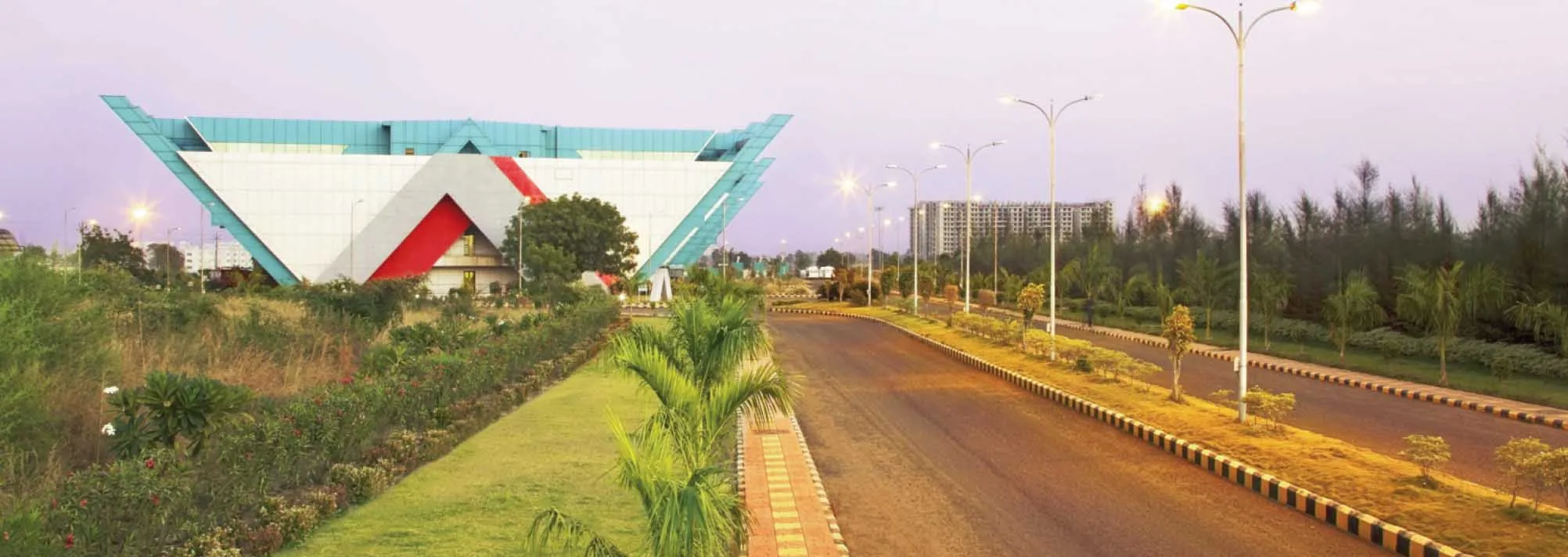
Asia’s largest industrial area by land, Butibori, hosts major players in textiles and infrastructure engineering like Indo Rama Synthetics and KEC International. On the other hand, Hingna industrial estate, located on the western fringes of the city, is made up of around 900 small and medium industrial units. The major ones among them are tractor manufacturing plants of Mahindra and Mahindra, casting units of NECO Ltd (the country’s largest casting group), units of International Combustion, Bajaj Auto group, and Candico (the second largest confectionery manufacturing plant in Bharat). Together, these estates are torchbearers of domestic production, from steel bars and manganese oxide to castings, yarn, and other products. These well-planned industrial corridors have made it a central node in the country’s journey towards Atmanirbharta, positioning Nagpur as a key contributor to national exports.
Strategic Exports and Industrial Products
Nagpur factories play a much bigger role at the international level by feeding the global supply chain. Each container that leaves Nagpur’s freight corridors carries a fragment of Bharat’s industrial self-confidence. Companies like internationally recognised Pix Transmissions Ltd, a local mechanical transmission manufacturer, maintain a strong local workforce. Exportable goods such as steel bars, castings, spun yarn, aluminium sheets, and manganese oxide also find markets across continents.
Minerals and Power
Beneath this manufacturing surface of Nagpur lies the geological strength that sustains it. The district’s reserves of coal, manganese ore, dolomite, and limestone have long underwritten its metallurgical and energy independence. Nagpur district is endowed with significant mineral deposits, including Coal and Manganese Ore. The production of these critical mineral were, 2,256,705 MT and 194,127 MT respectively 2010-11. These indigenous mineral resources support metallurgical operations, including the ferro-manganese plant at Kanhan, ensuring internal supply chains for energy and steel production. Beyond domestic consumption, Nagpur’s manufacturing base actively contributes to the nation’s export goals, with major exportable items including Steel Bar, Manganese Oxide, Spun Yarn, Castings, Fabric, and Steel Forging.
Agro-Processing and Food Security
Orange City is not just a mere identity, it is an economic advantage symbolising its strength in agro-processing. The Nagpuri orange is one of Bharat’s most remarkable food-processing ventures. In March 2025, Patanjali launched Asia’s largest orange processing unit at MIHAN (Multi-modal International Hub Airport at Nagpur) with an investment of ₹1,500 cr. With an aim to create a zero-waste industrial plant, it also extracts volatile oils from the peel. The Nagpur Orange, recognised with a Geographical Indication (GI) tag, is now backed by massive new investments focused on value addition. Beyond Oranges, there are 125 functional dal mill units with an annual turnover of ₹863 crore in the Bagadganj. Known for its purity and traditional processing methods, dal of this locality reaches kitchens across the country. It turns humble lentils into processed, packaged products proving that local clusters are the powerhouse of national food security.
Nagpur also harbours many major consumable industry players like ice-cream manufacturer Dinshaws, Indian dry food manufacturer Haldiram’s, Indian Ready to Cook food manufacturer ActChawa and Ayurvedic product companies like Vicco and Baidyanath. These industries also provide the safe ecosystem operational Integrated Cold Chain facilities (eg, units run by Haldiram Foods Intl Limited, B Y Agro & Infra Pvt Ltd, Global Food) which ensures efficient logistics for perishable agricultural and food products, contributing to reducing post-harvest losses. Together, these companies have transformed local crops into national brands.
Logistics and Future Growth
With the unmatched strategic leverage of location, Nagpur is the strongest structural asset supporting Atmanirbharta. The convergence point for major national highways (NH-7 and NH-6) and trunk railway routes (connecting Mumbai, Chennai, Howrah, and Delhi) makes it an undisputed transport hub. These factors make it central for the movement and distribution of domestically manufactured goods across the subcontinent. Amplified by establishing a dry port, the MIHAN , the city serves as a vital corridor for pan-Bharat distribution networks. In FY 2023–24, MIHAN’s SEZ exports more than doubled to ₹4,013 crore, the highest growth since inception. This rise reflects Nagpur’s transformation into Bharat’s central logistics and export hub, where goods from the heartland reach ports and borders efficiently. Nagpur is not just about factories or industrial corridors. Adding a layer of strategic significance, there are multiple new defence and aerospace projects established around MIHAN, aptly utilising its manufacturing and logistics infrastructure. Collectively, they ensure that on national defence capabilities, we do not just buy, we build on Bharatiya soil.
Following this, the city was recognised by KPMG–NASSCOM as one of Bharat’s top Tier-II IT cities, which contributes nearly 58 per cent of its GVA through the services sector. With 8,600 engineers graduating each year, a growing start-up ecosystem, and steady government support, the city is steadily emerging as a digital and knowledge capital of Central Bharat.
Traditional Arts and Artisanal Empowerment
Being a cotton-rich region with access to coal and water and strong connectivity, Vidarbha is ideal for textile manufacturing. This was one of the major strategic decisions which Jamsetji Tata took while founding Empress Mills, which marked the start of what today is known as the Manchester of Central Bharat. With over 750 garment units and generating ₹900 crore annually, the garment Cluster alone supports 8,000 workers. Efforts to revive handloom heritage, such as the Patti Kinar saree woven by the Halba Koshti community, are being documented and restored even through partnerships with design institutions like NIFT. The craftsmanship has always found its home in Nagpur. The globally sought-after mango-wood craftsmanship has surged Bharat’s wooden art by 89 per cent (2023–24), placing the country among the top three exporters worldwide. Each handcrafted piece narrates a story of local skill meeting international taste.
These stories in every lane of Zero Mile do not just tell the economic growth but narrate how with a balanced approach of new advancement embracing cultural values and traditions led to a Nagpuri Swadeshi movement which is reaching its destination of Atmanirbharta.












Comments