





Finland has announced the closure of its embassy in Pakistan, a nation gripped by political unrest and recurring internal conflicts. The embassies in Afghanistan and Myanmar will also shut down. The decision, according to Finnish officials, stems directly from the persistent political insecurity and deteriorating governance conditions in all three countries. Foreign Minister Elena Voltanen stated that Finland currently maintains no meaningful trade or economic engagement with these nations. With limited diplomatic or commercial returns, she stressed that Helsinki must redirect its resources toward countries that align with Finland’s foreign policy objectives, export priorities, and national security interests.
Voltanen noted that Finland seeks to prioritise diplomatic presence in regions where stable political environments and economic potential exist. As part of this strategic shift, Finland has recently opened a Consulate General in Houston, USA, signalling its intent to deepen ties with key Western partners and major economic hubs. Finland continues to enjoy the global spotlight for being named the world’s happiest country for the eighth consecutive year, with Denmark, Iceland and Sweden following closely behind. However, officials in Helsinki highlight that geopolitical realities cannot be ignored. Afghanistan’s conflict-like tensions and its strained relations with Pakistan, coupled with political and economic instability in both countries, have made diplomatic engagement increasingly difficult. As a result, all three embassies will be formally closed by 2026.
Myanmar’s prolonged political crisis and lack of democratic stability have also contributed to Helsinki’s decision to withdraw its mission from the country. Voltanen emphasised that Finland’s future diplomatic outreach will prioritise regions that support its long-term political and economic aspirations. She reiterated that the aim is not to isolate countries like India with restrictive policies or tariffs, but rather to reduce trade barriers and create stronger, mutually beneficial agreements. Finland, a member of the European Union, has notably dismissed calls for harsh tariffs on India, particularly those linked to global energy dynamics and Russian oil imports.
Finland has supported India’s position on oil purchases from Russia and taken a critical view of tariff escalation proposals made by global powers. Finnish President Alexander Stubb recently underscored India’s growing geopolitical stature, stressing that India is a rising superpower and should not be categorised alongside Russia or China. He added that Europe and the United States have long shared cooperative ties with India, and strengthening trade relations with one of the world’s fastest-growing economies is a strategic priority. Echoing this sentiment, European Commission President Ursula von der Leyen stated that the European Union aims to finalise its long-pending trade agreement with India within the year. Officials in Brussels argue that expanding economic cooperation with India aligns with Europe’s broader policy of diversifying strategic partnerships in the Indo-Pacific.
Pakistan PM Shehbaz Sharif leaves country ahead of key military appointment
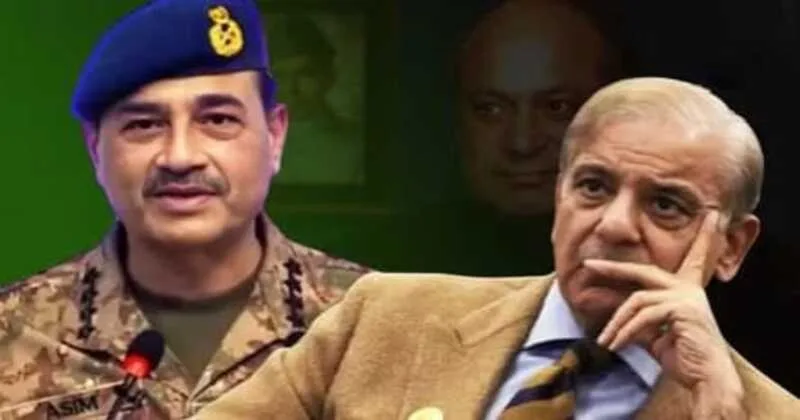
In a parallel development in Pakistan, a significant political and military crisis has unfolded as Prime Minister Shehbaz Sharif left the country just as the notification appointing Asim Munir as Pakistan’s first Chief of Defence Forces (CDF) was expected to be issued. According to media reports, Sharif’s departure appears to be a deliberate attempt to avoid being physically present when the crucial notification is released. The CDF post was created under Pakistan’s 27th Constitutional Amendment, and once appointed, Asim Munir would become the most powerful military leader in Pakistan’s history, surpassing even the traditional role of the Chief of Army Staff. The notification was originally expected on November 29, aligning with the conclusion of Munir’s term as army chief. However, the notification was not issued, creating an unprecedented vacuum in Pakistan’s top military leadership.
Sources cited in media note that Shehbaz Sharif travelled first to Bahrain and then onward to London, raising questions about whether he aims to temporarily evade the political responsibility of formalising Munir’s elevation to CDF status for a five-year term. Former National Security Advisory Board member Tilak Devasher, according to media, stated that Sharif’s absence will not absolve him of responsibility. He highlighted that Pakistan currently finds itself in an extraordinary and unstable situation. With Asim Munir’s term as army chief having ended and no formal successor or CDF appointment announced, Pakistan technically has no serving military chief. This leadership void extends to Pakistan’s Nuclear Command Authority, which operates under the Strategic Forces Command. Without a military head, critical decision-making nodes, including those linked to nuclear oversight, lack clear leadership. Legal experts remain divided on whether a CDF notification is procedurally mandatory or if an interim arrangement is permissible.
Political observers warn that a nuclear-armed nation functioning without a confirmed military chief or designated leader of its nuclear command signals a deepening institutional crisis in Pakistan. Many argue that while political instability is not new to the country, the current leadership vacuum represents an unprecedented challenge for national security and regional stability.













Comments