





The Indian stock market is expected to begin today’s session with strong momentum, buoyed by India’s unexpectedly high GDP growth figures for the second quarter. Early morning trade in the GIFT Nifty showed a jump of 130 points, signalling the possibility of a robust rally on December 1. If this positive sentiment carries through the day, both the Sensex and Nifty are likely to scale new record highs, continuing the upward trajectory driven by domestic economic resilience.
India’s GDP growth for the July–September quarter surged to 8.2 per cent, far exceeding the Reserve Bank of India’s expectations and marking the highest growth rate in six quarters. Most financial institutions and rating agencies had projected a growth range between 7 and 7.5 per cent. Even as the economy delivered a standout performance, the achievement was marred by political controversy after the International Monetary Fund deliberately assigned India a ‘C grade’, citing deficiencies in GDP estimation methodologies. The Congress’s decision to welcome the IMF’s assessment has somewhat overshadowed what would have otherwise been a moment of economic celebration.
Despite the political noise, market sentiment remains upbeat. The GIFT Nifty gained further strength as India reaffirmed its position as the world’s fastest-growing major economy. Market participants are now awaiting the next key trigger: the Reserve Bank of India’s monetary policy announcement on December 5. If the RBI moves ahead with reducing the benchmark interest rate, the first week of December could become particularly favourable for the equity markets. The outlook for a rate cut has been boosted by October’s inflation numbers, which showed retail inflation dipping to a strikingly low 0.25 percent and food inflation entering negative territory at –5.02 per cent. These inflationary trends provide strong justification for monetary easing.
RBI Governor Sanjay Malhotra recently noted that rate cuts are possible, though the final decision rests with the Monetary Policy Committee. Market analysts expect a reduction of 25 basis points in the repo rate. The RBI has not lowered interest rates in its last two policy meetings, making expectations of a possible cut even more significant. A reduction in the repo rate would lower lending rates for home, auto and personal loans, easing EMI burdens for consumers. Higher disposable income and improved borrowing conditions would likely stimulate consumption, strengthening the broader market sentiment. Equity markets would also benefit from increased economic activity and improved credit conditions.
China’s deepening industrial slump signals worsening economic strain
Global cues are also in focus. US Federal Reserve Chair Jerome Powell is scheduled to deliver a key address tomorrow, ahead of the Fed’s monetary policy meeting on December 10. There is strong speculation that the Federal Reserve may also opt for a 25-basis-point rate cut. Investors believe Powell’s remarks could signal the likelihood of such a move. Should the US follow a rate-easing path, global liquidity conditions would improve, providing an additional boost to emerging markets, including India. A dual rate-cut scenario, from the RBI and the US Fed, would be a particularly favourable combination for equity markets.
However, the global economic environment is not without challenges. China’s economy continues to present worrying signs, emerging as a major source of concern for Asian markets. The country’s National Bureau of Statistics recently reported that industrial sector profits contracted by 5.5 per cent in October. Manufacturing activity has continued to weaken, with November’s PMI slipping to 49.9 percent, remaining below the 50-mark for the eighth consecutive month. This prolonged contraction reflects deep structural stress in China’s industrial sector. As a result, Asian stock markets displayed mixed trends. Japan’s Nikkei index dropped 1.3 percent, South Korea’s KOSPI declined 0.66 percent, and Australia’s ASX200 traded 0.23 per cent lower. Hong Kong’s index, however, rose by 0.7 percent, while Shanghai’s market pared previous losses. US futures markets remained largely flat.
Government pushes ahead with GST 2.0 as new tax bills reach parliament
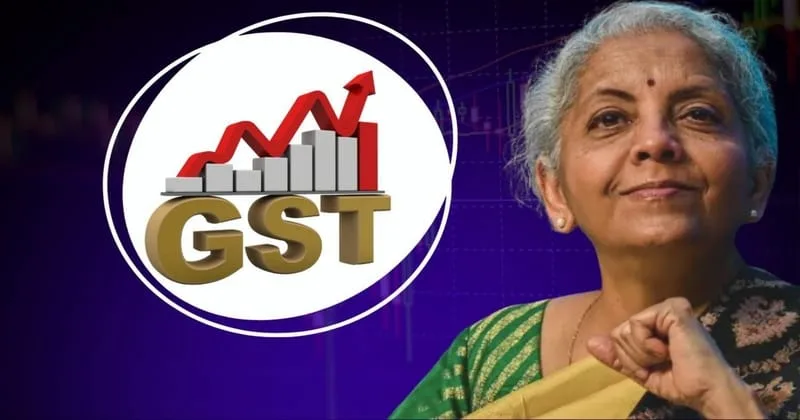
Back home, economic policy developments are also shaping market expectations. Union Finance Minister Nirmala Sitharaman will introduce new tax bills in Parliament today, continuing the government’s GST 2.0 reform process. The new GST structure, approved by the GST Council and implemented on September 22, removed the 12 per cent and 28 per cent tax slabs. This restructuring led to reduced prices for nearly 375 products, ranging from essential consumer goods to electronics and automobiles. Daily-use goods such as food items, medicines, soap, toothpaste and shampoo became cheaper, while the tax on several categories of goods was brought down to 5 per cent. Some products were exempted from GST altogether. The Finance Minister had previously stated that the GST 2.0 reforms would inject nearly Rs 2 lakh crore into the market, stimulating consumption and supporting economic growth.
A special 40 per cent GST slab has also been introduced for luxury goods, sin goods and items whose consumption the government aims to discourage, such as cigarettes. Under GST provisions, a maximum of 40 per cent tax can be levied within this category. However, the Centre currently imposes a compensation cess ranging from 1 per cent to 290 per cent on cigarettes, pan masala and other similar products. This cess is slated to expire in March 2026. If allowed to lapse, the prices of these products are likely to fall sharply, potentially reducing government tax revenue. To prevent this loss and maintain the existing cess structure, the Finance Minister will present a new bill in Parliament today, coinciding with the opening day of the winter session. The compensatory cess, initially introduced to offset states’ revenue losses after GST rollout, formally ended on June 30, 2022, but was extended until March 2026 to help repay loans taken during the Covid-19 crisis.
Commodity markets are also in focus today. Gold and crude oil prices have strengthened, driven by global geopolitical tensions and expectations of a US rate cut. Gold prices rose by $18 per ounce in international markets, reaching $4,238 in morning trade, signalling a likely price increase in India. Crude oil prices climbed after Ukraine destroyed two Russian oil tankers in Turkish waters during ongoing peace discussions, prompting objections from Turkey. The decision by OPEC+ to maintain current production levels also contributed to the price rise. WTI crude climbed 1.38 percent to $59.36 per barrel, while Brent crude rose 1.30 per cent to $63.19.
Other developments gaining attention include the National Company Law Appellate Tribunal’s rejection of a petition seeking insolvency proceedings against Voltas, a Tata Group company. IndiGo announced that it has completed the inspection of all 200 Airbus A320 aircraft in its fleet. Additionally, automobile manufacturers will begin releasing their monthly sales data today, while Oil India has commenced oil exploration activities in Kerala’s Konkan Basin.















Comments