





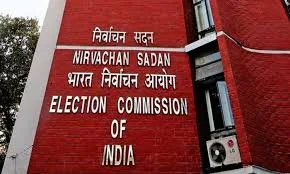
The Election Commission of India (ECI) on Saturday (Nov 29) appointed retired IAS officer Subrata Gupta as the Special Roll Observer for West Bengal’s ongoing Special Summary Revision (SIR), a critical exercise linked to updating and verifying the state’s electoral rolls. The Commission also named 12 serving IAS officers as Electoral Roll Observers to monitor and guide corrective measures during the revision process.
According to officials, these observers will support district election officers (DEOs) and electoral registration officers (EROs) in ensuring the integrity, accuracy and transparency of the rolls. Their responsibilities include monitoring discrepancies, supervising data verification, and helping implement corrective actions as mandated by the Commission.
The announcement comes at a time of intense friction between the ECI and the ruling Trinamool Congress (TMC). The party has alleged that the SIR process has led to unprecedented pressure on Booth Level Officers (BLOs), claiming that several BLOs have died due to what it calls the Commission’s “unplanned and dangerous” methodology.
A 10-member TMC delegation met EC officials in New Delhi earlier this week, where the party accused the Commission of having “blood on their hands” and claimed that the SIR exercise had triggered severe stress among field-level staff. It also raised red flags about alleged large-scale errors in the draft electoral rolls, missing names, and what it described as deliberate attempts to disenfranchise voters.
The TMC leadership further questioned why West Bengal had been subjected to intensified SIR scrutiny when several other border states face similar demographic and administrative challenges. Party leaders argued that the Commission’s “selective vigilance” raises concerns about political motivation and targeted oversight.
Responding sharply, the EC dismissed the allegations as “baseless, unfounded and politically motivated.” It asserted that the SIR was a routine, constitutionally mandated exercise meant purely to ensure a clean, updated, and error-free voter list.
The Commission also issued a stern warning to the TMC over what it described as attempts to intimidate or influence BLOs. It emphasised that the safety and independence of election staff were non-negotiable and urged the state government and political parties to cooperate rather than create unnecessary panic.
According to the Commission, claims of BLO deaths linked to the SIR process are “factually incorrect,” and no official communication from the state administration supports such allegations.
The SIR, usually a relatively technical administrative process, has turned into a full-fledged political flashpoint in West Bengal. The TMC insists that the current revision has produced discrepancies in the voter list, raising fears of large-scale exclusions. The EC, however, maintains that the SIR is essential for eliminating errors, removing duplicate entries, and adding eligible new voters.
With the appointment of Subrata Gupta and 12 IAS observers, the Commission aims to restore confidence in the process through enhanced supervision. Yet, political observers believe that the friction between the EC and TMC is unlikely to ease soon and may influence the larger narrative ahead of the 2026 Assembly elections.












Comments