A series of mass abductions across north-western and central Nigeria has pushed the country’s long-running security crisis back into the international spotlight, as the Nigerian government claims that jihadist organisations, Boko Haram and the Islamic State in West Africa Province (ISWAP), are behind the latest wave of attacks. The government’s statement marks the first time authorities have publicly identified who they believe is responsible for the recent incidents. Kidnap-for-ransom has evolved into a sprawling industry across different regions of Nigeria, carried out by an array of actors including jihadist factions, separatist militants, and loosely organised kidnapping syndicates. Despite widespread allegations, the government continues to insist that it does not pay ransoms.
Three major attacks in two weeks, targeting Christian Church & education centres
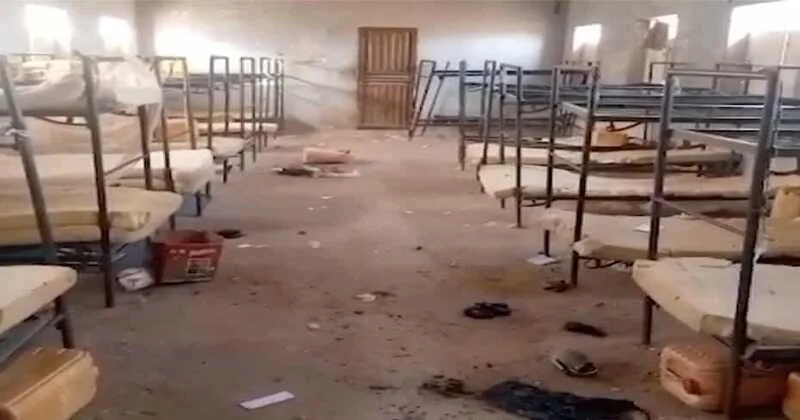
In just a two-week period, three mass kidnappings struck communities in the north-west and the Middle Belt, with Christian schools and a church among the targets: 17 November – Maga, Kebbi State: Gunmen stormed Government Girls Comprehensive Secondary School. Two people were killed, and 25 students and one teacher were abducted. All have since been freed. 18 November – Eruku, Kwara State: Armed assailants attacked the Christ Apostolic Church during a programme, killing two worshippers and kidnapping 38 congregants, who have since been released.
November 21, Papiri, Niger State: St Mary’s Catholic School was attacked in what appears to be the largest of the recent kidnappings, with reports suggesting that more than 250 children and 12 staff members may have been taken. Officials have questioned the exact number, but local accounts point to a large-scale abduction. The attacks have deepened concerns about the vulnerability of Christian schools, churches, and communities in regions where violent militant groups, whether jihadist or bandit, operate with impunity. Although ransom payments have been outlawed in Nigeria, there are growing allegations that the ban has been weakly enforced, and that negotiations involving financial transactions often take place behind the scenes.
Presidential spokesman Sunday Dare said large quantities of security data, both domestic and international, point to ISWAP and the remnants of Boko Haram as being responsible for recent abductions in the north-west and central regions. According to Dare, these jihadist organisations have “spread across multiple regions” and are deeply involved in the kidnap-for-ransom economy. While he refused to confirm whether ransom payments facilitated the release of some abductees, he stated only that a mix of “kinetic and non-kinetic measures, including negotiations” had successfully secured the freedom of those who had returned. ISWAP, an offshoot of Boko Haram, has been fighting an insurgency in north-eastern Nigeria for more than a decade. Their brutal campaign, marked by mass abductions, attacks on churches, and persecution of civilians, has led to thousands of deaths and widespread displacement. The presidency has promised that all remaining abductees will be rescued, but has not provided a timeline.
An independent conflict-monitoring organisation that tracks armed-group activity assessed all three kidnappings and concluded that Fulani Islamic militia networks, commonly referred to as “bandits”, were responsible for each incident. These groups, primarily composed of armed herder militias, have clashed with Christian communities across Nigeria. In many cases, the violence is driven by land disputes, extortion, cattle theft, territorial control, or the lucrative kidnapping economy.
According to the monitoring group: The mass abduction at St Mary’s Catholic School appears to have been partly motivated by political retaliation against the government, with the kidnappers aiming to embarrass the authorities and exert pressure. The assault on the church in Kwara State was linked to expansionist objectives and efforts to forcibly displace local residents to enable illegal mining operations. Such mining-related displacement has become common in parts of Zamfara and Kaduna States. Shortly after the three major incidents, 13 teenage girls were abducted in Borno State, Boko Haram’s long-established stronghold.
Analysts agree this particular kidnapping likely involved a jihadist faction, noting that Boko Haram and ISWAP continue to execute abductions in the north-east as part of their extremist campaign.The renewed spotlight on Nigeria’s security crisis intensified recently after US President Donald Trump threatened to send troops if the government fails to halt the “killing of Christians”. Nigerian officials and many analysts maintain that people of all faiths, Christians, Muslims, and others, are victims of the violence. However, the repeated targeting of Christian schools and churches in the recent attacks has heightened fears that extremist and criminal groups alike increasingly view Christian communities as vulnerable, high-value targets in a spiralling kidnapping economy.