





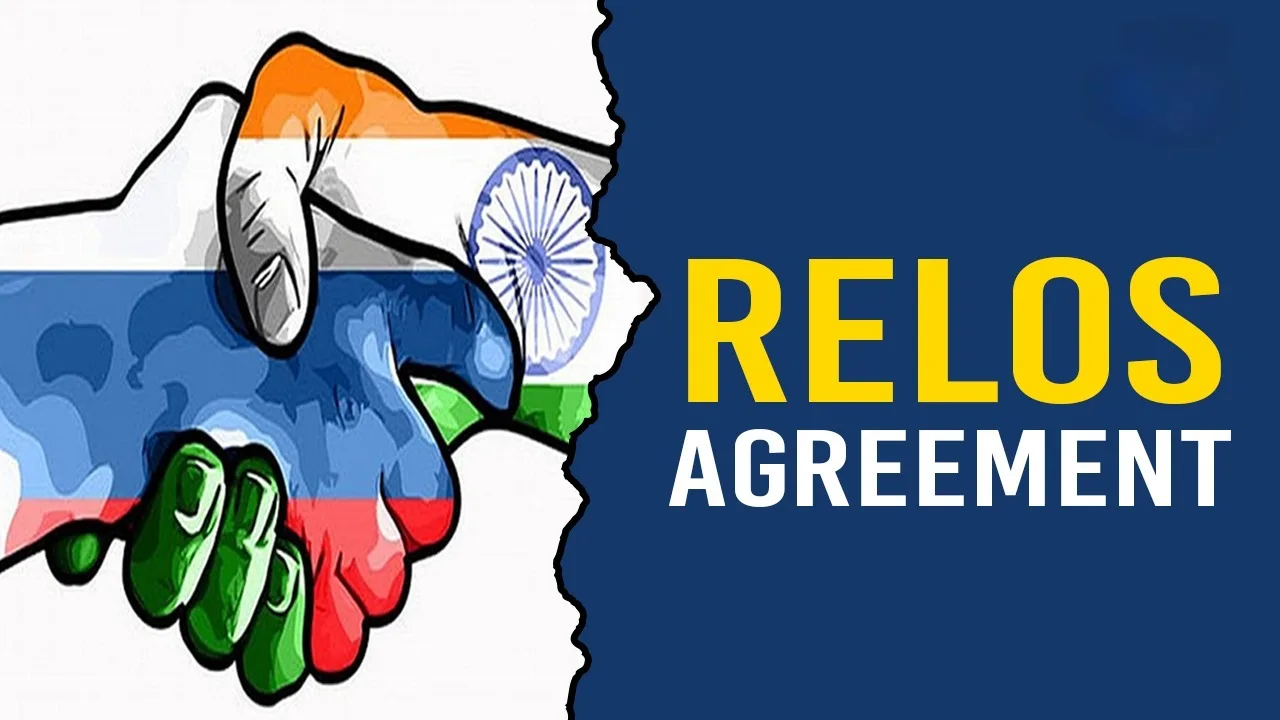
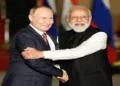
The time-tested strategic partnership between India and Russia is set to hit another benchmark as the lower house of the Russian Parliament, Duma, is set to ratify a key military pact inked with India earlier this year. The ratification in the Russian Parliament comes at an important timeline when the Russian President Vladimir Putin is set to make a historic visit to India on December 4 and 5 for the 23rd India-Russia Annual Summit.
The latest military pact between India and Russia is known as Reciprocal Exchange of Logistics Agreement(RELOS). It was signed on February 18, 2025 by the Indian Ambassador to Russia Vinay Kumar and then Deputy Defence Minister of Russia Alexander Fomin. The agreement aims to bolster defence and strategic partnership between New Delhi and Moscow, especially in the domain of rendering defence and logistics support.
“The Russian government believes that the ratification of the document will strengthen cooperation between Russia and India in the military sphere”, a statement from Duma, lower house of the Russian Parliament reiterated. The larger vision of the RELOS agreement is to foster defence partnership between India and Russia, in the domain of joint military exercises, disaster relief, response and coordinated actions etc. The agreement helps to consolidate more joint military activities and peace time cooperation between both the countries by simplifying the regulatory mechanisms and procedures.
The most starking highlight of this defence pact is that it gives India an enhanced, swift and easier access to the strategic Arctic region. The agreement aims to converge a joint military exercise in the Arctic landscape. India also ships the Liquified Natural Gas(LNG) from the Yamal Peninsula in the northwest of Siberia, Russia. The latest military agreement gives India better access to these regions with critical logistical support.
Meanwhile, the Talwar class frigates of the Indian Navy and naval vessels such as INS Vikramaditya have the potential to sail in the harsh and freezing zones of the Arctic region. In this direction, the latest agreement helps India to use the Russian naval bases and gain logistical support, thus have a credible and fair footprint in the Arctic domain which is emerging as an epicentre of geopolitical contestation among the hegemonic powers.
The RELOS military pact thus not just aids to further strengthen the India-Russia defence and strategic partnership, but also aims to restore balance of power in the critical Arctic region and beyond, which is seen as a potential zone by the superpowers to fulfill their respective hegemonic ambitions. For example, US President Donald Trump has repeatedly targeted the Arctic region and has claimed to annex it and imprint the American authority, as it is resource rich in terms of critical minerals and other strategic resources that Trump is fond of! Donald Trump has also exclaimed about purchasing Greenland.
China too has equal interests in the Arctic with the vision of carving “Polar Silk Road”. It aims to build research stations, build icebreakers, increase connectivity and carve new shipping routes to dig the critical resources. With the Arctic icecaps depleting at an extremely faster pace than anticipated as an impact of climate change, the Arctic region is evolving as an aspirational and contentious zone for the world nations. In this backdrop, India-Russia military pact helps both nations to maintain balance of power, thwart hegemonic ambitions and have a solid footprint in the emerging zone of geopolitical friction, which is of utmost strategic importance to seek national and economic security.










Comments