





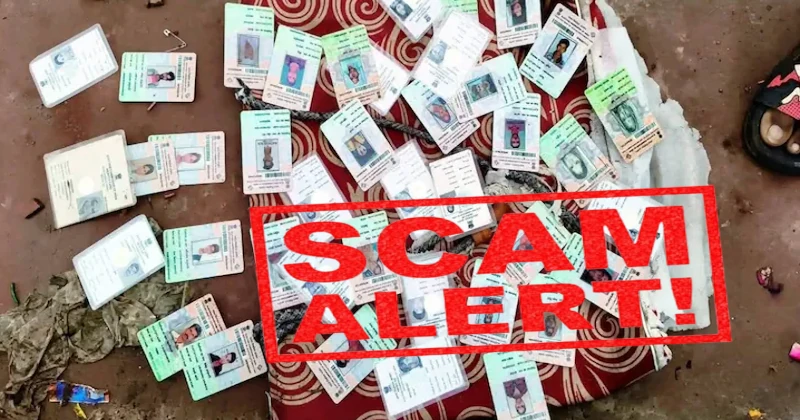
The Special Intensive Revision (SIR) of the electoral roll has intensified long-standing allegations that West Bengal’s voter-list machinery has been compromised for years under the Trinamool Congress (TMC) government.
In a statement that has sent shockwaves across administrative circles, Basirhat resident Ziad Ali Dafadar accused a Bangladeshi national of posing as his son to obtain an Indian voter ID a development critics say exposes a systemic pattern the TMC regime has allegedly ignored, enabled, or politically benefitted from.
According to Ziad Ali Dafadar, a young Bangladeshi man named Mahabur Dafadar entered India illegally, befriended his family, and then allegedly misused Ziad’s Aadhaar card and voter ID to falsely claim him as a parent, leveraging the documents to create a voter identity for himself.
“Mahabur is not my son. He is a Bangladeshi… He used my Aadhaar and voter card to show me as his father. I have complained to the administration before the SIR is completed,” Ziad said. Officials conducting SIR verification confirmed that such instances, though quietly known for years, are surfacing repeatedly in the border districts particularly in Basirhat, Bongaon, Deganga, Sandeshkhali, and Canning.
Basirhat North 24, West Bengal: During the SIR verification process, Landlord Ziad Ali Dafadar says, "Mahabur Dafadar is not my son, he is a Bangladeshi. After coming here and meeting my wife, he used my voter card and Aadhaar card to falsely show me as his father and make a… pic.twitter.com/ihyq8d6pmp
— IANS (@ians_india) November 28, 2025
The BJP, slammed the ruling TMC of enabling a “vote-bank pipeline” of illegal entrants from Bangladesh, who allegedly gain access to voter cards through forged parental linkages and politically protected local networks.
The Basirhat testimony has now been seized upon as the “smoking gun”. BJP IT Cell head Amit Malviya claimed the testimony reveals a methodical, politically curated operation involving:
- Fake parental declarations
- Use of forged or borrowed Aadhaar documents
- Collusion of local clerks and political intermediaries
- Systemic pressure on officials to “look away”
- Silent political encouragement from the TMC leadership
Explosive testimony from Basirhat exposes how West Bengal’s voter roll is being compromised through fake family linkages.
This single testimony lays bare a systemic modus operandi long suspected across several border districts:
✔️ Fake parental linkages
✔️ Fraudulent Aadhaar and… https://t.co/rPscwR54jF— Amit Malviya (@amitmalviya) November 28, 2025
Opposition leaders say these manufactured voters were deployed systematically in sensitive districts to tilt electoral outcomes forming what they describe as “cross-border voter factories”.
Why the allegations point toward the TMC administration
1. Administrative Apathy Despite Repeated Warning Signals: For years, border-district intelligence reports flagged suspicious spikes in voter numbers far higher than population growth trends. Yet, no state-led cleanup or enforcement followed.
2. Local-level party functionaries and brokers allegedly shielded
Multiple whistleblowers have accused local TMC workers of controlling:
- Panchayat certificates
- Residence proofs
- Ward-level verification processes
- Political pressure on police and BDOs
Whistleblower accounts claim these intermediaries acted as gatekeepers for illegal migrants seeking voter enrolment — as long as their political loyalties were “secured”.
3. Resistance to SIR
The moment the Election Commission launched the statewide SIR to clean up the voter lists, top TMC leaders labeled it:
- “Targeted harassment”
- “Political conspiracy”
- “Silent rigging by the Centre”
The SIR, a rare full-scale audit undertaken after nearly two decades, has already marked lakhs of entries as unverified, duplicate or untraceable. In North 24 Parganas ground zero for past allegations officials privately admit the test is “exposing patterns beyond random error.” Several enumerators reportedly encountered:
- Entire blocks of voters with identical parental names
- Migrants possessing freshly issued Aadhaar cards generated from local introducers
- Multiple “sons” and “daughters” linked to elderly individuals with no biological connection
- Households with 12–20 “residents”, many of whom do not live there
The Basirhat case has become the face of these revelations.







Comments