SIR drive in West Bengal turns into war of narratives
December 5, 2025
  • Read Ecopy
  • Circulation
  • Advertise
  • Careers
  • About Us
  • Contact Us
Android AppiPhone AppArattai
Organiser
  • ‌
  • Bharat
    • Assam
    • Bihar
    • Chhattisgarh
    • Jharkhand
    • Maharashtra
    • View All States
  • World
    • Asia
    • Europe
    • North America
    • South America
    • Africa
    • Australia
  • Editorial
  • International
  • Opinion
  • RSS @ 100
  • More
    • Op Sindoor
    • Analysis
    • Sports
    • Defence
    • Politics
    • Business
    • Economy
    • Culture
    • Special Report
    • Sci & Tech
    • Entertainment
    • G20
    • Azadi Ka Amrit Mahotsav
    • Vocal4Local
    • Web Stories
    • Education
    • Employment
    • Books
    • Interviews
    • Travel
    • Law
    • Health
    • Obituary
  • Subscribe
    • Subscribe Print Edition
    • Subscribe Ecopy
    • Read Ecopy
  • ‌
  • Bharat
    • Assam
    • Bihar
    • Chhattisgarh
    • Jharkhand
    • Maharashtra
    • View All States
  • World
    • Asia
    • Europe
    • North America
    • South America
    • Africa
    • Australia
  • Editorial
  • International
  • Opinion
  • RSS @ 100
  • More
    • Op Sindoor
    • Analysis
    • Sports
    • Defence
    • Politics
    • Business
    • Economy
    • Culture
    • Special Report
    • Sci & Tech
    • Entertainment
    • G20
    • Azadi Ka Amrit Mahotsav
    • Vocal4Local
    • Web Stories
    • Education
    • Employment
    • Books
    • Interviews
    • Travel
    • Law
    • Health
    • Obituary
  • Subscribe
    • Subscribe Print Edition
    • Subscribe Ecopy
    • Read Ecopy
Organiser
  • Home
  • Bharat
  • World
  • Operation Sindoor
  • Editorial
  • Analysis
  • Opinion
  • Culture
  • Defence
  • International Edition
  • RSS @ 100
  • Magazine
  • Read Ecopy
Home Bharat

SIR Under Attack in West Bengal: How political narratives turn routine voter list revision into a contentious battle

The Special Intensive Revision (SIR) of voter rolls, intended to update and verify electoral lists, has sparked intense political controversy in West Bengal. Mamata Banerjee’s strong opposition to SIR frames it as a tactic of voter suppression, highlighting a clash between democratic process and political narrative

Debika DuttaDebika Dutta
Nov 29, 2025, 05:00 pm IST
in Bharat, Opinion, West Bengal
Follow on Google News
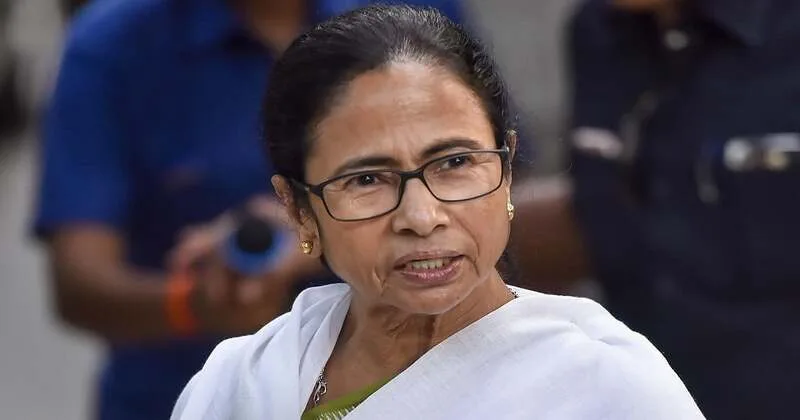
West Bengal Chief Minister Mamata Banerjee

West Bengal Chief Minister Mamata Banerjee

FacebookTwitterWhatsAppTelegramEmail

Mamata Banerjee’s vehement condemnation of the Election Commission’s Special Intensive Revision (SIR) as “votebandi” reframes a routine electoral exercise into a drama of disenfranchisement. By drawing a parallel with “notebandi,” she transforms what is fundamentally a technical process into a political battleground. Her narrative, though emotionally charged, risks undermining not just the integrity of voter rolls, but the very institutions that uphold democratic legitimacy.

SIR is not a novel invention; rather, it is a constitutionally sanctioned mechanism under the Registration of Electors Rules, 1960, designed to update voter lists, correct erroneous entries, remove duplicates, and incorporate eligible new voters. In a country as vast and mobile as India, periodic verification of electoral rolls is indispensable. Far from being an extraordinary fiat, SIR simply seeks to align the voter list with ground realities.

Yet, opposing voices in West Bengal have chosen to portray it otherwise. Banerjee’s depiction suggests a sweeping conspiracy to strip citizens of their voting rights. This framing, powerful as it may be, departs significantly from the procedural safeguards that the Election Commission has put in place. Notices are mandatory before removal, objections may be filed, and appeals are available. Bloated rolls are not discarded arbitrarily; BLOs are trained to verify documents with flexibility, even accepting varied proofs for vulnerable populations.

Also Read: Ancient bamboo discovery dating back 37,000 years in Manipur reveals a hidden chapter of Ice Age ecology in Asia

The political subtext cannot be ignored. West Bengal’s electoral history is marked by sensitive demographics, migration, border disputes, and older registration systems. A meticulous revision threatens inaccuracies, inflated lists, and missing entries that benefit entrenched interests. By framing SIR as “votebandi,” Banerjee deflects attention from these distortions, while projecting herself as a guardian of excluded voices.

It is one thing to demand fairness, and quite another to evoke fear. The issue is not paper or forms; it is trust. When political rhetoric turns a precision exercise into a spectacle, voters begin to believe in exclusion even when safeguards exist. The risk is real: a process that should strengthen democracy ends up eroding faith in institutions.

However, concern is not misplaced. Given the complexity of migration, lack of standardised documentation, and historical gaps in registration, many citizens genuinely struggle with verification. But SIR does not block them; it encourages their inclusion. The system allows for alternate proofs, repeated visits, and transparency in dealing with objections. The Commission has repeatedly emphasised that SIR is about inclusion—not elimination.

The danger is that political theatre now fuels administrative anxiety. Instead of reassuring the public, Banerjee’s narrative escalates it, and for a purpose. As electoral competition intensifies with the 2025 cycle looming, her strategy mobilises fear among constituencies that feel vulnerable. In doing so, she trades off civic confidence for political gain.

The heart of the matter, however, is not the reform itself; it is the distrust that political narratives foster. By insisting that the blood of eligible voters runs through “votebandi,” Banerjee makes reassurance more difficult. Rather than calming nerves, she magnifies them, contributing to a culture in which verification becomes suspicion.

A democratic polity must ground itself in trust, not tremors. Even the best processes falter when trust is lacking. If SIR is to succeed, it must not just be implemented properly; it must be communicated with humility and clarity. Publication of deletion lists, clear appeal mechanisms, and citizen-friendly outreach are not optional extras; they are essential to the legitimacy of the exercise.

At its core, SIR is not an administrative act; it is a renewal of the social contract between citizen and state. A clean voter list affirms the principle that every vote matters and that every voter deserves recognition. The political noise around SIR should not obscure this conviction. The integrity of elections demands more than a war of words: it needs steadfast processes, respectful engagement, and transparent institutions.

Mamata Banerjee’s sharp critique may dominate headlines, but history will not remember the slogans. It will remember whether SIR strengthened citizenship or deepened distrust. And in that reckoning, what matters is not just who wins the argument, but who reaffirms the dignity of every voter.
 

Topics: SIRvoter rightsvoter listElectoral IntegrityElection CommissionCM Mamata BanerjeeWest Bengal politics
ShareTweetSendShareSend
✮ Subscribe Organiser YouTube Channel. ✮
✮ Join Organiser's WhatsApp channel for Nationalist views beyond the news. ✮
Previous News

The relevance of the personality and deeds of Bhagwan Birsa Munda in contemporary student life and nation-building

Next News

Revolutionary Indian AI system OncoMark redefines cancer understanding through molecular hallmark mapping

Related News

West Bengal Chief Minister Mamata Banerjee

West Bengal: NCBC delists 35 Muslim castes wrongly included in OBC category; Mamata govt’s appeasement politics exposed

Lakshadweep becomes first UT to complete 100 per cent SIR, sets new national standard in electoral preparedness

The election commission of India

EC appoints retired IAS officer Subrata Gupta as special observer for SIR in West Bengal amid escalating TMC-EC clash

ECI exposes false narrative of TMC; Issues point-by-point takedown, flags intimidation of BLOs & state govt failures

SIR in WB: Basirhat testimony lays bare voter-roll scam with fake linkages & illegal Bangladeshis holding voter IDs

SIR in West Bengal: Electoral manipulation of TMC govt exposed; Arambagh BDO office a hub of illegal data entry

Load More

Comments

The comments posted here/below/in the given space are not on behalf of Organiser. The person posting the comment will be in sole ownership of its responsibility. According to the central government's IT rules, obscene or offensive statement made against a person, religion, community or nation is a punishable offense, and legal action would be taken against people who indulge in such activities.

Latest News

Chhattisgarh CM Vishnu Deo Sai at Panchjanya Conclave, Nava Raipur, Image Courtesy - Chhattisgarh govt

Panchjanya Conclave: Chhattisgarh CM Sai shares views on development projects in Maoist hotbed, women empowerment

Union Finance Minister Nirmala Sitharaman

‘TMC is holding Bengal back’: Sitharaman slams Mamata govt over industrial & healthcare setbacks

Karnataka: Muslim youth Mohammed Usman accused of sexual assault, blackmail & forced conversion in Bengaluru

Social Justice Is a cover; Anti-Sanatana dharma is the DMK’s real face at Thirupparankundram

Karnataka: Hindus demand reclaiming of Anjaneya Mandir at the site of Jamia Masjid; Setting wrongs of Tipu Sultan right

Assam govt proscribes all forms of Jihadi literatures in state; Islamic terror groups trying to recruit Muslim youth

Retired Subedar held for leaking Army details to Pak handlers posing as Indians

Gujarat ATS dismantles spy network involving Ex-Army personnel and woman for sharing information with Pakistan

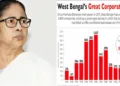
Economic freefall of West Bengal: Mamata’s “Paribartan” turns to crisis; 207 Companies gone in six months

Prime Minister Narendra Modi and Russian President Vladimir Putin

India on the side of “peace” in Russia-Ukraine conflict, PM Modi asserts for swift peaceful solution

Russian Economic Development Minister Maxim Reshetnikov and Commerce and Industry Minister Piyush Goyal

Piyush Goyal holds talks with Russian counterpart, discusses cooperation in textiles, automobiles and agriculture

Load More
  • Privacy
  • Terms
  • Cookie Policy
  • Refund and Cancellation
  • Delivery and Shipping

© Bharat Prakashan (Delhi) Limited.
Tech-enabled by Ananthapuri Technologies

  • Home
  • Search Organiser
  • Bharat
    • Assam
    • Bihar
    • Chhattisgarh
    • Jharkhand
    • Maharashtra
    • View All States
  • World
    • Asia
    • Africa
    • North America
    • South America
    • Europe
    • Australia
  • Editorial
  • Operation Sindoor
  • Opinion
  • Analysis
  • Defence
  • Culture
  • Sports
  • Business
  • RSS @ 100
  • Entertainment
  • More ..
    • Sci & Tech
    • Vocal4Local
    • Special Report
    • Education
    • Employment
    • Books
    • Interviews
    • Travel
    • Health
    • Politics
    • Law
    • Economy
    • Obituary
  • Subscribe Magazine
  • Read Ecopy
  • Advertise
  • Circulation
  • Careers
  • About Us
  • Contact Us
  • Policies & Terms
    • Privacy Policy
    • Cookie Policy
    • Refund and Cancellation
    • Terms of Use

© Bharat Prakashan (Delhi) Limited.
Tech-enabled by Ananthapuri Technologies