





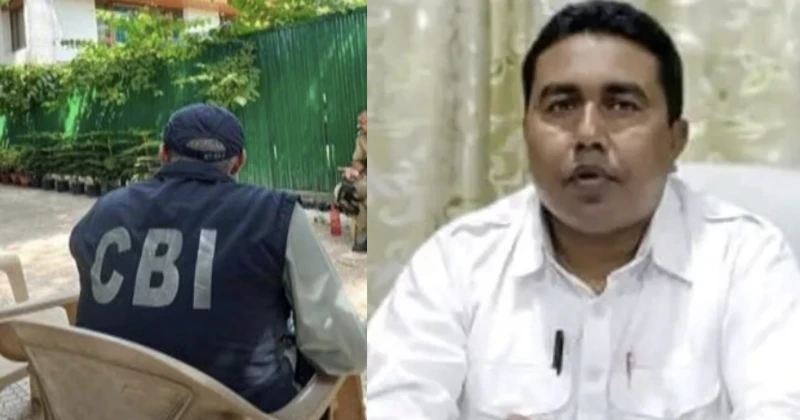
Sandeshkhali a region long scarred by accusations of land-grabbing, extortion, and politically backed intimidation has once again exploded into national focus. This time, the flashpoint is a powerful combination of a crucial CBI breakthrough and villagers’ explosive claims of large-scale infiltration by illegal Bangladeshi nationals allegedly settled under Trinamool Congress protection.
On November 25, the Central Bureau of Investigation arrested Abul Hossen Molla, popularly known as “Duronto,” from his ancestral home in Sarberia, Sandeshkhali. Duronto, described by multiple agencies as a long-time and highly trusted associate of suspended TMC leader Sheikh Shahjahan, had allegedly been evading summons for months, even ignoring a non-bailable warrant.
Investigators believe he holds critical knowledge of who mobilised the violent mob that attacked Enforcement Directorate officials on January 5, 2024, during their raid in the ration distribution scam probe.
Duronto’s arrest comes after the CBI had earlier taken into custody three of Shahjahan’s close associates Jiauddin Mollah, Didarbaksh Mollah, and Faruque Akunji but officials privately describe Duronto as the “missing link” in reconstructing the events leading up to the mob attack.
While the CBI probe was intensifying, an entirely different storm was building in the villages under Sandeshkhali Block II, especially during the ongoing Special Intensive Revision (SIR) of electoral rolls.
For the first time, locals began openly telling media crews and election officials that their neighbourhoods had been flooded for years with illegal Bangladeshi entrants, allegedly allowed to settle and integrate fully into the Indian welfare system.
Many residents described what they claim is a well-oiled network:
- Individuals from Bangladesh were allegedly brought into Sandeshkhali through riverine routes.
- Local political operatives would then “place” them in villages under assumed identities.
- Fake parentage documents were allegedly arranged using friendly panchayat members or local strongmen.
- Aadhaar, ration cards, voter IDs, and welfare scheme enrolments followed swiftly.
A villager told a journalist on camera, “These people are not from here. They came from Bangladesh, everyone knows it. But they have ration cards, Aadhaar, voter ID — things we struggled years to get. They were protected.”
Another added, “We indigenous Muslims of Sandeshkhali feel betrayed. Outsiders became voters while our own youths have to fight for basic documents.” During the voter-list verification, villagers pointed out multiple individuals they insist are Bangladeshi nationals living under fake identities:
Shahin Gazi, allegedly claimed to be the son of a local resident despite villagers insisting he was “not born here.”
Gafur Molla, recorded on video saying he crossed into India illegally and yet receives food-security rations.
Marjina Bibi, Anjura Sheikh, and Habibul Sheikh, accused of obtaining Aadhaar and ration cards by posing as relatives of local families.
Reporters captured several admitting Bangladeshi origins despite holding Indian papers, a revelation that has sent shockwaves across the district. Villagers claim some of these entrants are beneficiaries of Lakshmir Bhandar, a flagship TMC scheme, fuelling allegations of vote-bank engineering.
BJP IT Cell head Amit Malviya released statements and video testimonies from locals, particularly from Booth No. 235 in Korakati Gram Panchayat, asserting that illegal Bangladeshi entrants were systematically settled and provided official documents.
Locals in Sandeshkhali claims that several Bangladeshi nationals have been living illegally in Booth No. 235 under Korakati Gram Panchayat after entering the area years ago with the support of local leaders and securing Indian documents. Their presence reportedly came to light… pic.twitter.com/irG2I2lMYP
— Amit Malviya (@amitmalviya) November 26, 2025
According to Malviya, residents identified “multiple illegal infiltrators who have lived here for years but are not Indians.” He alleged that these individuals were shielded to strengthen TMC’s electoral base a charge the ruling party has repeatedly denied.
Sandeshkhali has long been identified as a zone where:
- TMC-linked strongmen allegedly controlled access to land, often grabbing it from local farmers.
- Extortion networks flourished, with villagers accused of being forced to pay “cuts” to operate boats, sell produce, or run small businesses.
- The area remained difficult for outsiders, media, and even law-enforcement to enter without political clearance.
Locals say the influx of alleged illegal Bangladeshi settlers fitted into this model. “They brought in people who would be loyal. They gave them land, houses, ration cards, everything. They created a private army.” The January 5 ED attack, they argue, reflected exactly this network a coordinated show of strength.
According to CBI officials familiar with the investigation, Duronto is suspected of:
- Knowing who called the crowd that blocked the ED team
- Acting as a conduit between Shahjahan and local enforcers
- Being aware of settlement patterns of Bangladeshi nationals in the region
- Controlling ration-related networks that are now under scrutiny
Interrogators believe Duronto may be able to connect the dots between political protection, economic networks, and illegal settlement patterns.














Comments