





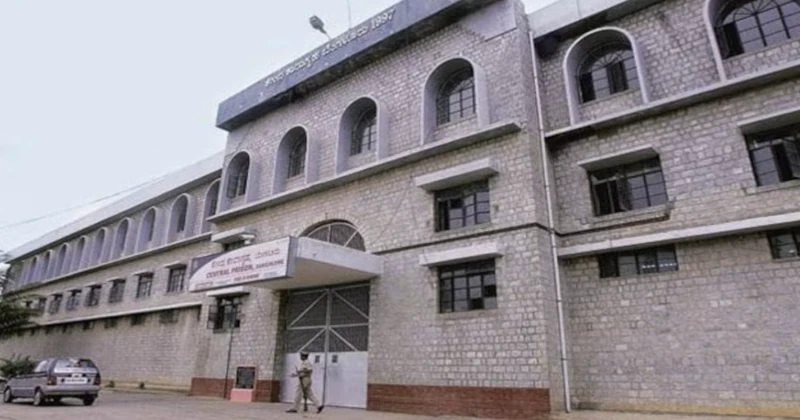
The Parappana Agrahara Central Prison, meant to be a correctional institution, has now become a glaring symbol of the Karnataka government’s administrative failure. Instead of functioning as a place of reform or punishment, the prison has turned into a playground for criminals, a hub of illegal activities, and, shockingly, a fully functional liquor factory operating under the nose of the state authorities. This is not an isolated incident but yet another addition to a long list of scandals that have emerged from the state’s most prominent jail.
For months, videos showing prisoners celebrating birthdays, organising parties with bullets, enjoying feasts and freely using mobile phones have gone viral, raising serious questions about the lack of discipline inside the prison. Rather than taking swift action, the government and the prison department have been reacting with routine statements and weak assurances, revealing an alarming collapse in oversight and accountability. Now, the most explosive revelation has emerged: prisoners have been manufacturing liquor inside the jail using resources available within the barracks, transforming Parappana Agrahara into something that resembles a liquor factory more than a high-security prison.
The investigation into the viral “oil party” video, reportedly recorded in the 7th barracks, brought to light the disturbing method through which liquor was being produced. Contrary to initial suspicions, no liquor was smuggled from outside the prison. Instead, two organised groups of inmates were operating a sophisticated liquor-making setup that had gone unnoticed by authorities for months. One group collected rotten apples, grapes, leftover fruit piles, wheat, sugar, nuts and other fermentable items easily found inside the prison. Another group sourced yeast directly from the prison bakery, which itself is supposed to be closely monitored. These materials were mixed and stored in containers hidden in the corners of the barracks, left to ferment for months until they transformed into an alcoholic substance known as “oil.” When parties or celebrations were held, this mixture was filtered, squeezed and filled into water bottles for consumption.
What is even more frightening is that investigators suspect some prison staff were well aware of the operation and possibly accepted bribes to ignore it. This raises a far deeper question, whether the government has any real control over the prison machinery or has surrendered the system to internal corruption.
The investigation also revealed why the prisoners boldly recorded these illegal activities. Many inmates made videos to send home and assure their families that they were enjoying a comfortable life in jail. Others circulated the videos outside to build their criminal reputation and maintain influence over their gangs, collecting weekly “hafta” from associates. A third group used the videos as tools of blackmail, threatening to expose the officers who were complicit or negligent, creating a toxic ecosystem within the prison.
All of this has occurred despite the presence of a reputed officer like ADGP Dayanand at the helm of the Prisons and Corrections Department and despite the Supreme Court’s previous warnings against VIP treatment and illegal activities inside prisons. The fact that such a large-scale illegal industry could flourish inside a central prison reflects a shocking administrative breakdown that cannot be attributed to mere negligence it points to systemic collapse.
The Karnataka government has continued to respond with silence, delays and half-hearted measures. Previous scandals involving VIP privileges, illegal phone networks, drug circulation, and extortion rackets have resulted in minor suspensions or temporary crackdowns but no structural reform.
















Comments