





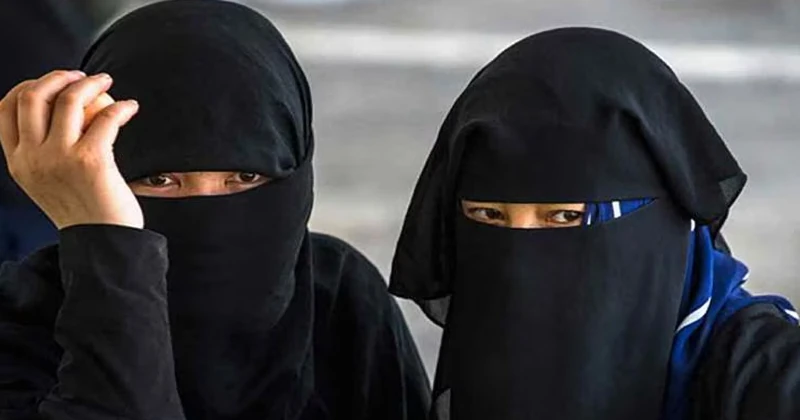
A sweeping new survey by the Bharatiya Muslim Mahila Andolan (BMMA) has exposed a grim and largely invisible humanitarian crisis unfolding within India’s Muslim community one that mainstream civil society, political parties, and self-appointed “secular feminists” have preferred to stay silent about.
The survey, based on detailed interviews with 2,500 low-income Muslim women across multiple cities, reveals the widespread misuse of religion to justify polygamy, marital abandonment, child marriage, and economic exploitation. These findings paint a reality far harsher than previously acknowledged and show that women are demanding urgent, uniform legal protection.
93% of Muslim women want a legal ban on child marriage. 85% want polygamy abolished.
A survey of 2,500 low-income Muslim women by BMMA reveals staggering realities encountered by women in Islam.
-59% had education at or below secondary level
-20% were married before 18
-79% had… pic.twitter.com/A8DKChbTPy— Prasanna Viswanathan (@prasannavishy) November 26, 2025
The data speaks with a clarity impossible to ignore:
- 93 per cent want a legal ban on child marriage
- 87 per cent want polygamy criminalised under Section 82 of the Bharatiya Nyay Samhita
- 85 per cent of Muslim women currently in polygamous marriages want the system abolished
These are not elite voices or academic samples they are women living in cramped bastis, working as domestic help, tailors, Aanganwadi workers, and daily-wage earners. Their lived experience has become the basis of their resistance.
BMMA co-founders Zakia Soman and Noorjehan Safia Naaz emphasise that while the respondents were mostly poor and undereducated, similar stories routinely emerge from women in middle-income and affluent families too only silenced under “family honour,” community pressure, and social stigma.
One of the most alarming revelations is how men weaponise the phrase “Islam allows four marriages” to normalise what is essentially abandonment and deception.
Shocking statistics reveal:
- 79 per cent of first wives were never informed about the second marriage
- 88 per cent of husbands did not seek their permission
- 54 per cent stopped living with their first wife entirely after remarrying
- 47 per cent of first wives were forced to move back with their parents
- 36 per cent received no financial support after the husband took a second wife
This pattern does not depict a religiously sanctioned practice it exposes a system of coercion and exploitation.
Many men surveyed had meagre incomes, some earning as low as Rs 10,000 per month, yet sustaining two families pushing both wives and children into deeper poverty. The study documents widespread mental health trauma:
- 36 per cent of first wives report stress, anxiety, panic symptoms
- 22 per cent of second wives report similar distress
- Frequent symptoms include irregular menstruation, thyroid disorders, weight fluctuations, and chronic fatigue
- Medical help remains inaccessible for most due to lack of money, mobility, and family support.
One first wife from Mumbai said, “After his second marriage, I was so anxious I could not sleep for months. My hair began falling out in chunks. When I told him, he mocked me.” Another said she had attempted suicide after discovering her husband’s hidden marriage.
The study finds a disturbing link between polygamy and child marriage:
- 20 per cent of women in polygamous households were married before 18
- Early marriage was more common among women with no formal education
- Poverty, patriarchal control, and lack of legal enforcement compound the problem
BMMA notes that child marriage is often disguised as a “family decision” or “community norm,” but in reality, it traps girls early into cycles of dependency and vulnerability. The nikahnama, meant to protect women, becomes a tool of silencing.
- 94 per cent signed the document
- 83 per cent never read it
- 38 per cent have no idea where the papers are
- Worse, 61 per cent of first wives never received mehr (the mandatory Islamic marital gift), while 32 per cent paid dowry an un-Islamic, illegal practice.
This shows how the rights granted to Muslim women by Islamic law itself are routinely violated.
The most haunting parts of the study emerge in the voices of women who spoke publicly at the BMMA briefing. Tasneem was pregnant with her third child when her husband abandoned her after giving triple talaq still illegal. When he called her back later, she returned hoping for stability. Instead, she was beaten and verbally abused.
Breaking down on stage, she said, “He told me I was mad. He hit me when I questioned his second marriage. My children begged him to stop.” Husna’s husband forged a divorce document to force her and her children out so he could marry again.
“I had nowhere to go. I want a law that stops men from ruining two women’s lives. Why does no one talk about our pain?” Her words reflect a widespread sentiment women have no institutional support and face community backlash if they complain.
Despite the magnitude of the crisis, activists who are usually vocal on gender issues remain largely muted. The absence of solidarity particularly from outsiders who claim to speak for marginalised women stands out sharply.
- Why does this silence exist?
- Fear of “communal optics”
- Self-censorship in the name of secularism
- Avoidance of internal community issues
- Politicisation of Muslim women’s suffering
BMMA criticised this selective outrage, noting that real empowerment cannot happen if society refuses to confront uncomfortable truths. The women surveyed are not asking for special treatment. They want:
- the same legal protection all Indian women are entitled to
- a ban on polygamy
- strict enforcement against child marriages
- mandatory, informed nikahnama signing
- economic support for abandoned wives
- criminal action against husbands who deceive or abuse
They want dignity nothing more, nothing less.













Comments