





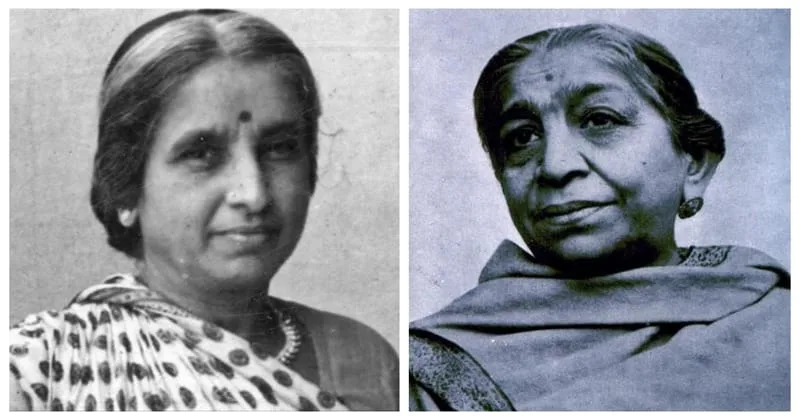
The formation of the Bhartiya Constitution, a pivotal moment in the nation’s history, was fundamentally shaped by the inclusion of fifteen extraordinary women in the Constituent Assembly between 1946 and 1949. Far from being token figures, these women were formidable political veterans and social reformers who ensured the foundational values of the new Republic were intrinsically Bhartiya and unequivocally modern. Their participation was instrumental in guaranteeing that the Constitution enshrined equal rights for women, secured their property and political participation, and successfully resisted attempts to reintroduce discriminatory, communal, or orthodox legal frameworks. These pioneers – who included freedom fighters and advocates for integral humanism – ensured that the spirit of Bharat’s ancient wisdom and the ethos of national unity, cultivated during the freedom struggle, were seamlessly woven into the secular and democratic fabric of the Constitution, making it a truly inclusive document rooted in native strength.
The formation of Bharat’s Constitution, a monumental effort that spanned from December 1946 to November 1949 (a total duration of 2 years, 11 months, and 18 days), saw the significant involvement of 15 prominent women.
This report focuses on the crucial roles played by these fifteen women during the Constitution-making process. The nation will observe the 76th Constitution Day (Samvidhan Diwas) this year on November 26, 2025, commemorating the day the Constitution was adopted. The process officially began with the first sitting of the Constituent Assembly on December 9, 1946, and concluded with the adoption of the Constitution on November 26, 1949.
Ammu Swaminathan: Securing women’s rights in the Constitution
Ammu Swaminathan (Ammu Kutti Swaminathan, born April 22, 1894, in Palghat, Kerala; died July 4, 1978) was a crucial voice for social reform and women’s rights within the Constituent Assembly. In 1917, she co-founded the Women’s Indian Association (WIA) in Adyar, Madras, alongside pioneers like Annie Besant and Muthulakshmi Reddy. The WIA grew into one of India’s foremost women’s rights organisations, aggressively tackling grave social issues such as child marriage and the Devadasi system, thereby initiating a national awakening on gender dignity. Swaminathan joined the Indian National Congress in 1934 and actively participated in the 1942 Quit India Movement, which led to her imprisonment a year later. She was elected to the Constituent Assembly from the Madras constituency in 1946. Inside the Assembly, she was instrumental in shaping the debate around Fundamental Rights and the Directive Principles of State Policy, ensuring these principles reflected true equality for women. Following the adoption of the Constitution, Swaminathan was elected as a Member of Parliament for the Dindigul constituency in Madras (Tamil Nadu) in India’s first parliamentary elections in 1952. Her lifelong commitment to national values and women’s empowerment earned her the distinction of ‘Mother of the Year’ at the inauguration of the International Women’s Year in 1975.
Durgabai Deshmukh: Laying the foundation for women’s rights and judicial independence
Durgabai Deshmukh (born July 15, 1909, in Rajahmundry, Andhra Pradesh; died May 9, 1981) was a stalwart of the freedom movement whose tireless work defined the push for social justice in independent India. Inspired by Mahatma Gandhi’s Non-Cooperation Movement, she joined the freedom struggle at the tender age of 12. Her dedication was sealed when she participated in the Salt Satyagraha, leading to her imprisonment for three years between 1930 and 1933. In 1946, she became a dedicated member of the Constituent Assembly and served on its crucial Steering Committee. Here, her most significant contribution was her forceful advocacy for the Hindu Code Bill, specifically ensuring that Hindu women secured equal rights to property, a key step towards dismantling patriarchal legal structures. Deshmukh also championed the independence of the judiciary, supported Hindi as the national language, and advocated for lowering the age limit for the Council of States. Working alongside other members, she successfully introduced nearly 750 amendments to refine the Constitution. Post-independence, she served on the Planning Commission and became the first Chairperson of the nation’s Central Social Welfare Board, where she pioneered the concept of Self-Help Groups (SHGs) for women. Her enduring legacy also includes championing the establishment of Family Courts, a vision that eventually materialised with the passage of the Family Courts Act in 1984.
Hansa Jivraj Mehta: Championing human rights and gender equality globally
Hansa Jivraj Mehta (born July 3, 1897, in Surat, Gujarat; died April 4, 1995) was a leading voice for human rights on the world stage. Her journey into nationalism began in 1920 when she met Sarojini Naidu while studying in London, who introduced her to Mahatma Gandhi and the freedom movement. Mehta was arrested in 1932 for her participation in the struggle. Her political career formally launched when she was elected to the Bombay Legislative Council in 1937, and later, in 1946, she was elected as a member of the Constituent Assembly on a Congress ticket. Within the Assembly, she was a fervent advocate for women’s rights, a Uniform Civil Code, and equal opportunities. Crucially, Mehta served as India’s representative to the United Nations Human Rights Commission. It is to her credit that she successfully campaigned for the wording of Article 1 of the Universal Declaration of Human Rights (UDHR) to be changed to “All human beings are born free and equal,” replacing the gender-specific “All men are born free and equal,” thereby ensuring the declaration was gender-inclusive and universally applicable. After independence, she served as the first woman Vice-Chancellor of the Maharaja Sayajirao University of Baroda and was honoured by the Government of India with the Padma Bhushan in 1959.
Kamala Chaudhri: Literary voice and constitutional member from Uttar Pradesh
Kamala Chaudhri (born February 22, 1908, in Lucknow, Uttar Pradesh; died 1970) was a dynamic figure who combined her political activism with a distinguished literary career. She actively joined the Civil Disobedience Movement in 1930 and was a dedicated member of the Indian National Congress, enduring imprisonment multiple times by the British authorities during the freedom struggle. Chaudhri was an elected member of the Constituent Assembly, continuing her service until 1952 after the Constitution’s adoption. She also contributed as a member of the Uttar Pradesh State Social Welfare Advisory Board. Her political influence expanded when she was elected as a Lok Sabha MP for the Congress (INC) from Hapur in 1962. Parallel to her political life, Kamala Chaudhri was a renowned Hindi writer, celebrated for her four short story collections: ‘Anmad’ (1934), ‘Picnic’ (1936), ‘Yatra’ (1947), and ‘Bel Patra’. She received the Ratna and Prabhakar degrees in Hindi Literature from Punjab University.
Sucheta Kripalani: Flag presentation and Bharat’s first woman Chief Minister
Sucheta Kripalani (born June 1908 in Ambala, Punjab; died 1974) was a powerful nationalist leader known for her organisational acumen and administrative achievements. She joined the Congress Party in 1938, serving as secretary for both the Foreign Department and the Women’s Section. Kripalani played a significant, underground role in the 1942 Quit India Movement, successfully evading arrest for a period before her eventual capture and detention in 1944. In 1946, she was elected to the Constituent Assembly from the United Provinces. Her historic contribution during this period includes being a member of the Flag Presentation Committee, which officially presented Bharat’s first National Flag to the Constituent Assembly. Kripalani was among the first woman MPs of independent India, representing the Provisional Parliament (1950–52), the First Lok Sabha (1952–56), and the Second Lok Sabha (1957–62). She achieved a massive administrative milestone by becoming the first woman Chief Minister of any Indian state, leading Uttar Pradesh from October 1963 to March 1967.
Sarojini Naidu: The nightingale, poet, and political Governor
Sarojini Naidu (born 1879 in Hyderabad, Telangana; died 1949) was known as the “Nightingale of India” and served as an inspiration for the Indian independence movement, the women’s rights movement, and the Constitution-making process. As an eminent poet and orator, she played an unparalleled role in mobilising Indian women to join the national movement. Naidu was an influential member of the Constituent Assembly. Her dedication to the Congress Party culminated in her becoming the first Indian woman President of the Indian National Congress at the 1925 Kanpur Session. Her exceptional work during the plague epidemic in India earned her the ‘Kaiser-i-Hind’ medal in 1928. Following India’s independence, she made history again by being appointed the Governor of the United Provinces (Uttar Pradesh), making her Bharat’s first woman state Governor. Her eloquent poetry, immortalised in works like The Golden Threshold and The Bird of Time, vividly articulated the spirit of Indian nationalism and humanitarianism.
Vijaya Lakshmi Pandit: Guiding the constitution towards internationalism and equality
Vijaya Lakshmi Pandit (born 1900 in Allahabad, Uttar Pradesh; died 1990) was an internationally recognised diplomat and a forceful advocate for global cooperation and democratic principles within the Constituent Assembly. A key figure in the freedom movement, she was a pioneering politician, becoming the first Indian woman Cabinet Minister in the United Provinces in 1937. In the Constitution-making process, Pandit consistently stressed the importance of international collaboration, democracy, and gender equality. Her speeches provided a crucial global perspective on India’s future role and emphasised the necessity of women’s equal participation in nation-building. Post-independence, her diplomatic career was historic: she represented India at the United Nations and, most notably, became the first woman President of the UN General Assembly in 1953, bringing international prestige to the newly formed Republic. She vigorously championed the principles of democracy, secularism, and human rights, later serving as India’s ambassador to the Soviet Union and Mexico, and as High Commissioner to Britain.
Purnima Banerji steered the Bharat Constitution towards the spirit of equality, justice, and women’s rights
Purnima Banerji (born 1911 in Kalka, Punjab; died 1951) was a steadfast freedom fighter whose contributions to the Constituent Assembly centred on justice and the protection of citizens’ rights. Her commitment was proven by her active participation in the Dandi March (1930), Individual Satyagraha (1941), and the Quit India Movement (1942), enduring multiple periods of imprisonment. As a member of the Constituent Assembly, Banerji played a significant role in debates concerning the Preamble, Preventive Detention, and the qualifications for Rajya Sabha members. She eloquently clarified that ‘Sovereignty’ derived its ultimate power from the people of Bharat. Crucially, she argued for reforms in Preventive Detention, advocating that if the detained person was the sole earner for their family, the family should be provided with a subsistence allowance. In a celebrated moment that solidified her place in history, after the adoption of ‘Jana Gana Mana’ as the national anthem, Purnima Banerji led the group singing the anthem herself, a powerful symbol of democratic unity.
Malati Choudhury: From freedom fighter to rural development icon in Odisha
Malati Choudhury (born July 26, 1904, in Calcutta, West Bengal; died March 15, 1998) was a dedicated nationalist whose work focused on social justice, education, and rural upliftment, especially for the tribal and marginalised communities of Odisha, starting as early as 1927. Her revolutionary commitment was evident in her participation in the Civil Disobedience Movement (1930), Gandhi’s Odisha Padayatra (1934), and the Quit India Movement (1942), all of which led to her imprisonment. In 1933, she co-founded the ‘Utkal Congress Samajwadi Karmi Sangh’, the Odisha branch of the All India Congress Socialist Party, with her husband, Navakrishna Choudhury. In 1946, she established the ‘Bajirao Chhatravas’ to educate the children of freedom fighters and became the President of the Odisha Provincial Congress Committee. Her subsequent life was dedicated to service, earning her numerous national awards, including the National Child Welfare Award (1987) and the Jamnalal Bajaj Award (1988), highlighting her transition from a political revolutionary to a champion of social upliftment.
Leela Roy: Pioneering feminist and revolutionary leader
Leela Roy (born October 2, 1900, in Goalpara, Assam; died June 11, 1970) was a fervent feminist and freedom fighter who focused on mobilising women into active political and social leadership roles. In 1923, she founded ‘Dipali Sangha,’ an organisation dedicated to preparing women for social awareness, leadership training, and physical empowerment – a truly radical concept for the time. In 1931, she launched the magazine ‘Jayasree,’ which became a major platform for discourse on nationalism and women’s rights. She joined the revolutionary organisation ‘Shree Sangha’ in Dhaka in 1926, organising youth for the freedom struggle. Recognising her contributions, the Indian National Congress invited her as a representative to the 1928 Calcutta Congress session, where she presented a paper on the history of the women’s movement in Bengal. On December 9, 1946, Leela Roy was elected as a member of the Constituent Assembly from Bengal.
These accounts further illustrate how nationalist women from diverse backgrounds used their seats in the Constituent Assembly to dismantle colonial and feudal practices, focusing on universal rights, healthcare, and true social integration, which were essential for building a unified, post-colonial India.
Renuka Ray: Laying the legal foundation for Indian women’s rights
Renuka Ray (born January 4, 1903, in Calcutta, West Bengal; died 1997) was a prominent social worker and freedom fighter who served as a pioneering guardian of women’s rights in India’s legal landscape. Her seminal work came in 1934 when, as the Legal Secretary of the All India Women’s Conference (AIWC), she presented the historic document, ‘Legal Disabilities of Women in India.’ This paper aggressively highlighted the need for gender equality and strongly advocated for a Uniform Civil Code (UCC), a visionary demand for national integration and equal justice. Ray was elected to the Constituent Assembly from West Bengal in 1946. She subsequently represented India at the UN General Assembly in 1949. Her distinguished political career continued as a member of the West Bengal Legislature in 1952 and as a Lok Sabha MP in 1957. Recognising her contributions to law and public life, she was honoured with the Padma Bhushan in 1988.
Rajkumari Amrit Kaur: Pioneer of public health and Uniform Civil Code Advocate
Rajkumari Amrit Kaur (born February 2, 1889, in Lucknow, Uttar Pradesh; died February 6, 1964) was an iconic figure of the freedom struggle and the first woman Cabinet Minister in independent India. A passionate social reformer, she vehemently opposed regressive customs like purdah (veiling), child marriage, and the Devadasi system. In 1927, she became a co-founder of the All India Women’s Conference (AIWC). Kaur endured multiple imprisonments for her participation in movements like the Salt Satyagraha and the Quit India Movement. She staunchly resisted the idea of protecting discriminatory practices like Sati, Purdah, and Devadasi under the guise of religious freedom and was a firm supporter of the Uniform Civil Code (UCC) to ensure legal parity for all. Post-independence, she became India’s first Health Minister. Under her transformative leadership, the All India Institute of Medical Sciences (AIIMS) was established, fundamentally reshaping medical education and research in the nation. Her influence extended globally when she became the first woman and the first Asian to preside over the World Health Assembly in 1950.
Dakshayani Velayudhan: Champion of decentralisation and Dalit rights
Dakshayani Velayudhan (born July 15, 1912, in Ernakulam, Kerala; died July 20, 1978) made history as the first Dalit woman member of the Indian Constituent Assembly. She viewed the Constitution not merely as a document defining the relationship between the state and society, but fundamentally as a vehicle for social transformation. Crucially, she opposed divisive measures like separate electorates and emphasised the necessity of decentralisation within the federal framework, arguing for empowerment at the grassroots level. Velayudhan continuously fought for the rights of both Dalits and women, co-founding the “Mahila Jagriti Parishad” in Delhi to champion women’s empowerment. Her pioneering work was officially recognised when the Kerala Government instituted the “Dakshayani Velayudhan Award” in 2019 for women promoting empowerment in society.
Annie Mascarene: Kerala’s political pioneer and constitutional voice
Annie Mascarene (born June 6, 1902, in Thiruvananthapuram, Kerala; died July 19, 1963) was a spirited freedom fighter and politician. She achieved the milestone of becoming the first woman MP elected from Kerala in the first Lok Sabha (1952) of independent India. Prior to this, she served as a member of the Travancore-Cochin Legislative Assembly from 1948 to 1952, also holding the portfolio of Health and Energy Minister. Mascarene was a relentless advocate for greater female representation in politics and public life. She was the first woman to join the Travancore State Congress and led the Congress movement against the then-Dewan of Travancore, enduring multiple imprisonments between 1939 and 1947 for her nationalist activities.
Begum Aizaz Rasul: The only muslim woman member championing unity and feudal reform
Begum Aizaz Rasul (born April 4, 1908, in Punjab; died December 2001) holds a unique place as the only Muslim woman member of the Indian Constituent Assembly. Representing the United Provinces (Uttar Pradesh), she made profound contributions to debates on minority rights, the national language, and property rights. She demonstrated true commitment to national integration by opposing the separate reservation (electorate) for minorities in the legislature and firmly stood against the partition of India. Elected to the Uttar Pradesh Legislative Assembly in 1937, she actively campaigned against feudal systems like the Zamindari system and passionately promoted women’s education and social reform, showcasing a modern, unifying vision of Indian identity.
The enduring legacy of these women constitutionalists lies in the permanent statutory protection they secured for all Indian women and marginalised groups. From demanding that fundamental human rights be made gender-inclusive on the global stage to ensuring domestic policies like healthcare (AIIMS) and social welfare boards were established, their impact was comprehensive and nation-defining. These leaders, representing diverse backgrounds and ideologies, united to champion the dignity of the individual and the unity of the nation. Their efforts ensured the Constitution actively resisted divisive communal politics, upheld the principles of judicial independence, and championed grassroots empowerment. The contributions of this dedicated group of female leaders remain a powerful testament to the fact that the spirit of democratic equality was, from the very beginning, inextricably linked to women’s leadership in the formation of modern Bharat.











Comments