





The Jammu and Kashmir State Investigation Agency (SIA) has achieved a crucial breakthrough in the ongoing probe into the intricate Jaish-e-Mohammad (JeM) and Ansar Ghazwatul Hind (AGH) “interstate” terror module with the formal arrest of its first suspect.
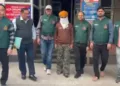
The arrested individual has been identified as Tufail Niyaz, a technician and a resident of Srinagar. Niyaz is central to the logistics chain of the module, specifically accused of supplying the AK rifle that was later recovered from a locker utilized by one of the module’s main accused doctors at the Government Medical College (GMC), Anantnag. This arrest is the first formal action taken by the SIA since the specialized probe agency took charge of the sensitive case from the Jammu and Kashmir Police.
Niyaz had initially been detained by the J-K Police shortly after the terror module was exposed. The exposed network included a number of professionals, notably doctors Muzamil Shakeel Ganai, Adeel Ahmad Rather, Umar Nabi, and Shaheen Shahid. Following his detention, Niyaz was transferred into the custody of the SIA, which then proceeded to formally place him under arrest.
According to officials, Niyaz’s role involved acting as a conduit, having allegedly received the AK rifle from a Pakistani handler before successfully passing it on to Dr. Adeel Ahmad Rather. This transaction directly led to the rifle being seized from Rather’s locker within the GMC Anantnag premises, a key piece of evidence linking the professional members of the module to serious arms trafficking.
The case has wider national security implications, as the other accused individuals have been linked to activities outside the UT. Doctors Muzamil, Adeel, and Shaheen were previously arrested by the J-K Police and subsequently handed over to the National Investigation Agency (NIA), which is currently handling the connected Red Fort blast case.
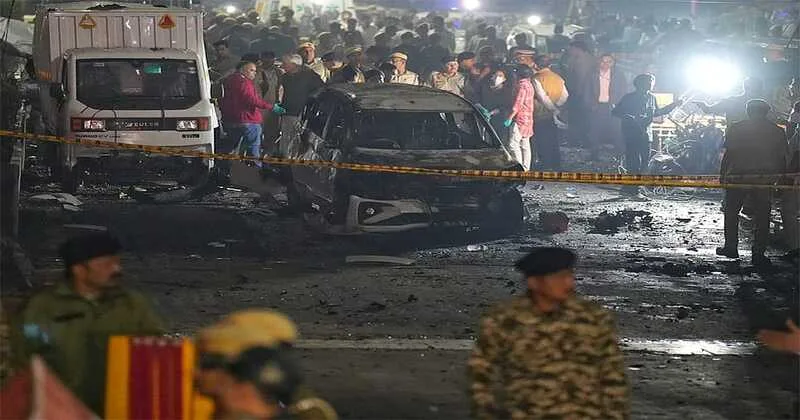
The incident outside the Red Fort saw the death of one of the module’s key members, Umar Nabi, in the explosion. The formal arrest of Niyaz represents a significant advance for the SIA in its efforts to fully dismantle the logistical and operational framework of the JeM-AGH network operating across multiple states.















Comments