





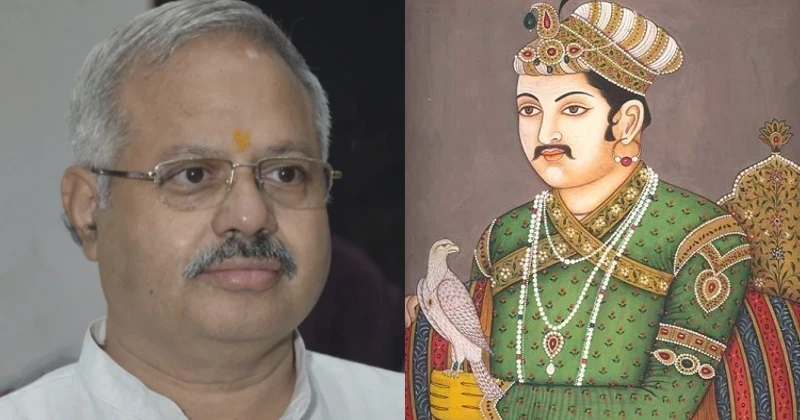
The National Council of Educational Research and Training (NCERT) history textbooks, senior Rashtriya Swayamsevak Sangh (RSS) Akhil Bharatiya Prachar Pramukh Sunil Ambekar has declared the changes a long-awaited correction in how India narrates its own past. Speaking at the Orange City Literature Festival, Ambekar said the removal of phrases like “Akbar the Great” and “Tipu Sultan the Great” marks a “positive shift” toward presenting history with greater honesty and balance.
Countering claims that the curriculum overhaul erases historical figures, Ambekar clarified that the revisions merely strip away terminology that presented controversial rulers through a one-sided, glorified lens.
“Nobody has been removed,” he said. “Students should know everyone and they should also know the cruel deeds and real actions of these figures. Sanitisation of the past cannot continue.”
Further, VHP spokesperson Vinod Bansal, questioned the historical basis for bestowing the title of “great” on figures like Akbar or Tipu Sultan. Bansal argued that the previous framing reflected “sycophantic historiography” that attempted to elevate foreign invaders while downplaying indigenous heroes.
“How can Akbar be great? When we call Maharana Pratap ‘great’, how can Akbar be ‘great’? Are Akbar’s misdeeds hidden from anyone?” Bansal asked. “The glorification of Babur, Humayun, Akbar, Aurangzeb how can it be allowed on the sacred land of Maharana Pratap? NCERT deserves thanks for correcting this.”
#WATCH | Delhi: On NCERT dropping 'Great' from Akbar, Tipu Sultan in textbooks, RSS leader VHP spokesperson Vinod Bansal says, "How can Akbar be great? When we call Maharana Pratap 'great', how can Akbar be 'great'? Are Akbar's misdeeds hidden from anyone? After all, He is the… pic.twitter.com/aMdlhTAdEV
— ANI (@ANI) November 22, 2025
Ambekar confirmed that NCERT has already updated textbooks for 11 out of 15 classes, with new editions for Classes 9, 10 and 12 to be introduced next year. He described the content overhaul as a “very good initiative” and hinted that additional reforms are likely.
He emphasised that historical narratives must present a complete picture one that allows students to evaluate figures not merely through inherited labels, but through a grounded understanding of their actions.
Moving beyond textbook politics, Ambekar spoke extensively on the need to restore awareness of India’s ancient knowledge systems an area he said was inadequately represented in previous academic frameworks. He highlighted the academic breadth of institutions like Nalanda University, asserting it offered 76 skill-based disciplines, including:
- farming and mechanisation,
- urban planning,
- make-up and aesthetics,
- political governance,
- and even secret agent training.
According to him, this showcases India’s millennia-old commitment to applied learning and civilisational excellence an inheritance that modern India must reclaim.
Ambekar also cautioned that nations which blindly pursued material development often surrendered their cultural core, leading to erosion of family and societal values. Positioning India at a crossroads, he said the country must decide what kind of society it wants to build, insisting that cultural roots cannot be compromised.
Reflecting on Ayodhya, Ambekar said many have misunderstood the Ram temple movement as merely an architectural or religious project. “It was not just about constructing a temple. It was a campaign to remind people of their cultural selfhood and their relationship with Lord Ram.”
Ambekar concluded with strong praise for India’s youth, describing them as confident, globally aware and increasingly proud of their heritage. “For today’s youth, patriotism is a cool thing,” he said, expressing optimism that they will guide the nation’s future with clarity and conviction.












Comments