





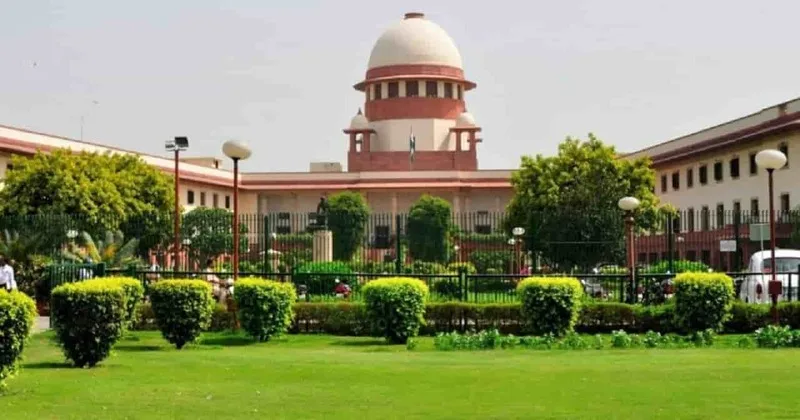
The DMK government, its allies and its controlled media that rejoiced and held felicitations to the advocate for getting a ‘historic’ verdict from the Apex Court on April 8 seem to be oblivious of the five-judge Constitutional Bench, which in one voice said “it can’t set a timeline for the President of India or Governors to give assent to the Bills passed in the State Assemblies or Parliament”. It did not think its euphoria would end soon.
In April 2025, the SC Division Bench had ruled that the President must decide on State Bills, reserved by Governors for Presidential assent, within three months. The Apex Court set aside Tamil Nadu Governor R.N. Ravi’s decision to withhold assent to 10 pending Bills and, in the process, ruled that the President should also not take more than three months in arriving at a decision on Bills referred by Governors.
On May 13, 2025, President Droupadi Murmu invoked the Supreme Court’s advisory jurisdiction under Article 143 of the Constitution (which empowers the President to seek the Court’s opinion on questions of law or fact which are of public importance). The President referred a total of 14 questions concerning the powers of a Governor and the President under Articles 200 and 201, respectively. The reference came after the Court’s judgment in State of Tamil Nadu v Governor of Tamil Nadu (2025).
A Bench comprising Chief Justice of India B.R. Gavai, Justice Surya Kant, Justice Vikram Nath, Justice P.S. Narasimha and Justice A.S. Chandurkar heard the matter for ten days and reserved its opinion on September 11, and gave its unanimous verdict on November 20.
The judges said, “We have no hesitation in concluding that deemed consent of the Governor or President, under Article 200 or 201 at the expiry of a judicially set timeline, is virtually a takeover, and substitution, of the executive functions by the Judiciary, through judicial pronouncement, which is impermissible within the contours of our written Constitution.”
The Questions were:
1. What are the constitutional options before a Governor when a Bill is presented to him under Article 200 of the Constitution of India?
2. Is the Governor bound by the aid & advice tendered by the Council of Ministers while exercising all the options available with him when a Bill is presented before him under Article 200 of the Constitution of India?
3. Is the exercise of constitutional discretion by the Governor under Article 200 of the Constitution of India justiciable?
4. Is Article 361 of the Constitution of India an absolute bar to the judicial review in relation to the actions of a Governor under Article 200 of the Constitution of India?
5. In the absence of a constitutionally prescribed time limit, and the manner of exercise of powers by the Governor, can timelines be imposed and the manner of exercise be prescribed through judicial orders for the exercise of all powers under Article 200 of the Constitution of India by the Governor?
6. Is the exercise of constitutional discretion by the President under Article 201 of the Constitution of India justiciable?
7. In the absence of a constitutionally prescribed timeline and the manner of exercise of powers by the President, can timelines be imposed and the manner of exercise be prescribed through judicial orders for the exercise of discretion by the President under Article 201 of the Constitution of India?
8. In light of the constitutional scheme governing the powers of the President, is the President required to seek advice of the Supreme Court by way of a reference under Article 143 of the Constitution of India and take the opinion of the Supreme Court when the Governor reserves a Bill for the President’s assent or otherwise?
9. Are the decisions of the Governor and the President under Article 200 and Article 201 of the Constitution of India, respectively, justiciable at a stage anterior into the law coming into force? Is it permissible for the Courts to undertake judicial adjudication over the contents of a Bill, in any manner, before it becomes law?
10. Can the exercise of constitutional powers and the orders of/by the President/Governor be substituted in any manner under Article 142 of the Constitution of India?
11. Is a law made by the State legislature a law in force without the assent of the Governor granted under Article 200 of the Constitution of India?
12. In view of the proviso to Article 145(3) of the Constitution of India, is it not mandatory for any bench of this Hon’ble Court to first decide as to whether the question involved in the proceedings before it is of such a nature which involves substantial questions of law as to the interpretation of constitution and to refer it to a bench of minimum five Judges?
13. Do the powers of the Supreme Court under Article 142 of the Constitution of India limited to matters of procedural law or Article 142 of the Constitution of India extends to issuing directions /passing orders which are contrary to or inconsistent with existing substantive or procedural provisions of the Constitution or law in force?
14. Does the Constitution bar any other jurisdiction of the Supreme Court to resolve disputes between the Union Government and the State Governments except by way of a suit under Article 131 of the Constitution of India?”
In its 111-page order, the Constitutional Bench replied to the 14 questions posed by the President of India one by one with its legal opinion.
‘What are the constitutional options before a Governor when a Bill is presented to him under Article 200 of the Constitution of India?’ The Bench said: “Upon reservation under Article 200, the President is empowered to exercise his options under Article 201, and the proviso also provides for an option to return the Bill to the House with a message. What is important is that the words ‘shall not withhold therefrom’, which are present in the first proviso to Article 200, are conspicuously absent from the proviso to Article 201. Since the Presidential reference has not sought our opinion as regards the options under Article 201, we say no further.”
For the second question, “Is the Governor bound by the aid & advice tendered by the Council of Ministers while exercising all the options available to him when a Bill is presented before him under Article 200 of the Constitution of India?”, the Bench said: “Having already held that the Governor does not have powers simpliciter to withhold, we find that the Governor has discretion in the context of referring a Bill for the consideration of the President, or for returning the Bill to the Legislature with his comments.” At the same time, it also agreed that this interpretation does not confer any unfettered powers on the Governor, saying: “In fact, it does not in any way deviate from the concept of a responsible constitutional government.”
Answering “Is the exercise of constitutional discretion by the Governor under Article 200 of the Constitution of India justiciable?”, the Apex Court said, “the constitutional choice made by the Governor is not justiciable and a merit review is unavailable in judicial proceedings”. For the question, its answer is: “This limited judicial review cannot be overcome on the pretext of Article 361, which offers personal immunity to the Governor. The constitutional office of the Governor is definitely subject to the jurisdiction of the Court, to prevent prolonged and evasive constitutional inaction.”
It said (for Question No. 5): “Thus, as a natural corollary of this reasoning, the Court said there cannot be a concept of ‘deemed consent’ in the absence of any prescribed timelines under Articles 200 and 201. There cannot be a concept of ‘deemed consent’ in absence of any prescribed timelines under Articles 200 and 201.” To the next question it said, “the President’s assent under Article 201 too, is not justiciable.” Answering the next query, the Bench said: “President, like the Governor, cannot be bound by judicially prescribed timelines in the discharge of functions under Article 201. There was no occasion in the Tamil Nadu case for setting a timeline for disposal of Bills referred to the President under Article 201. Thus, it is clarified that any observations on the aspect of timelines applicable to the President under Article 201, or conclusions thereof on this aspect, are merely obiter, and ought to be treated as such.”
It said: “Judicial review of a legislation is premised on the fact that it will be considered by the Court only after it has been made into law – i.e. assented by the Governor or President as the case may be, and brought into force. It is this judicial review over legislation that our constitutionalism envisages, and this particular form is an essential feature of our basic structure,” the Apex Court Bench said, terming as erroneous the view that courts may sit in review over Bills, and highlighting how it would destroy the doctrine of separation of powers. “This would have the effect of Courts supplanting the wisdom and considerations of the Governor and President – who are constitutional authorities vested with constitutional obligations – in exercise of the Court’s power of judicial review. We are of the considered opinion that to permit such a reading of the Constitution would be to destroy the doctrine of separation of powers – which, as elaborated above in our discussion on ‘deemed assent’, is an essential feature of our Constitution.”
The judges said: “We have no hesitation in concluding that deemed consent of the Governor, or President, under Article 200 or 201 at the expiry of a judicially set timeline, is virtually a takeover, and substitution, of the executive functions by the Judiciary, through judicial pronouncement, which is impermissible within the contours of our written Constitution.”
It said: “There is no question of a law made by the State Legislature coming into force without assent of the Governor under Article 200,” the Court said. “The Governor’s legislative role under Article 200 cannot be supplanted by another constitutional authority.”
For the remaining three questions, the Bench said it declined to answer, saying they were “irrelevant to the functional nature of the reference and the question was worded in such broad terms that it was not possible to answer it in a comprehensive and definitive manner”.
The Bench said: “We find no reason to deviate from the binding decisions of this Court and, for the additional reasoning stated above, are of the considered view that the discharge of the Governor’s or President’s functions under Articles 200 and 201 respectively, is not justiciable…. we are of the firm view that judicial review scrutiny and the jurisdiction of courts can be invoked only once the Bill becomes law.”
The judges said: “Thus, the Legislature which represents the people’s will is only effective if the Governor acts under Article 200. This is not to say that the Governor is merely a rubber stamp between a Bill becoming an Act. There is value in his consideration and thus choice exercised between the three options before him under Article 200. Thus, it is correct that the Court cannot supplant the wisdom of the Governor and enter a merits review of this decision so taken. However, where the Governor chooses to not act under Article 200, resulting in prolonged pendency in Bills without initiating the dialogic process that the Constitution envisions, thus frustrating the outcome of the Legislature’s functions and efforts – Constitutional Courts can exercise limited judicial review.”
Last week, the DMK government approached the Supreme Court against the President of India’s withholding of assent for the NEET exemption Bill passed by the State Assembly. It sought a direction to hold and declare that the Tamil Nadu Admission to Undergraduate Medical Degree Courses Bill, 2021, is deemed to have received the assent of the President of India under Article 254(2) of the Constitution of India.
With today’s verdict it would not get favourable orders. Its promise of getting exemption to NEET as its first priority, and now with the polls nearing, it wants to cheat the voters.
















Comments