





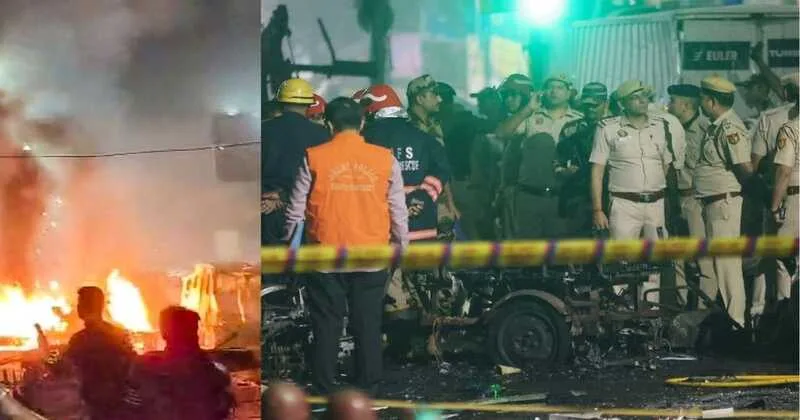
Crucial new information has emerged in the ongoing investigation into the Red Fort blast, with strong indications that the masterminds behind the attack may have received training in Afghanistan. According to officials, preliminary evidence suggests that the arrested suspect, Muzammil, had travelled to Afghanistan via Turkey, raising questions about cross-border facilitation and the involvement of multiple international handlers.
Investigators have also confirmed that Umar Nabi and several detained doctors were working for Pakistani terrorist organisations Jaish-e-Mohammed (JeM) and the Islamic State-linked outfit Ansar Ghazwat-ul-Hind. A key intermediary, identified by the codename “Ukasa,” is believed to have operated from Ankara, Turkey, coordinating between the doctors, JeM operatives, and Ansar affiliates.
Authorities revealed that terrorists abroad had sent bomb-making instructional videos to the Indian operatives; Muzammil alone received 42 such videos. These digital manuals, investigators say, were used directly to assemble the explosives used in the attack. The names of three foreign terrorists who controlled the operation remotely have also been traced, though officials stress that these identities may be pseudonyms.
In parallel, the probe has widened to examine the suspected involvement of Indian Mujahideen operative Mirza Shadab Baig. A fugitive since the 2008 Batla House encounter, Baig had reportedly studied at Alfalah Engineering College before going underground. Investigators are now seeking additional technical details connected to Umar Nabi’s social media accounts and are conducting searches in Kanpur to track down more members of the network. Security agencies are also investigating whether foreign operatives linked to the Red Fort attack were involved in similar blasts across India in recent years. Three suspected handlers, identified as “Hansulla,” “Nisar,” and “Ukasa”, have been flagged, though their real identities remain unknown.
Meanwhile, new details have surfaced regarding Muzammil’s arrest. He was taken into custody 10 days before the Red Fort blast while in possession of a staggering 2,500 kilograms of explosives. Further, investigators suspect the involvement of another foreign handler, Mohammed Shahid Faisal, also known by multiple aliases, including Colonel, Laptop Bhai, and Bhai. Faisal has been active in Tamil Nadu’s terror circuits since 2020 and is believed to be connected to a series of major blasts in the state. Faisal is thought to be the mastermind behind the Coimbatore suicide attack on October 23, 2022, the auto-rickshaw explosion on November 20, and the Rameswaram Cafe blast on March 1 last year. An engineering graduate who disappeared from Bengaluru in 2012 at the age of 28, he adopted the alias Zakir Usdat and subsequently crossed into Pakistan after being identified by intelligence agencies. Recent intelligence inputs suggest that he has now shifted to the Syria–Turkey border region and is currently in hiding. Investigators also believe that Ukasa, the handler linked to the Red Fort blast, is currently based in Turkey.
“There is a possibility that the Red Fort blasts are linked to the Karnataka and Tamil Nadu blasts. There are several similarities at the level of the foreign handlers. This requires deeper investigation, and more information is expected to emerge,” an officer associated with the Delhi and South India blast investigations told to media.
In another significant development, investigators have learned that Umar Nabi met terrorist groups in Syria in 2022. Muzammil, Shakeel, and Muzaffar Rather were present at the meeting, which is believed to have been arranged by Ukasa. Initial plans involved joining the Lashkar-e-Taiba (LeT), but the group later shifted allegiance to Jaish-e-Mohammed on the handler’s instructions. As the probe accelerates, authorities are now mapping the cross-border linkages that appear to connect terror networks operating across India, Pakistan, Afghanistan, Turkey, and Syria. More revelations are expected as agencies continue to decipher digital trails, financial flows, and international communication patterns.









Comments