





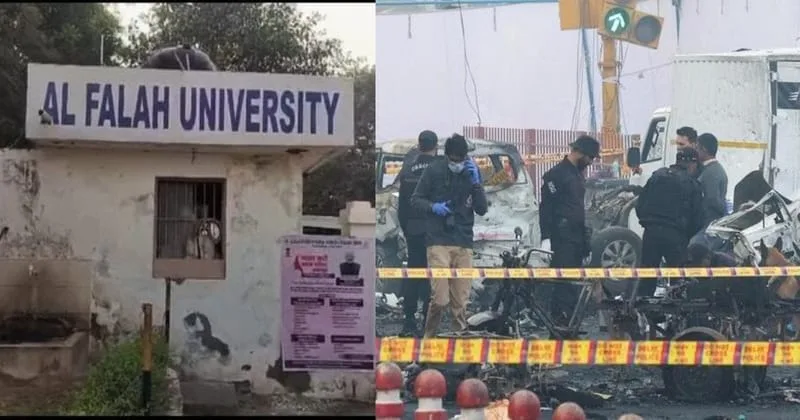
Intelligence sources say at least 10 people, including three Kashmiris, who worked or studied at Al‑Falah University in Faridabad, Haryana, are now missing, their mobile phones switched off. The university is increasingly under intense scrutiny, with security agencies flagging it as a possible nerve centre of the terror module behind the Red Fort car blast.
Al‑Falah University, located in the Dhauj area of Faridabad, just 30 km from Delhi, has emerged as a “white‑collar terror” hub, according to investigators. Several doctors who taught or worked at the university and its hospital have been linked to extremist ideologies and terror operations.
Among those under the scanner are Dr Umar Un‑Nabi, Dr Muzammil Shakeel Ganaei, Dr Shaheen Shahid, and Dr Nisar‑ul‑Hassan.
Umar is believed to have carried out the Red Fort bombing; Muzammil is alleged to have stored huge amounts of explosive materials; Shaheen is suspected of setting up the women’s wing of Jaish‑e‑Mohammed (JeM) in India; and Nisar, previously dismissed from a government job in J&K for “posing a threat to state security,” has gone missing.
Al‑Falah University has denied institutional complicity. In a statement, the vice-chancellor said the university’s only connection to the accused individuals was through their official employment. She also rejected claims that any explosive chemicals were stored on campus, saying the laboratories are used solely for academic work.
The Red Fort Blast
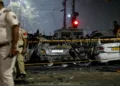
On November 11, 2025, a Hyundai i20 exploded near the Red Fort in Delhi, in one of the most alarming terror incidents the national capital has witnessed in years. The vehicle had been parked for hours in a nearby lot before the blast, according to security footage under investigation.
Preliminary forensic analysis suggests that the explosive used was Ammonium Nitrate Fuel Oil (ANFO), a highly combustible industrial compound, often misused to manufacture improvised explosive devices. At the blast site, teams recovered detonators, wires, and chemical traces consistent with a large-scale IED.
Investigators allege the bomber was Dr Umar Un‑Nabi, who was driving the car when it went off. Multiple surveillance teams and tower‑data analysis suggest he had support: Dr Muzammil may have conducted reconnaissance in and around the Red Fort in the weeks prior, studying security patterns and crowd behaviour.
The timing of the blast and the scale of the precursor raids also point to a broader terror conspiracy. Just before the explosion, a joint operation by the J&K Police and Haryana Police resulted in the arrests of several doctors and the seizure of nearly 2,900 kg of explosive or bomb-making material from locations linked to the suspects.
Investigators believe the group is ideologically aligned with Jaish‑e‑Mohammed and possibly Ansar Ghazwat-ul-Hind. The probe suggests they may have had foreign handlers, possibly based in Pakistan or Gulf countries, who communicated with them over encrypted platforms.
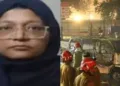
Dr Shaheen Shahid, notably, is under suspicion of establishing JeM’s women’s wing in India, reportedly under direction from higher-ups. Her role underscores the modular, networked nature of the plot, not just operational but organisational, with clear ideological recruitment, financing, and planning.
Of particular concern are the 10 people linked to Al‑Falah University who are now missing, intelligence sources told. Three of them are from J&K, raising fear that they might be part of the same terror module. Their disappearance followed a coordinated action by Haryana police and J&K forces, suggesting a possible escape or cover-up. Security agencies have now broadened their probe to include more than 200 staff and students at Al‑Falah. Over 1,000 individuals are reportedly being questioned, and investigators are combing through off-campus hostels for leads.
The fallout for Al‑Falah University has been immediate and severe. Authorities are investigating whether parts of the campus, like labs or hostels, were misused to store or test explosive compounds.











Comments