





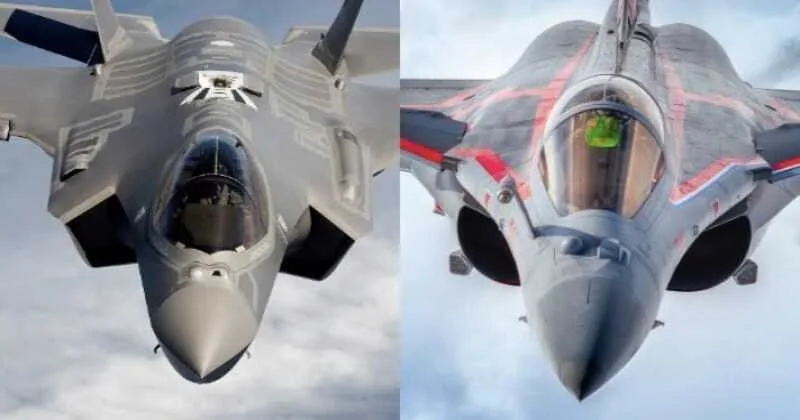
Russia has declared that it is willing to meet any requirements set by India regarding the fifth-generation Su-57 stealth fighter jet, including extensive technology transfer and joint development. The assurance was delivered by Sergey Chemezov, CEO of the state-owned defence conglomerate Rostec, during the Dubai Air Show 2025. The statement comes just weeks ahead of Russian President Vladimir Putin’s scheduled visit to India next month, signalling a potential breakthrough in bilateral defence cooperation.
Chemezov said that Russia had consistently supported India’s defence needs, even in times when the country faced international sanctions and supply constraints. He noted that Moscow’s approach would remain unchanged, adding that Russia intended to supply any military equipment New Delhi required while ensuring mutual benefits in ongoing and future projects. According to him, Moscow remained committed to strengthening India’s security architecture and expanding technological collaboration. He also indicated that Russia was open to India’s demands for advanced technology transfers related to both the S-400 air defence systems and the Su-57 platform. Chemezov emphasised that Russia considered its ties with India to be strategic and stable, reinforcing the message that Moscow was prepared to back Indian requirements across platforms without hesitation.
Vadim Badekha, Director General of the United Aircraft Corporation (UAC), which developed the Su-57, echoed Chemezov’s position. He affirmed that all requests from India regarding the stealth fighter had so far been viewed positively and were considered fully acceptable by Russian authorities. His remarks reinforced the impression that Russia is willing to be flexible and expansive in accommodating India’s technical and operational needs. According to reports, the technology transfer would be channelled through Rosoboronexport, Russia’s official defence export agency. The range of technologies offered to India reportedly includes engine systems, optical sensors, Active Electronically Scanned Array (AESA) radar, artificial intelligence components, radar cross-section reduction technology, and weapon systems designed for the Su-57 platform. If finalised, the arrangement would mark one of the most significant and comprehensive defence technology transfers India has ever received.
Russia is also exploring opportunities for collaboration with India on the development of a twin-seat variant of the Su-57. Such cooperation could help India mitigate concerns about potential sanctions or supply chain disruptions by enabling domestic manufacturing of critical components. A joint development model would also align with India’s strategic goal of strengthening indigenous aerospace capabilities under the broader framework of “Aatmanirbhar Bharat.”
US panel says China orchestrated fake propaganda campaign targeting India’s Rafale fleet
A US congressional advisory panel has accused China of orchestrating a coordinated disinformation campaign that falsely claimed Indian Rafale fighter jets had been shot down during Operation Sindoor. The findings were published in the annual report submitted to the US-China Economic and Security Review Commission, which monitors Beijing’s influence operations and military strategies. According to the report, China used a network of fake social media accounts to disseminate AI-generated images and fabricated data showing what appeared to be the wreckage of Rafale aircraft. The propaganda was aimed at creating the false impression that Indian and French jets had been neutralised by Chinese-developed air defence systems. The analysis concluded that Beijing’s primary objective was to undermine the global export prospects of the French-made Rafale fighter jet, which has gained prominence following its operational success with the Indian Air Force.
The report further noted that the campaign was designed to boost the market profile of China’s own J-35 stealth fighter by promoting a narrative of technological superiority. It described these actions as part of China’s broader “grey zone” strategy, aimed at shaping geopolitical outcomes without engaging in direct military confrontation. The disinformation push intensified after India launched Operation Sindoor in May, a military response to the Pahalgam terror attack that killed 26 civilians in April. During the operation, India targeted terrorist camps, military infrastructure, and air bases inside Pakistan. Pakistan’s counter-offensive relied largely on Chinese weapon systems. However, after India gained tactical advantage, China escalated its online influence operations to shift perceptions in its favour.
Indian Air Chief Marshal A.P. Singh had confirmed in August that Indian forces shot down five Pakistani fighter jets and destroyed an air defence system during the operation. The US report suggests that China sought to exploit the India-Pakistan conflict to highlight its defence exports and influence global opinion about its weapons systems.











Comments