





The recurring and massive seizures of RDX and Ammonium Nitrate (AN) across Bharat from 2000 to 2025 are not isolated law enforcement successes but rather a direct and chilling testament to the persistent threat of cross-border, ideologically-driven terrorism. These seizures, often revealing large, military-grade caches of explosives (like the recent 2,900 kg haul of IED-making material near Delhi), expose a sinister “white-collar terror ecosystem” deeply embedded within professional and academic circles in mainland Bharat. The consistent use of RDX, a military explosive, often mixed with AN (as seen in attacks like the 2006 Mumbai train bombings), is the hallmark of foreign-backed terror networks such as Lashkar-e-Taiba (LeT) and Jaish-e-Mohammed (JeM), who are actively leveraging radicalised individuals and encrypted channels to target Bharat’s heartland.
2,900 kg explosive chemical seized from doctors linked to terror in Faridabad
On November 9, 2025, in Faridabad, Haryana, a chilling discovery was made when police seized over 2,900 kilograms of suspected Ammonium Nitrate from locations linked to an educated professional network. The explosives, which included an initial 360 kg followed by an additional 2,500 kg haul, were linked to the accused: Adil Ahmed, Dr Muzamil Shakeel, and Dr Shaheen Shahid. Furthermore, a highly dangerous Krinkov assault rifle and other weapons were recovered from the car belonging to Dr Shaheen, a resident of Lal Bagh, Lucknow. The involvement of highly educated individuals like doctors in accumulating such a massive cache of explosive material suggests the deep-seated radicalisation and professional infiltration by terror elements. Police promptly arrested Dr Muzamil Shakeel and detained Dr Shaheen Shahid.
Jalandhar police busted BKI terror module, seize 2.5 kg RDX IED
On October 9, 2025, in Jalandhar, Punjab, police successfully dismantled a terror module operated by the banned Babbar Khalsa International (BKI). Authorities arrested Gurjinder Singh alias Rinku and Deewan Singh alias Nikku, seizing a sophisticated RDX-based Improvised Explosive Device (IED) weighing nearly 2.5 kg, along with a remote control and a motorcycle. Intelligence reports indicated the IED was intended for a targeted attack. The module was allegedly directed by UK-based handlers Nishan Jaurian and Adesh Jamarai, acting under the command of BKI mastermind Harwinder Singh alias Rinda, highlighting the ongoing threat from Pakistan-backed Khalistani groups operating from foreign soil.
Over 2,075 kg of explosives seized in Jaipur rural
A massive quantity of explosive material was recovered on May 11, 2025, in the Bassi police station area of Jaipur Rural, Rajasthan. Authorities seized 2,075 kilograms of combined Ammonium Nitrate and Opti Star explosive from an abandoned pickup truck found near the Mohanpura bridge on Agra Road. The sheer scale of the seizure, exceeding two metric tons, sparked fear and confirmed the existence of a high-capacity supply chain for precursor bomb-making chemicals within India. The failure to locate the owner and driver of the vehicle, registered to Ishwar Singh from Bhilwara, pointed toward a highly organised and secretive operation.
RDX-packed IED found Near Kainchi Chowk in Kaithal district
On September 22, 2022, a serious terror plot was thwarted in Kaithal, Haryana, when a tip-off led to the discovery of a 1.16 kg IED packed with RDX. The explosive device was found concealed inside an iron box near Kainchi Chowk on Jind Road. The highly volatile RDX component posed a major threat to the public. The Special Task Force immediately secured the area, and the bomb disposal squad was called in to safely defuse the dangerous explosive, averting a potential tragedy.
Gurdaspur police seized 1 kg of RDX, suspect linked to Pakistan
In Dinanagar, Gurdaspur, Punjab, on December 1, 2021, police arrested Sukhwinder Singh and recovered 1 kg of RDX from an undisclosed location. The accused confessed during interrogation that he had planted the highly explosive material and admitted to having links with Pakistan-based agencies. Given that RDX is capable of causing destruction within a 50-meter radius, the seizure highlighted the persistent strategy of foreign adversaries to infiltrate and plant destructive material in border states. Police investigations focused on establishing links with other suspects and verifying the full extent of the Pakistan connection.
71 grenades and 24 kg RDX seized in major Reasi anti-terror operation
In a major consolidation of past anti-terror successes, a massive cache of explosives, including 71 hand grenades, 24 kg of RDX, detonators, IED fuses, and IED remotes, was deliberately destroyed in Reasi, J&K, on November 26, 2021. These deadly materials had been seized over the years from the highly volatile Mahore-Chassana belt, confirming the continuous infiltration and stockpiling activities by Pakistan-backed terror groups in the region since at least 2009. The planned destruction, authorised by multiple courts, was essential to mitigate the serious risk of accidental blasts from the vast quantity of military-grade explosives held in police custody.
12 kg RDX cache found hidden in jungle hut in Palghar
A serious terror plot was averted on November 5, 2016, when the Mumbai Crime Branch and ATS, acting on specific intelligence, discovered a significant cache of explosives buried inside an abandoned hut in a jungle near Satavli village, Palghar, Maharashtra. The recovery included 12 kg of confirmed RDX, two packets of ammonium nitrate, 40 gelatin sticks, and 39 detonators. The professional manner of storage suggested the explosives – materials capable of causing large-scale destruction – had been hidden for long-term use, potentially by sleeper cells planning major urban attacks. The incident highlighted the use of remote jungle hideouts to stage operations against the nation’s financial capital.
Over 40 kg explosives recovered near Tarapur Atomic Power Station in Palghar
Just a week before the previous incident, on October 27, 2016, an even larger haul of over 40 kg of explosives was recovered from an abandoned Public Works Department (PWD) building in Manor, Palghar, Maharashtra. The cache included RDX, gelatine, detonators, and white and black powder (likely ammonium nitrate). The highly sensitive location, near the Tarapur Atomic Power Station, strongly suggested the explosives were intended for large-scale, high-impact terrorist activities. The prompt operation by ATS officials, utilising dog squads, averted a major threat to critical national infrastructure.
RDX seized from Baig’s house matches German Bakery bomb components
A critical forensic link was established on July 7, 2012, when RDX seized from the residence of Mirza Himayat Inayat Baig in Udgir, Maharashtra, was forensically confirmed to match the explosive components used in the deadly 2010 Koregaon Park German Bakery blast in Pune. The blast involved a mix of ammonium nitrate and oil, materials often utilised by foreign-backed terror groups. The matching RDX confirmed Baig’s involvement in a wider terror network responsible for mass-casualty attacks on Indian soil.
Police seized 1 kg of RDX and 45 grenades from maoist hideout in Banka forest
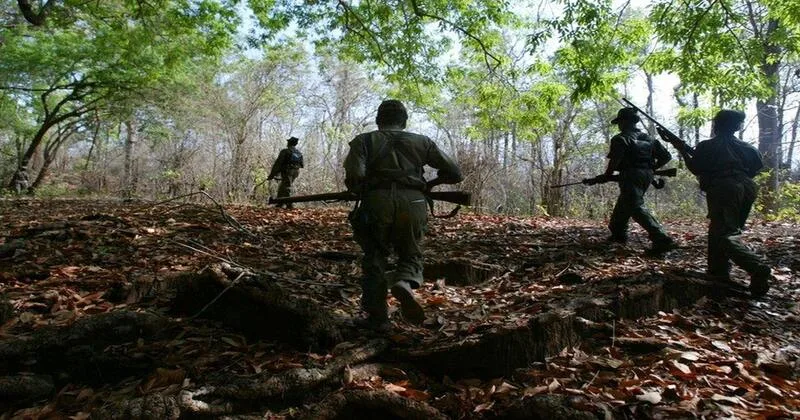
The threat is not solely external, as demonstrated on May 9, 2012, when police in Banka district, Bihar, discovered a substantial Maoist hideout in a forest area near Bagadhsawa village. The combing operation, based on a tip-off, yielded 1 kg of RDX, 45 grenades, 2 rifles, and 2 can bombs. The sophisticated and large quantity of explosives, particularly RDX, confirmed the continued efforts by Maoist insurgents to wage war against the Indian state and stockpile materials for violent acts against security forces and infrastructure in Bharat’s heartland.
3 kg RDX seized near Kailash Yatra path: Attack on Hindu pilgrims averted
On August 31, 2008, security forces successfully averted a planned terror attack targeting Hindu pilgrims by busting a militant hideout in the Ramtandu area, along the Kailash Yatra route in Doda district, J&K. The operation yielded 3 kg of RDX, along with a .303 rifle, an AK magazine, 40 rounds, 7 detonators, and 30 kg of ration. The presence of these materials near the pilgrimage route, which is expected to attract over 50,000 devotees, clearly indicates the militants’ intent to cause mass casualties and communal discord by attacking the Kailash Yatra starting from Bhaderwah town.
Delhi Special Cell seizes 1.5 kg RDX from LeT suspects near Red Fort
The pervasive reach of Islamist terror was confirmed on December 20, 2006, when the Delhi Police Special Cell arrested three suspects, Salman Khurshid Kori, Abdur Rehman, and Mohammad Akbar Hussain (all from Manipur), near the Red Fort area, New Delhi. The trio, linked to Lashkar-e-Taiba (LeT), were carrying 1.5 kg of RDX, two detonators, and a hand grenade, allegedly planning blasts in the capital’s crowded markets. This incident was especially alarming as officials noted it was the first instance of LeT recruiting individuals from a northeastern state, demonstrating the terror group’s sinister strategy to expand its operational base across India’s diverse regions.
J&K STF seizes massive 200 kg RDX cache from Ramban hideout
A major terrorist logistics hub was dismantled on November 4, 2006, in Ramban, Doda district, J&K, when the J&K STF seized a colossal 200 kg of RDX and 60 detonators, along with 25 kg of fuse wire, from a hideout located suspiciously near a school. This extraordinary quantity of military-grade RDX signified a large-scale storage operation by terror groups aiming to sustain a major insurgency. The operation led to the arrest of two militants, while the concurrent neutralisation of an LeT terrorist in a separate search highlighted the sustained pressure on these Pakistan-backed organisations.
Delhi police recover 1.5 kg RDX from two Kashmir-Based LeT terrorists in Mahipalpur
The capital’s vulnerability was underscored again on December 11, 2006, when police stopped two suspected Lashkar-e-Taiba (LeT) terrorists, Gulzar Ahmed and Mohd Amin, in Mahipalpur, New Delhi. The search led to the recovery of 1.5 kg RDX, two detonators, and Rs 2 lakh in cash. Both men were found moving suspiciously, and their arrest preempted a likely attack on the capital, confirming the LeT’s relentless efforts to smuggle high explosives from Kashmir into mainland Bharat.
25 kg RDX Buried Near Sukrala Temple recovered by Army in Kishtwar
Security forces preempted another attack on a Hindu religious site on October 9, 2006, in Kishtwar, Doda district, J&K. During a sanitisation operation, army troops discovered 25 kg of RDX and detonators buried in a field near the Sukrala Temple. Officials strongly suspected that terrorists had planned to detonate the explosives to target the temple during its upcoming annual festival, confirming the specific and calculated strategy of terror groups to strike at prominent places of Hindu worship to inflame communal tensions.
35 kg of RDX recovered in joint operation in J&K
On January 21, 2006, security forces, acting decisively in Doda and Kathua districts, J&K, foiled a major terror plot by recovering 35 kg of RDX. The explosives were found in two separate locations:
1. An underground hideout in Deribagh near Doda yielded 25 kg RDX, two AK rifles, and a remote-control IED.
2. In Kathua, three IEDs carrying 10 kg RDX were recovered from a bag on the Budhi-Nagrota-Ghati road.
The arrest of local facilitators Mohammad Subhan and Akhtar Nabaz confirms the existence of a local support system aiding militants in the region. The swift neutralisation of the IEDs averted a deadly, co-ordinated attack.
76 kg RDX seized on bus and from fields in Doda
A significant security breach was exposed on January 4, 2006, in Bhaderwah, Doda district, J&K, with the recovery of a massive 76 kg of RDX. This massive haul was discovered in two parts:
1. 48 kg of RDX was found hidden in a bag under a bus seat during a routine check.
2. An additional 28 kg RDX was subsequently found buried in nearby fields following a tip-off.
The sheer volume of RDX, a military explosive, indicates a large-scale conspiracy to arm terror cells. The arrest of the bus driver and conductor highlighted the disturbing exploitation of civilian transport to move highly destructive military material.
35 kg RDX seized in Kutch, confirmed Lashkar-e-Taiba link
The far-reaching operational capacity of Pakistan-based terror groups was exposed on December 18, 2001, in Kutch, Gujarat. Police recovered a consignment containing 35 kg of RDX, an AK-56 rifle, hand grenades, and remote control devices, all buried in the Rann of Kutch. The operation was launched after the arrest of Muzamil Shahnawaz Husain, an LeT militant who disclosed that the deadly cache was buried by a team that had crossed the border. This incident provided irrefutable proof of LeT’s strategy to use the Gujarat coastline for the infiltration of explosives and highly-trained terrorists into mainland Bharat.
5.2 kg RDX and grenades recovered in Patan, Gujarat by CBI-ATS joint operation
Just a day prior, on December 17, 2001, a joint operation by the CBI and ATS in Patan, Gujarat, recovered a buried cache containing 5.2 kg of RDX, 10 hand grenades, two anti-personnel mines, a rocket, and multiple sophisticated detonators near Santalpur. The most damning evidence was the recovery of a letterhead slip marked ‘Lashkar-e-Taiba’ and newspapers from Rawalpindi and Hyderabad (Sind), leaving no doubt about the direct Pakistani sponsorship and LeT’s plan to execute a terror plot in the state.
Delhi Police recover 10 kg of RDX and sensitive letters from LeT operative
The threat reached the nation’s capital on December 5, 2000, when Military Intelligence and the Delhi Police Special Cell arrested Khalid Mehmud alias Sajjad in Badarpur, South Delhi. From this Lahori native, officials recovered 10 kg of RDX, two AB timers, two detonators, and sensitive letters allegedly written in secret ink. Mehmud’s activities since 1999-collecting intelligence on army goods trains and road networks-confirmed a long-term, sophisticated espionage and terror plot aimed at destabilising the capital using military-grade explosives.
The repeated and massive seizures of RDX and AN over two decades confirm that India is locked in an unending counter-terror struggle against foreign and domestic extremist elements. The operations- whether thwarting a plot by Khalistani groups, seizing caches from Naxalite hideouts, or arresting highly educated individuals involved in LeT supply chains- show a unified threat matrix that transcends political and geographical boundaries. The nation has repeatedly averted mass carnage, notably the planned attacks on the Kailash Yatra and the Sukrala Temple, directly challenging the narrative that terrorism is merely a law-and-order issue. To truly secure the future, the state must relentlessly identify, dismantle, and prosecute every link in this terror supply chain, ensuring that individuals and institutions providing shelter, funding, or ideological cover for the movement of military explosives are treated as essential components of the enemy’s war against the Republic.











Comments