





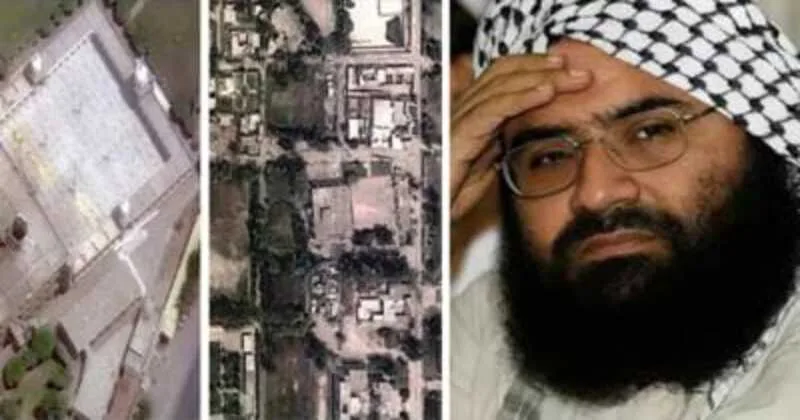
Jaish-e-Mohammed (JeM), the Pakistan-based Islamic terrorists organisation, has launched a public fundraising campaign seeking contributions for “Complete Winter Survival Kits” for its fighters operating in J&K. The group is asking for PKR 20,000 per kit, a move that security analysts interpret as clear evidence of the outfit’s worsening financial situation following the destruction of its key infrastructure during Operation Sindoor by Indian security forces, according to media reports.
This appeal represents a sharp departure from JeM’s earlier, high-value fundraising drives and indicates a shift in its operational posture as it struggles to meet even the most basic logistical needs for its cadres. The winter survival kit, comprising a coat, boots, a blanket, gloves and socks, highlights the organisation’s difficulty in securing essential supplies for militants stationed in frontline locations. Analysts say this is the first time JeM has publicly focused on immediate subsistence requirements rather than more ambitious long-term financing goals, underscoring a marked contraction in the resources available to the group after recent counter terror operations.
Not long ago, JeM attempted to collect over PKR 3.91 billion through a campaign disguised as a construction initiative for 313 new mosques and training facilities. That project was designed to fund the organisation’s operational and weapons expenses over the next decade. However, the current plea for winter essentials suggests that such large-scale initiatives failed to generate enough revenue to meet short-term demands.
The urgency behind the winter-kit drive signals that earlier efforts, even when presented as charitable or religious causes, were insufficient to manage immediate logistical needs, particularly with winter approaching. Security watchers note that JeM’s focus on the bare minimum required for survival reveals a substantial decline in its capacity to sustain prolonged militant activity. Compounding the organisation’s troubles are parallel fundraising activities undertaken by the family of its chief, Masood Azhar. His son, Hammad Azhar, is reportedly conducting a separate campaign using cryptocurrency, ostensibly framed as support for Gaza. Analysts point out that such digital fundraising methods are frequently adopted by proscribed groups to bypass international financial monitoring while advancing broader organisational agendas.
The increasingly visible and multi-layered nature of JeM’s fundraising attempts has drawn attention from security experts. They observe that the organisation’s resort to public appeals for money reflects an acute liquidity crisis, pushing it to seek donations simply to meet the daily needs of its operatives in the Kashmir Valley. Operation Sindoor’s sweeping offensive resulted in the destruction of JeM’s core facilities, including its headquarters. The financial strain exposed by the winter-kit appeal indicates that the group is still reeling from those losses, operating under sustained pressure and heightened surveillance. Experts conclude that JeM’s latest fundraising effort marks a significant moment for the outfit. The organisation’s constrained resources and renewed appeals for basic supplies underscore its weakened condition and the growing difficulties it faces in maintaining its operational presence in the region.












Comments