






Bengaluru: With the Congress reeling under a humiliating defeat in the Bihar Assembly polls, political activity in Karnataka has surged and discussions around an imminent cabinet reshuffle have accelerated. Senior leaders have confirmed that Rahul Gandhi has given his in-principle approval for a substantial reorganisation of the Siddaramaiah-led cabinet, triggering fresh jockeying among ministerial aspirants.
For weeks, the Congress’s internal circles were abuzz with talk of a “November revolution” in Karnataka, particularly after the Bihar results. Many Congress MLAs themselves suggested that major political changes would roll out following the outcome in Bihar. However, instead of triggering leadership change, the AICC high command has directed the state unit to focus on a cabinet reshuffle aimed at correcting political imbalances and consolidating power.
Rahul Gandhi gives green signal; Siddaramaiah meets top leadership
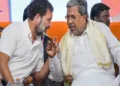
Chief Minister Siddaramaiah, currently is on a visit to New Delhi. He met Rahul Gandhi and discussed the political situation in Karnataka. This marks their first face-to-face meeting after the Congress-INDIA alliance’s defeat in the Bihar polls. Siddaramaiah’s meeting lasted around 20 minutes, during which Rahul Gandhi reportedly approved the cabinet overhaul.
Energy Minister K.J. George was also present during this interaction, sources said. Rahul Gandhi is said to have asked Siddaramaiah to consult AICC President Mallikarjun Kharge and General Secretary (Organisation) K.C. Venugopal regarding the final contours of the reshuffle.
Siddaramaiah is expected to meet Kharge and Venugopal on November 17 to finalise the list of ministers who will be dropped and the leaders who may be inducted.
Twelve members may lose ministerial positions
Sources indicate that between 8 and 12 ministers are likely to be removed from the cabinet. This has intensified anxiety within the ruling party. On the other side, the list of aspirants hoping for a cabinet berth is long and politically diverse. Names doing the rounds include Belur Gopalakrishna, B.K. Hariprasad, N.A. Harris, Salim Ahmed, R.V. Deshpande, Nagendra, B.K. Sangamesh, Narendra Swamy, Sharath Bachegowda, M. Krishnappa, Magadi Balakrishna, Lakshman Savadi, S. Ponnanna, Rizwan Arshad, Shivalingegowda, Rupakala Shashidhar and Maluru Nanjegowda among others.
Reshuffle seen as strengthening Siddaramaiah, Weakening DK Shivakumar
Political observers suggest the reshuffle is designed to consolidate Siddaramaiah’s influence in the government. By inducting loyalists and sidelining certain ministers, Siddaramaiah is expected to emerge stronger—particularly at a time when Deputy Chief Minister D.K. Shivakumar is pushing for the CM post as part of the earlier power-sharing promise.
When the Congress returned to power in 2023, Shivakumar is said to have demanded equal power-sharing, with the high command agreeing that Siddaramaiah would complete 2.5 years before passing the baton. Now, with the Bihar election defeat altering the political mood, the high command is reportedly reluctant to risk instability in Karnataka by shifting leadership. Analysts believe Shivakumar may have to temporarily set aside his chief ministerial ambitions and continue as KPCC President.
Leaders accompany Siddaramaiah to Delhi
During his Delhi visit, Siddaramaiah was accompanied by several close aides including Minister Bairathi Suresh, Social Welfare Minister Dr. H.C. Mahadevappa, Housing Minister Zameer Ahmed Khan, Higher Education Minister Dr. M.C. Sudhakar and Assembly Chief Whip Ashok Pattan.
Siddaramaiah likely to meet PM Modi
Meanwhile, the Chief Minister is expected to meet Prime Minister Narendra Modi on November 17. Reports say the PMO has permitted the meeting. Siddaramaiah is likely to discuss the extensive damage caused by the southwest monsoon, particularly in Northern Karnataka and seek funds from the National Disaster Relief Fund (NDRF) for the reconstruction work.
He is also expected to raise the concerns of sugarcane growers and mill owners. Karnataka is seeking Central intervention to increase the Fair and Remunerative Price (FRP) for sugarcane, fix a higher minimum support price for sugar, expand export opportunities and enhance ethanol allocations to oil companies.
With cabinet changes on the horizon, Karnataka’s political landscape is poised for significant realignments in the coming weeks.












Comments