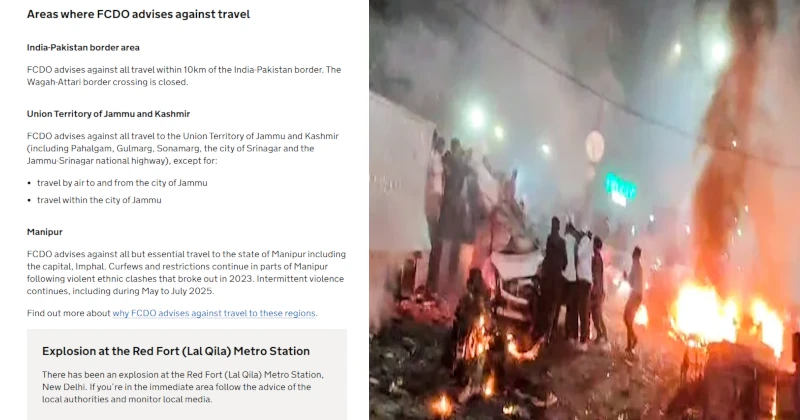
The United Kingdom (UK) has issued a comprehensive and urgent travel advisory, warning its citizens against travel to several parts of India following a deadly explosion near the Red Fort (Lal Qila) Metro Station in New Delhi.
The UK’s Foreign, Commonwealth & Development Office (FCDO) responded swiftly, updating its official Travel Advisory for India within hours of the Red Fort explosion. The advisory not only warns British nationals to avoid central Delhi temporarily but extends to entire regions under heightened security or conflict threat.
UK issues travel advisory against all travel to parts of India, following an explosion at the Red Fort (Lal Qila) Metro Station.
FCDO advises against all travel within 10km of the India-Pakistan border. The Wagah-Attari border crossing is closed. FCDO advises against all travel… pic.twitter.com/kUtJ5dIrbv
— Press Trust of India (@PTI_News) November 10, 2025
- India-Pakistan Border: The FCDO has advised against all travel within 10 kilometres of the India-Pakistan border, citing the risk of “armed conflict and cross-border hostilities.” It confirms that the Wagah-Attari border crossing India’s only land route to Pakistan is closed until further notice.
- Union Territory of J&K: The advisory warns against all travel to the Union Territory of J&K, including major tourist hubs such as Pahalgam, Gulmarg, Sonamarg, and Srinagar, as well as the Jammu–Srinagar National Highway. Exceptions are made solely for air travel to and from Jammu and movement within the city of Jammu.
- State of Manipur: The FCDO advises against all but essential travel to Manipur, including its capital Imphal, citing continuing ethnic violence, curfews, and sporadic militant activity. The advisory notes that “intermittent violence continues, including during May–July 2025”, underscoring the region’s volatility since the outbreak of Meitei–Kuki clashes in 2023.
The advisory is stern urging British citizens already in India to “remain vigilant, avoid crowded places and political gatherings, and follow the instructions of local authorities.” It also warns of the possibility of further terrorist incidents in major urban centres.
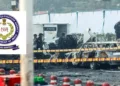
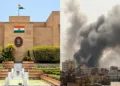
The explosion, which ripped through a Hyundai i20 vehicle parked near the Red Fort Metro Station around 7 p.m., killed at least nine people and injured dozens. Flames engulfed nearby cars, triggering panic among commuters, tourists, and vendors in the bustling vicinity of one of India’s most iconic landmarks. The area frequented daily by hundreds of foreign visitors lies within a few hundred meters of the historic Red Fort, from where India’s Prime Minister traditionally addresses the nation on Independence Day.
Eyewitness accounts described a “thunderous explosion” followed by black smoke rising from the station parking area. Passengers at the adjacent metro exit were thrown to the ground by the shockwave. “It felt like an earthquake,” said Ramesh Kumar, a local shopkeeper who witnessed the blast. “There was fire everywhere, and people were screaming for help.”
Emergency responders, including the Delhi Fire Service, National Disaster Response Force (NDRF), and National Security Guard (NSG) bomb disposal units, rushed to the site. The Delhi Police immediately sealed the area, evacuating nearby buildings and metro entrances. Forensic teams recovered metal fragments, circuit components, and traces of ammonium nitrate, indicating the use of a sophisticated improvised explosive device (IED).
While authorities have not officially attributed responsibility, early intelligence inputs suggest the involvement of Pakistan-based terror networks, potentially Lashkar-e-Taiba (LeT) or its offshoots. Investigators are probing whether the blast was timed to coincide with broader geopolitical developments, particularly renewed hostilities along the India-Pakistan border and Islamabad’s ongoing propaganda against New Delhi in global forums.
Following the explosion, Delhi Police Commissioner S. N. Srivastava imposed citywide security restrictions, suspending metro services at multiple stations near the Red Fort, Jama Masjid, and Chandni Chowk. Sniffer dogs, metal detectors, and baggage scanners have been deployed at major metro stations and bus terminals.
Intelligence agencies are also on alert for potential follow-up attacks. Sources within the Ministry of Home Affairs (MHA) indicate that the blast may have been part of a larger plot targeting crowded heritage sites including India Gate, Connaught Place, and the Delhi High Court complex.
Meanwhile, security has been strengthened around foreign embassies, religious sites, and transportation hubs, with the NSG and Delhi Police’s Special Cell conducting joint patrols.