




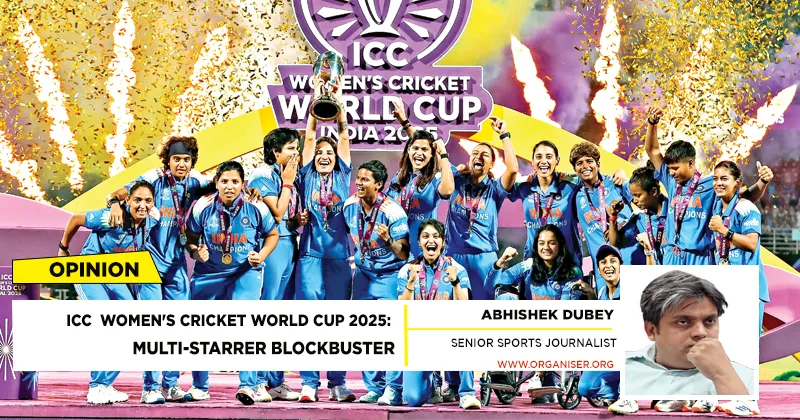
There are dates in history which get etched forever with a specific event. November 2, 2025 is the date which changed Indian women cricket forever. Before this, at least twice they were so near and yet so far. But after this date, when Harmanpreet Kaur and the team lifted the women’s Cricket World Cup, they took Indian women cricket in the orbit from where they will not look back. Before this, when girls in the far flung places of India wanted to take up cricket, the frequently asked question was why men’s sports? After November 2, 2025, the answer will be why not? If Harmanpreet and the team can do this, why not us! Along with the men’s team, Indian women’s team will be the engine which will be driving the global cricket story for the decades to come.
Mumbai is Iconic Venue
When we talk about Mumbai, it instantly brings to our mind two things. Firstly, the financial capital of India. Indian women cricket, after their sensational World Cup victory, will have the financial muscle which will be a growth rate driver for world cricket. Secondly, Mumbai is recognised for its Bollywood movies. For years, Bollywood scriptwriters, directors and producers have interwoven compelling narratives which have mesmerised the masses. But on the night of November 2, 2025, a story was scripted by the Indian women team at Navi Mumbai, outskirts of the city, which will be difficult to match by the best of scriptwriters and directors in the decades ahead. Like the best of Bollywood blockbuster films, the Indian women’s cricket team has real life stories of Naya Bharat which will inspire generations.
The Coach Behind Winners
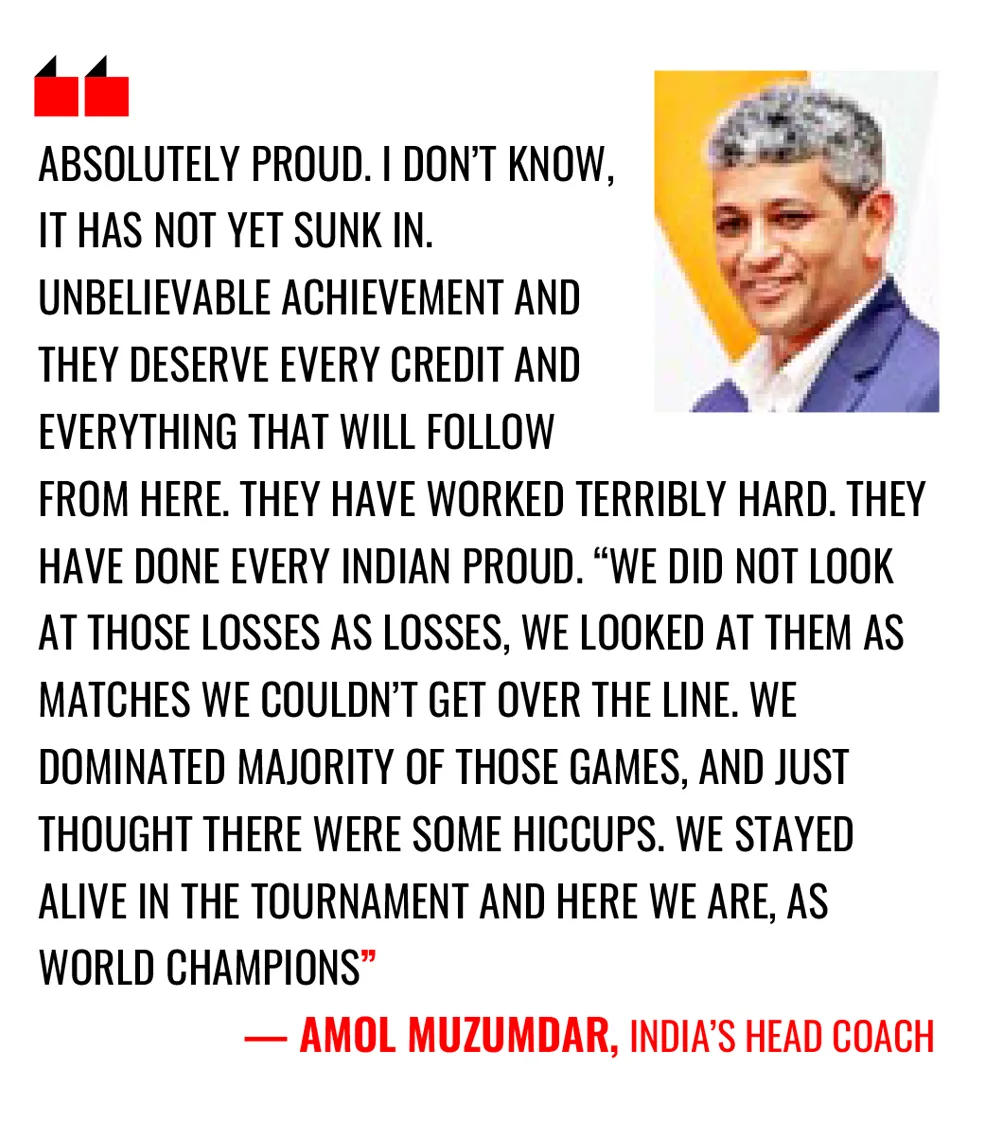
Behind every successful man, there is a woman. In the defining roar of 16 of the brave Indian women, there was a man- Amol Muzumdar who was looking for redemption. When Vinod Kambli combined with Sachin Tendulkar to forge the world record partnership of 664 runs in the school cricket, it was Amol Muzumdar, who throughout padded up and never got a chance to bat. After this, Amol dominated the domestic cricket playing Ranji Trophy for Mumbai and Assam. But, Amol never got to play for India. Finally, when Amol Muzumdar was appointed as coach of the Indian women’s team in November 2023, he was convinced of the talent of a bunch of Indian girls. But, he was equally convinced that like him talent alone will not make them champions.
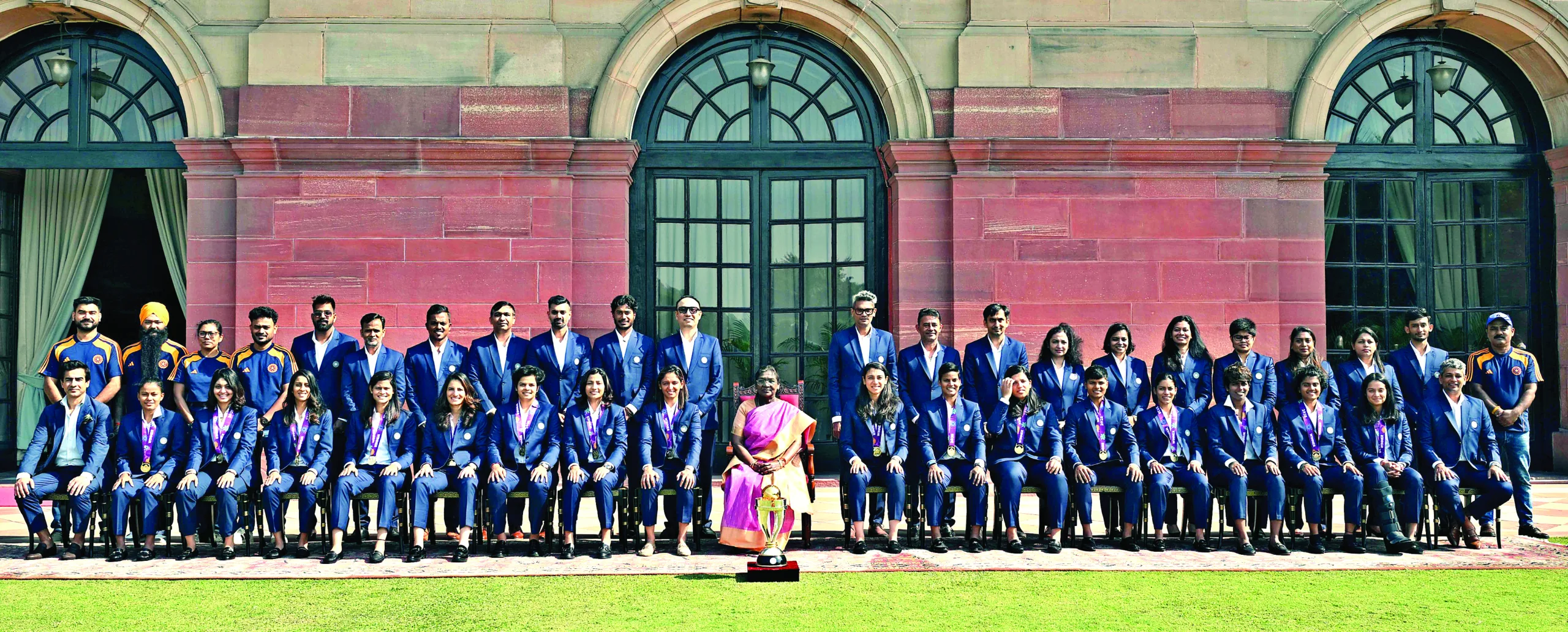
From Hardships to World Cup Glory!
A clip of former Indian captain, Mithali Raj’s old interview has gone viral on social media following India’s historic 2025 World Cup triumph. In the interview, the legendary cricketer recalled how players barely earned enough to cover their travel costs during the early 2000s.
“When we became runners-up in the 2005 World Cup, each of us received just Rs 1,000 per match,” Mithali said, looking back on India’s first appearance in a World Cup final. “We played eight matches in that tournament, so we got Rs 8,000 in total. Back then, we didn’t even have annual contracts or match fees in a proper structure.”
At the time, women’s cricket in India was managed by the Women’s Cricket Association of India (WCAI), which functioned independently without major sponsors or solid financial support. Players often travelled by train in general compartments, stayed in modest hotels, and played purely out of passion for the game.
Things began to change in 2006 when the BCCI took women’s cricket under its wing. Over time, the structure evolved to include central contracts and higher pay scales. The biggest breakthrough came in 2022, when the BCCI announced equal match fees for men and women a historic move that put India among the global leaders in promoting gender equality in sport. Today, women cricketers earn Rs 15 lakh for a Test, Rs 6 lakh for an ODI, and Rs 3 lakh for a T20I, the same as their male counterparts.
Notably, this time BCCI has announced a cash reward of Rs 51 crore rupees for the Indian women’s cricket team players, support staff and selection committee, in recognition of their momentous achievement.
After the unexpected rainfall which had delayed the start of the final match of the Women’s World Cup 2025, the 50-year-old coach, with grey hairs and unshaven beards, pulled up the women in blue under the leadership of skipper Harmanpreet Kaur for the team huddle. “For the next seven hours, we cut out all the noise. We cut them out of our lives. We create our own bubble here. Seven hours, we create our own bubble, and we step into it, and we finish that. And we write our own story. No more stories from outside, we write our own story. You will write your own story tonight. Let us create history”, said Amol Muzumdar.
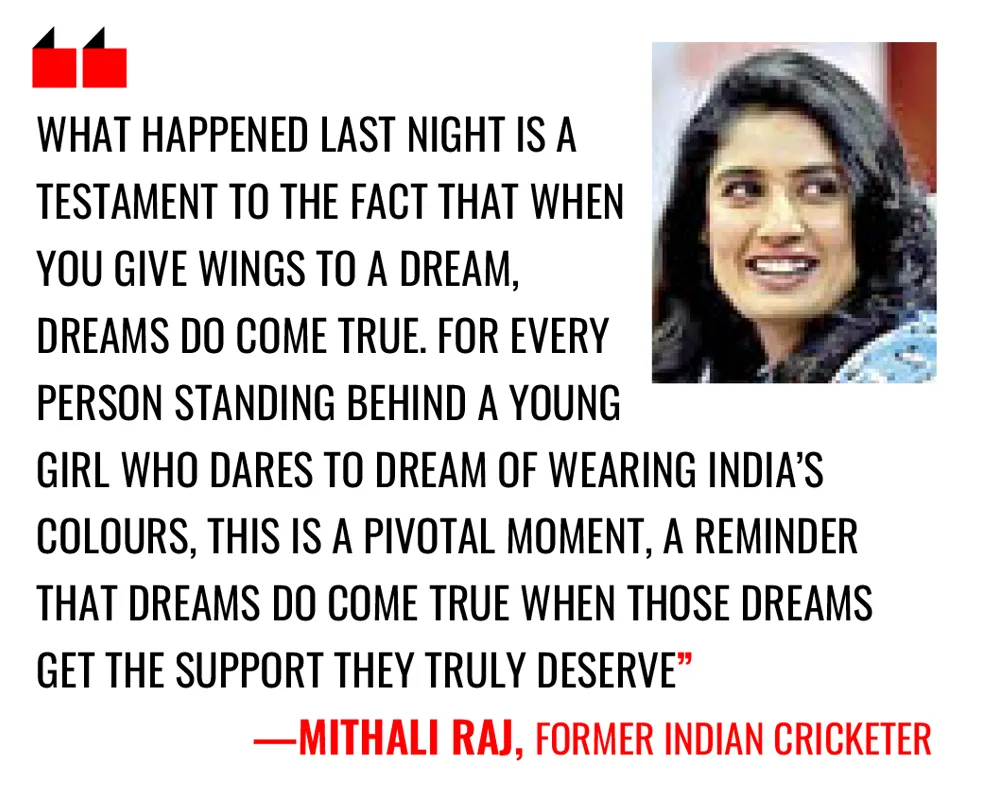
Seven hours after this, when Harmanpreet Kaur took the catch to etch the name of Indian women’s team on the World Cup 2025 trophy, she touched the feet of her
coach-true to the Indian age old tradition of Guru-Shishya parampara.
Etched in History
Harmanpreet was born on March 8, 1989 in the Moga district of Punjab, to Harvinder Singh Bhullar and Satvinder Kaur. Her father was a former sportsman who later on worked as a clerk in the local judicial court. She played with the boys in the formative years of her career. All these contributed in shaping her up as the battle hardened woman destined to change the course of Indian women’s cricket. She was part of the Indian women’s cricket team which reached the finals of the 2017 World Cup. Her 171 runs memorable innings versus Australia in the same World Cup is etched in history. But not getting the trophy was playing on the psyche of Indian women cricketing legends before and after her.
After one such near and yet so far moment, the two future stars of the Indian women’s cricket- Harmanpreet and Smriti Mandhana- promised Jhulan Goswami. “Jhulan di, we don’t know as to whether you will be playing the next World Cup or not. But we will leave no stone unturned to win the World Cup for the country. Nothing else matters.”
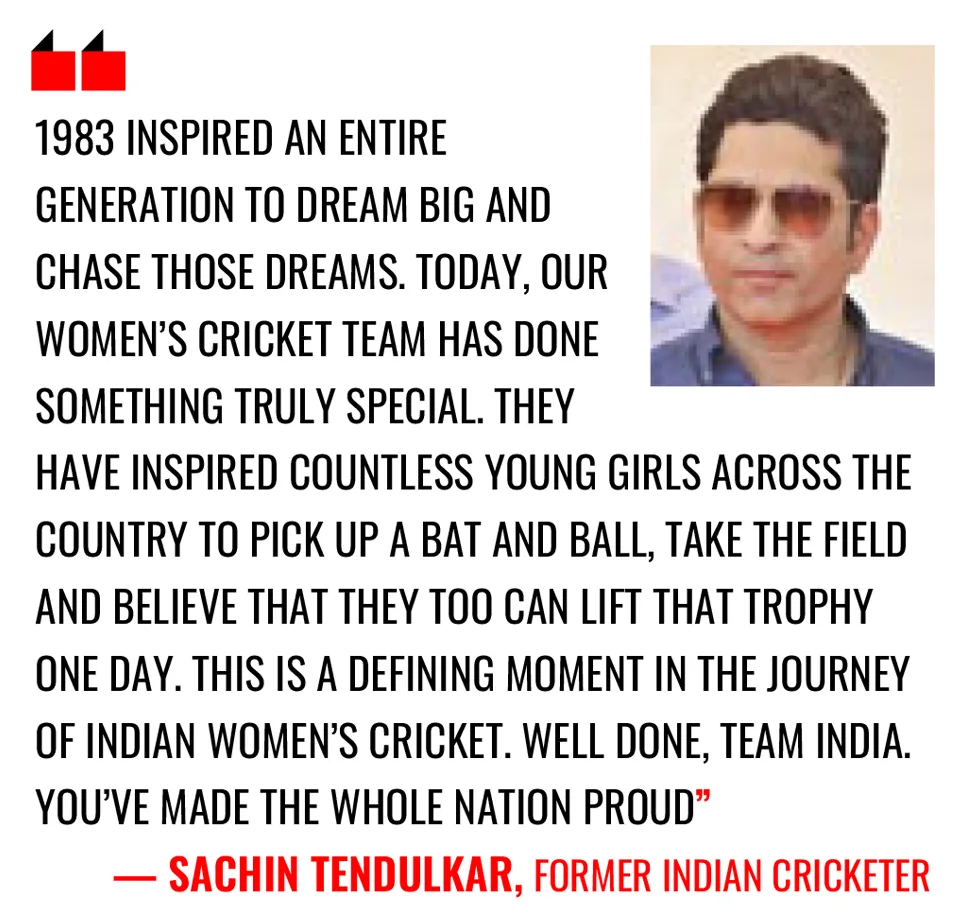
Smriti Mandhana Becomes Poster Girl
After the famous victory at DY Patil Stadium in Navi Mumbai, the camera panned on Harmanpreet and Smriti Mandhana – the captain and the vice captain – holding on to each other in a tight embrace. Both had taken on themselves the responsibility of winning the trophy for the country and that time had finally come. Indian women cricket was in need of a poster girl. Perhaps, there could not have been a better one than Smriti Mandhana. When Smriti was two-year-old, her parents moved to Sangli district in Maharashtra. Her father Srinivas Mandhana played cricket at the district level and her brother Shravan also played the game. Though Shravan was Smriti’s initial inspiration, she surpassed them all to play for her country. By the 2025 World Cup, Smriti had established her credentials as Indian women’s cricket best batter and brands’ delight. Not the one known to show her emotions publicly, Smriti wanted to win the cup for India.
“After every World Cup defeat, we had our lows together. We departed, did not interact for days and then started dreaming of World Cup win the moment we assembled again,” says Harmanpreet, on her bond with Smriti.
Before the World Cup 2025, Smriti, in one of her interviews, clearly said, “I don’t have any personal milestones for the World Cup. In the previous World Cups I had scored tons of runs but could not win the trophy for my country. In this World Cup, my only focus is on contributing to the team’s cause and the victory.”
Post-2025 World Cup win, Smriti Mandhana is set to be the future team leader, the girl with the coveted World Cup Trophy and Women Premier League trophy for her franchise and most importantly, brand value surpassing many established men’s players. But, apart from these lead characters, the blockbuster has many other characters whose roles have been equally impactful.
In the victory ceremony, there was a girl in the wheel chairs. A pass out from the prestigious Jesus and Mary’s college of Delhi University, Pratika Rawal is a psychology graduate with a strong academic background. Before playing cricket, she had excelled in basketball and won a medal in the National School Games. Her father, a BCCI certified umpire, introduced her to cricket and she got to hone her skills under different coaches. In the do or die match for the semi final berth versus New Zealand, Pratika played an innings of her life. Her innings contributed to India’s victory and semi-final berth but she got injured and could not participate further in the tournament. Pratika’s loss was Shefali Verma’s opportunity.
Before the semi final match of the World Cup, Shefali Verma, the attacking batter of Indian cricket was watching the matches from her home. She was out of the team. Suddenly, she got a call to join the team. Upon rejoining the team, she told the media, “I believe God has sent me to do something.” The comment turned prophetic. In the final match of the tournament, Shefali scored her career best 87 runs. In addition to this, when it seemed that South African batters were taking away the game from India, she took two wickets to swing the game decisively towards India. Success has many fathers and failure is orphan. As tennis legend Rafal Nadal’s book shows, it takes guts to admit your human fragilities when you are at the summit of your success. Jemimah Rodrigues is one such gutsy girl.
India had lost three games on the trot in the World Cup 2025. Jemimah Rodrigues, the smiling and chirpy face of the Indian Women’s team, was going through the worst insecurities of her life. She was struggling with the bat and she had to be dropped from the playing eleven mid way in one of the matches. And, then the big game against Australia in the semi finals came. Jemimah smashed unbeaten 127 versus Australia in the record winning run chase which many consider one of the best ever innings ever under pressure. After this once in a lifetime innings, Jemimah said, “I will be very vulnerable here because I know if someone is watching, this might be going through the same thing. Nobody likes to talk about their weaknesses. I was going through a lot of anxiety, you just feel numb. You don’t know what to do. You are trying to be yourself. And this time my mom and my dad supported me a lot.” Clearly, the message for the youngsters is it’s equally cool to be down and out. Accept it and move ahead.
Richa Ghosh from Siliguri in West Bengal started playing cricket with her father Manabendra Ghosh. With the dearth of a girls team, Richa started playing cricket in her father’s boys club. This forged her fearlessness and aggressive style. Richa used this to the hilt whenever required in the Indian women’s team World Cup winning campaign.
Born in August 2005 in Mohali Punjab, Amanjot Kaur grew up in the modest household where her father worked as a carpenter. When as a child she wanted a bat, her father used his skills to make a bat for her. Amanjot honed her skills in Chandigarh where her father honed her skills. Amanjot’s skills as an all rounder gave team India the balance to win the World Cup.
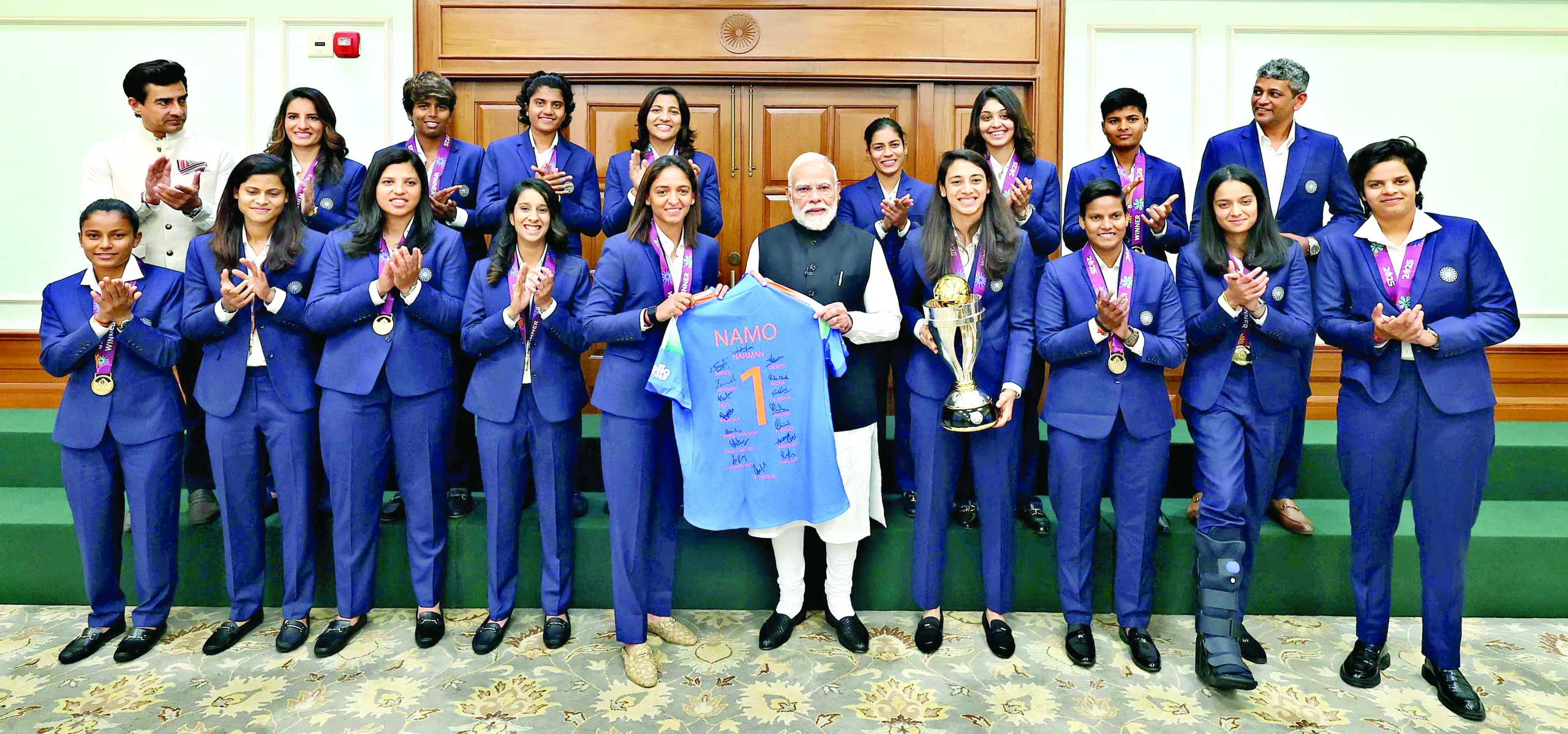
“You should be ashamed to see your girl playing cricket with the boys. People used to say this to me when my daughter Radha Yadav played cricket. Now the same people are praising us and distributing sweets on her accomplishments,” says Omprakash Yadav, father of Radha Yadav, Indian spinner. Omprakash sold paav, beedi and milk on the footpath to raise his kids.
Sree Charani from Kadapa district of Andhra became the first woman from the region to represent the country. Whenever team India was in trouble, she weaved magic to bring her team back on the track. From Kranti Gaud to Uma Chhetri, there are stories galore which makes this blockbuster special. But what makes it truly special is the way the ‘Women in Blue’ shared their best moments with their predecessors- Jhulan Goswami, Anjum Chopra and others- which shows the large hearted side of Indian women.












Comments