





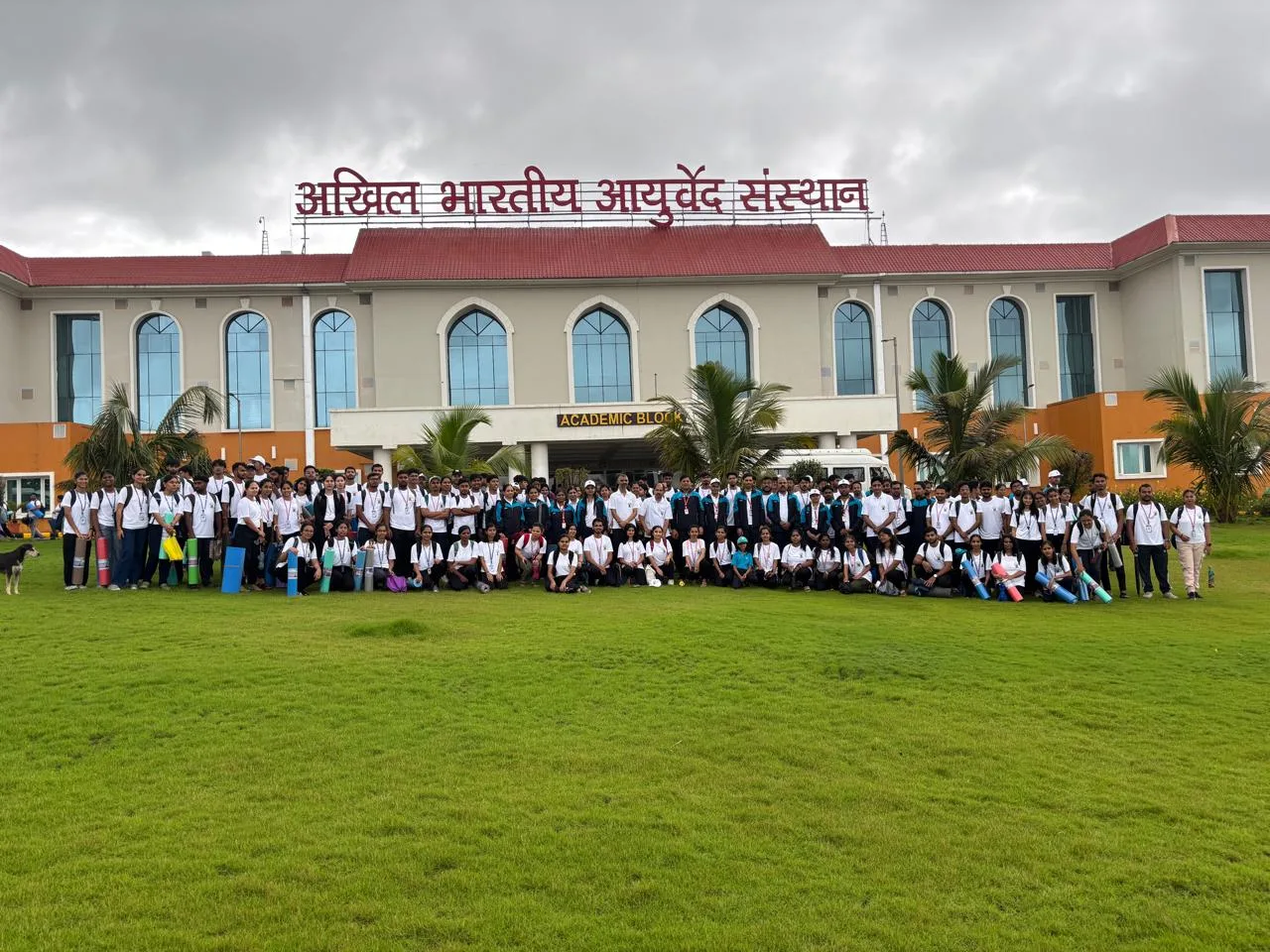
Cementing India’s growing leadership in evidence-based traditional medicine, the Pharmacology Laboratory of the All India Institute of Ayurveda (AIIA), New Delhi, has received triple ISO certification from the Bureau of Indian Standards (BIS).
The recognition includes IS/ISO 9001:2015 for Quality Management Systems, IS/ISO 14001:2015 for Environmental Management Systems, and IS/ISO 45001:2018 for Occupational Health and Safety Management Systems. This rare combination of accreditations positions AIIA among a handful of global research institutions to operate under a fully integrated management framework that aligns with international standards.
The certification was formally presented at a BIS event on Quality Management System certification for the Central Council for Research in Homoeopathy (CCRH) officials in New Delhi, where AIIA’s achievement was highlighted as a model for institutional excellence and sustainability.
Milestone in Ayurveda’s globalisation journey
The All India Institute of Ayurveda (AIIA), an autonomous body under the Ministry of Ayush, Government of India, has long been at the forefront of blending traditional wisdom with modern science. This triple ISO certification, experts say, marks a new chapter in Ayurveda’s globalisation journey.
The recognition shows AIIA’s adherence to globally accepted standards of quality, environmental responsibility, and occupational health. It also validates the scientific rigour applied in pre-clinical pharmacological studies on Ayurvedic formulations, a crucial step toward global acceptance of India’s traditional medicine systems.
Prof. (Vaidya) P.K. Prajapati, Director of AIIA, hailed the certification as a proud moment for Indian Ayurveda, saying: “The ISO certification reflects AIIA’s continuous pursuit of excellence in education, research, and institutional governance. Integrating globally recognised ISO standards with traditional Ayurvedic research reinforces our commitment to quality, safety, and sustainability. This sets a new benchmark for Ayurveda institutions across India and abroad.”
Driving efficiency and compliance
The accreditation recognises the implementation of an Integrated Management System (IMS), a holistic operational framework that integrates quality, environmental, and occupational safety processes into every layer of research and administration at AIIA.
Through the IMS, AIIA has streamlined its research protocols, strengthened ethical and environmental compliance, and improved operational efficiency in pharmacological studies involving Ayurvedic and herbal formulations.
The ISO 9001 certification ensures standardised experimental protocols, documentation integrity, and reproducibility of results. ISO 14001 promotes eco-conscious operations, mandating waste reduction, resource efficiency, and adherence to environmental laws. Meanwhile, ISO 45001 ensures employee health and safety, risk mitigation, and periodic safety audits across laboratories and departments.
Together, these certifications represent a significant institutional shift toward transparency, accountability, and sustainability, traits increasingly demanded by international collaborators and funding agencies in biomedical research.
At the BIS felicitation event, Lalthan Pari, Scientist E, BIS, lauded AIIA’s achievement and highlighted the need for similar adoption of Quality Management Systems (QMS) across research institutions and public health bodies.
“Implementing QMS frameworks raises systemic standards, builds credibility, and ensures that India’s traditional knowledge systems meet the highest levels of international scrutiny,” Pari said.
Dr. Subhash Kaushik, Director General, Central Council for Research in Homoeopathy (CCRH), who also attended the event, emphasised the role of “quality, commitment, and continuous improvement” as the three pillars of institutional excellence.
AIIA’s rise as a global ayurveda leader
Established as India’s apex Ayurveda institute, the All India Institute of Ayurveda has steadily emerged as a global centre of excellence for clinical care, research, and education. Accredited with NAAC A++ and recognised as India’s first NABH-accredited public Ayurveda hospital, AIIA operates a 200-bed referral facility with 12 speciality departments and 45 clinical units.
The institute not only serves as a national referral centre for complex Ayurvedic treatments but also plays a key role in promoting integrative research by combining traditional formulations with modern pharmacological and clinical evaluation methods.
From exploring the molecular mechanisms of Ayurvedic herbs to developing evidence-based formulations for lifestyle and chronic diseases, AIIA’s research ecosystem reflects a growing synergy between ancient wisdom and modern science.
Bridging tradition and technology
The institute’s laboratories are now among India’s most advanced facilities for Ayurvedic pharmacology, equipped with modern analytical instruments and quality-control systems comparable to international research centres.
The ISO certifications strengthen AIIA’s global credibility and will enable easier international collaborations, joint research projects, and cross-border accreditation of Ayurvedic formulations. They also bring AIIA’s operational standards on par with global Good Laboratory Practice (GLP) norms, a critical requirement for publishing data in reputed international journals and gaining acceptance in global health systems.
The triple certification is expected to encourage other Ayurveda and traditional medicine institutions under the Ministry of Ayush to adopt similar systems of quality, environmental, and occupational safety compliance.
By institutionalising this integrated approach, AIIA has demonstrated how traditional medicine research can evolve to meet 21st-century expectations of transparency and sustainability without compromising on its core philosophical principles.
The lab’s eco-conscious initiatives, from waste segregation and recycling to energy-efficient infrastructure and water conservation, also align with India’s broader Mission LiFE (Lifestyle for Environment) vision launched by Prime Minister Narendra Modi.
Roadmap for ayurveda’s future
Notably, the certification will have far-reaching implications for the globalisation of Ayurveda. It strengthens India’s case for recognition of Ayurvedic pharmacology within international health frameworks and trade agreements while building confidence among researchers and investors in traditional medicine innovation.
In the long term, AIIA’s achievement is expected to accelerate standardisation, digitisation, and global validation of Ayurveda-based therapeutics, ensuring their integration into global healthcare systems.
The triple ISO certification from BIS is not just a recognition of operational excellence, it is a symbol of India’s commitment to positioning Ayurveda as a scientifically robust, environmentally responsible, and globally credible healthcare system.
By aligning centuries-old Ayurvedic principles with modern global standards, the All India Institute of Ayurveda has redefined what institutional excellence looks like in the traditional medicine sector, paving the way for a future where Indian Ayurveda stands shoulder to shoulder with the world’s leading health sciences.
















Comments