





Bharat’s eastern frontier has long grappled with one of the most persistent challenges to its demographic stability and national security, illegal infiltration. For decades, the porous border with Bangladesh has allowed steady migration into states like West Bengal and Assam, creating not only economic and cultural strains but also political distortions through fraudulent documentation and voter enrollment.
According to data from the Ministry of Home Affairs, the decadal growth rate of the Muslim population in Assam stood at 29.6 percent, while several districts of West Bengal recorded a rise of over 40 percent. Union Home Minister Amit Shah has repeatedly asserted that while infiltration has been largely checked in Assam after the NRC process, “illegal immigrants are getting a red-carpet welcome in Bengal.”
The border’s geography, marked by dense forests, riverine terrain, and open stretches of agricultural land, makes it nearly impossible to fence completely. This, coupled with the socio-cultural intermingling of border populations and the availability of forged documents, has allowed many non-citizens to blend seamlessly into local communities. Over time, these individuals manage to acquire identity documents, ration cards, and even voter IDs, thereby entering the democratic fabric as “citizens.”
Case studies that expose the system
The depth of this problem was starkly revealed in recent cases that shook administrative agencies across states.
In Madhya Pradesh, police detained a man claiming to be Palash Adhikari, a Hindu labourer from Malda, West Bengal. He presented a full set of Indian documents, Aadhaar card, PAN, and Voter ID, apparently leaving little room for doubt about his citizenship. But when a local court ordered a verification of his records, inconsistencies emerged. In the records of his supposed father Ramesh Adhikari, there were only two sons until 2010, yet by 2015, four names appeared, including Palash. Even more startling, Palash’s claimed date of birth preceded Ramesh’s marriage by a decade.
Further investigation exposed the truth: “Palash Adhikari” was actually Sheikh Moinuddin, a resident of Khulna, Bangladesh, who had infiltrated India years ago and lived under a fabricated identity. For nearly a decade, he worked as a daily labourer, obtained official IDs, and passed as an Indian voter.
In another case, Iclaj Molla, who crossed into India nearly twenty years ago, assumed the Hindu name Piklu Dey. He managed to obtain an Indian passport, travel to Kuwait, acquire property in Kolkata, and even renew his passport abroad. This case revealed glaring lapses in verification procedures and demonstrated how infiltrators not only penetrate the social fabric but also manipulate state institutions to obtain full citizenship privileges.
These two examples, “Palash Adhikari” and “Piklu Dey,” illustrate how deep the infiltration issue runs. It is not just a border security problem anymore; it has infiltrated the bureaucratic and electoral structures themselves.
What is SIR and why it matters
To address these challenges, the Election Commission of India (ECI) launched the Special Intensive Revision (SIR), a nationwide administrative exercise aimed at reviewing, verifying, and updating electoral rolls. Its stated purpose, according to ECI documents, is to remove duplicate, deceased, migrated, and ineligible entries to ensure that “every eligible Indian citizen is represented, and no outsider influences the electoral mandate.”
The SIR operates through door-to-door verification by Booth Level Officers (BLOs), who physically verify voter information with households. Each entry on the voter roll is cross-checked with identity and domicile documents such as Aadhaar, PAN, and land records. Any anomalies, duplicate entries, false ages, untraceable addresses, are flagged for scrutiny. Once verified, the ECI freezes the rolls and removes unverified names, following due process through notices and hearings.
According to the Press Information Bureau, the SIR ensures that infiltrators do not become “participants in the country’s political decision-making process.” When conducted transparently, it strengthens three key pillars of governance:
Democratic legitimacy: Ensuring that only genuine Indian citizens decide electoral outcomes.
Administrative fairness: Keeping welfare benefits and identity-based services reserved for legitimate citizens.
National security: Preventing illegal immigrants from altering the demographic and political landscape of sensitive regions.
The Amit Shah-led Home Ministry has also argued that large-scale infiltration has caused demographic shifts in several border districts and that an accurate voter list is essential not only for democracy but for India’s internal security architecture.
Why Bengal and Assam need it most
Among all Indian states, West Bengal and Assam remain the most vulnerable due to their long and porous borders. Infiltration in these regions is not a recent phenomenon, it has historical roots dating back to the 1971 Bangladesh Liberation War and the subsequent decades of political patronage that allowed illegal settlers to secure documentation.
The Bengal-Bangladesh border remains one of the most challenging to monitor, given its terrain and dense population. Local administrative systems have often been accused of negligence or even complicity in facilitating fake documentation, leading to a complex web of false identities that directly affect voter rolls.
Mamata Banerjee’s opposition
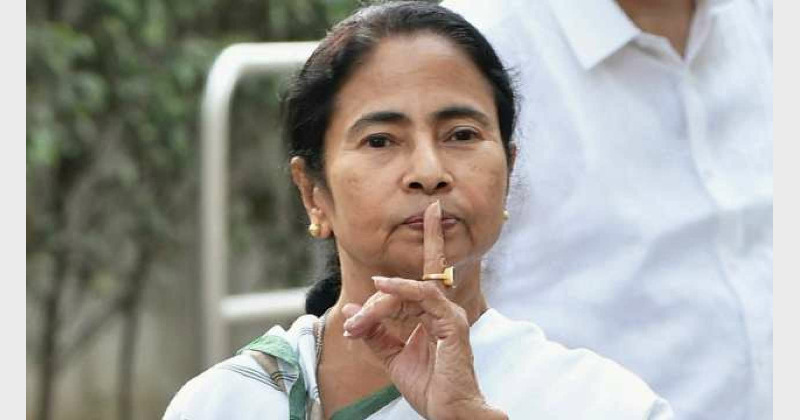
Despite the clear administrative and national rationale behind SIR, Chief Minister Mamata Banerjee has opposed its implementation in West Bengal. She has termed the process “politically motivated,” alleging that it is designed to act as a “backdoor NRC” aimed at disenfranchising minorities and poor voters.
According to The Times of India, Banerjee argued that the ECI’s proposed timeline of “2-3 months” is unrealistic, insisting that such a massive revision should take “at least 3-4 years.” Her party, the Trinamool Congress (TMC), has warned of mass protests if even one genuine voter’s name is deleted. “If a single genuine voter’s name is struck off, one lakh people will gherao the ECI office in Delhi,” declared Abhishek Banerjee, the party’s national general secretary.
The state government has also accused the ECI of excluding it from key consultations and of launching the process during sensitive periods like floods and festive seasons. Mamata Banerjee further claimed that Union Ministers had “announced numbers of deletions even before the verification began,” suggesting premeditated political intent.
Her resistance mirrors her long-standing opposition to measures like the NRC and CAA, which her government has dismissed as “anti-people” despite their stated objective of identifying non-citizens.
The infiltration crisis is not a myth, it is a complex, lived reality in India’s border states. From Sheikh Moinuddin alias Palash Adhikari to Iclaj Molla alias Piklu Dey, the cases highlight the alarming ease with which illegal migrants can obtain Indian identities, participate in elections, and even influence local governance.
The Special Intensive Revision (SIR), therefore, stands as a necessary corrective, an instrument to clean the democratic record, protect welfare resources, and uphold the sanctity of the vote. Yet, its success hinges on a delicate balance: it must be rigorous without being exclusionary, thorough without being vindictive.
In West Bengal, where infiltration has often been entwined with vote-bank politics, the Mamata Banerjee government’s opposition reflects not just administrative concerns but deeper political anxieties. As the debate intensifies, SIR has come to represent a much larger struggle, between electoral transparency and political expediency, between citizenship integrity and populist appeasement.
If executed with transparency and accountability, the SIR could mark a turning point, ensuring that only Indian citizens decide India’s future.















Comments