




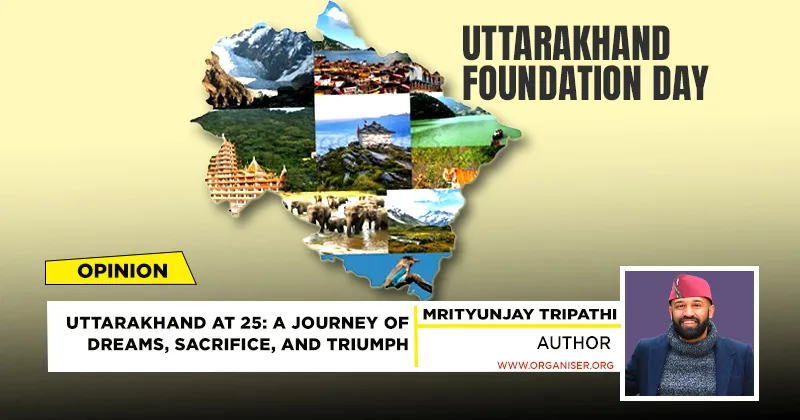
Twenty-five years. A quarter of a century. For Uttarakhand, these years represent not just time passing, but a remarkable story of hope, sacrifice, and transformation. As the state celebrated its Silver Jubilee on November 9, 2025, millions of hearts swelled with pride for the martyrs who laid down their lives, pride for the mountains that define their identity, and pride for the Dev Bhoomi (Land of Gods) that has emerged as one of India’s most dynamic states. This is not just a story of political boundaries being redrawn. It’s a story of mothers who marched with their children, of students who dared to dream, of activists who faced bullets for their homeland. It’s a story that every Uttarakhandi carries in their heart, passed down like the sacred waters of the Ganga that flow from these blessed mountains.
The Seeds of a Dream: When Mountains Called for Freedom
Long before November 9, 2000, became a date etched in history, the people of the hills knew they were different. Their struggles were unique, their needs distinct, their voices lost in the vastness of Uttar Pradesh. The mountains were calling out for recognition, and the people were ready to answer. The demand for a separate hill state wasn’t born overnight. It has roots going back to 1930, when local residents first moved a resolution claiming their right to self-governance. In 1938, when Pandit Jawaharlal Nehru himself acknowledged at a Congress convention in Srinagar (British Garhwal) that the people of this region should have the right to frame policies for themselves, a seed was planted. But it would take decades of struggle, pain, and unwavering determination before that seed would bloom into statehood. By the 1990s, that determination had transformed into a full-fledged movement. Young people, frustrated by unemployment and the lack of opportunities, joined hands with women who had long borne the burden of migration watching their husbands and sons leave for the plains in search of work. The hills were bleeding people, and those who remained knew something had to change.
The Blood That Watered Freedom: Rampur Tiraha and the Price of Statehood
If you ask any Uttarakhandi about the statehood movement, their voice will soften when they mention Rampur Tiraha. October 2, 1994 a date that should have been about celebrating Gandhi’s ideals of peace instead became a day of tragedy, brutality, and sacrifice that would forever mark Uttarakhand’s journey to statehood. On that fateful night, thousands of peaceful activists, including many women with their children, were heading to Delhi to stage a dharna at Raj Ghat. They were stopped at Rampur Tiraha crossing in Muzaffarnagar district. What followed was a nightmare that still sends shivers down the spine of every Uttarakhandi. Police opened fire on unarmed protesters. Seven brave souls Pratap Singh, Salim Ahmed, Bhagwan Singh, Dharmanand Bhatt, Gopichand, Paramjit Singh, Rampal, and Bhuvan Singh were killed. Women were allegedly raped and molested in the chaos that followed. Bodies were hidden, some dumped in the Sharda River. The brutality was unimaginable, but it only strengthened the resolve of the people.
“The foundation of Uttarakhand was nurtured with the blood of our martyrs,” Chief Minister Pushkar Singh Dhami said recently, his words echoing the sentiment of millions. Every year, on this dark day, Uttarakhandis remember not with bitterness, but with gratitude for those who sacrificed everything so their children could call this land their own. But Rampur Tiraha was not the only chapter of pain. The Mussoorie incident, the Khatima firings each place has its own story of sacrifice. Jeet Bahadur Gurung became the first martyr in Pauri on August 8, 1994. Deputy Superintendent of Police Umakant Tripathi, known for his dedication to justice, was tragically killed during the violence, becoming an unlikely symbol of the movement’s cost.
The Power of Women: The Backbone of the Movement
Here’s something that doesn’t get said enough: Uttarakhand wouldn’t exist without its women. They didn’t just support the movement , they were the movement. Approximately 60 to 70 percent of the statehood agitation comprised women. On August 31, 1994, around 100,000 women participated in the protests. These weren’t just numbers—these were mothers, sisters, daughters, and grandmothers who had seen their families torn apart by migration, who had struggled to access basic healthcare and education in remote villages, who had watched their hills being neglected while development passed them by. Women like Indira Hridayesh provided symbolic leadership, articulating the specific challenges that hill women faced lack of infrastructure, education, and healthcare in remote mountainous regions. In villages and towns across the region, women organized marches, hunger strikes, and sit-ins. They challenged patriarchal norms by taking leadership roles, ensuring that women’s voices shaped the state’s future. They faced police brutality, imprisonment, and unimaginable atrocities. Yet they never backed down. “About 70 percent of the movement comprised of women. The state was created mainly because of woman power,” said Nirmala Bisht, leader of Uttrakhand Mahila Manch. Today, in recognition of their sacrifice, the state government provides 30 percent horizontal reservation for women in government jobs a fitting tribute to the women who gave birth to this state.
The Dawn of Statehood: Dreams Come True
After years of struggle, tears, and bloodshed, the moment finally arrived. On August 15, 1996, Prime Minister H.D. Deve Gowda announced from the Red Fort that Uttaranchal would be formed. But it took four more years of political maneuvering and legislative processes before the dream became reality. Under the leadership of Prime Minister Atal Bihari Vajpayee , a leader remembered with deep affection in Uttarakhand—the Uttar Pradesh Reorganisation Act, 2000 was passed by Parliament. On August 1, 2000, President K.R. Narayanan approved the bill, and on November 9, 2000, Uttarakhand (initially named Uttaranchal) became the 27th state of India.
The historic parade grounds of Dehradun witnessed the oath ceremony of Governor Surjeet Singh Barnala and the first Chief Minister, Nityanand Swami. For the people watching many with tears streaming down their faces it was the culmination of decades of dreams, years of struggle, and months of sacrifice. The mountains had finally found their voice. Shri Vajpayee’s consensus-building approach ensured the state’s formation was peaceful, without the disturbances that marked other state formations. “Under Vajpayee ji, the NDA created three new states without even a ripple of disturbance,” L.K. Advani noted. This peaceful transition became a model for democratic state formation in India.
Dev Bhoomi: Where Faith Meets the Heavens
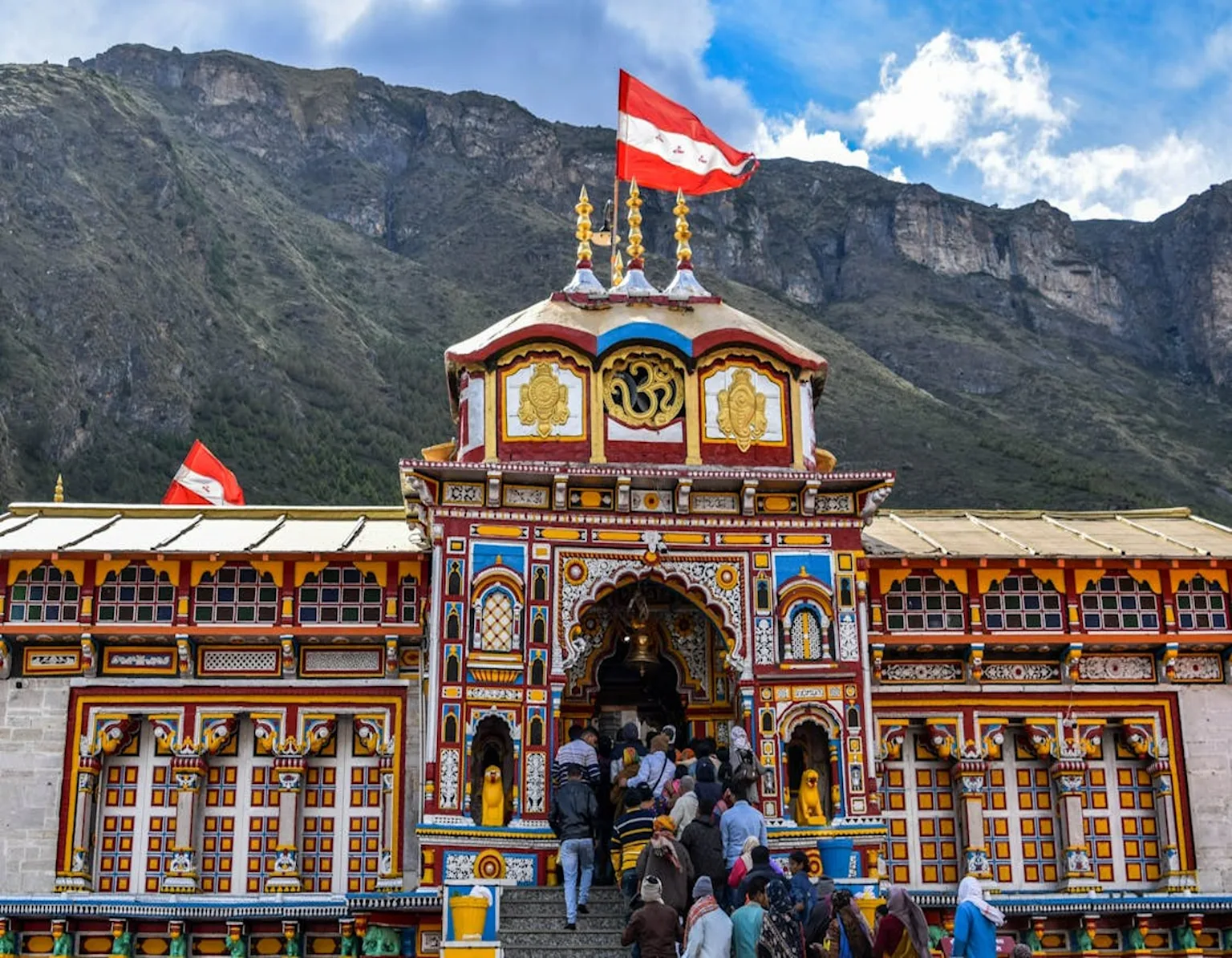
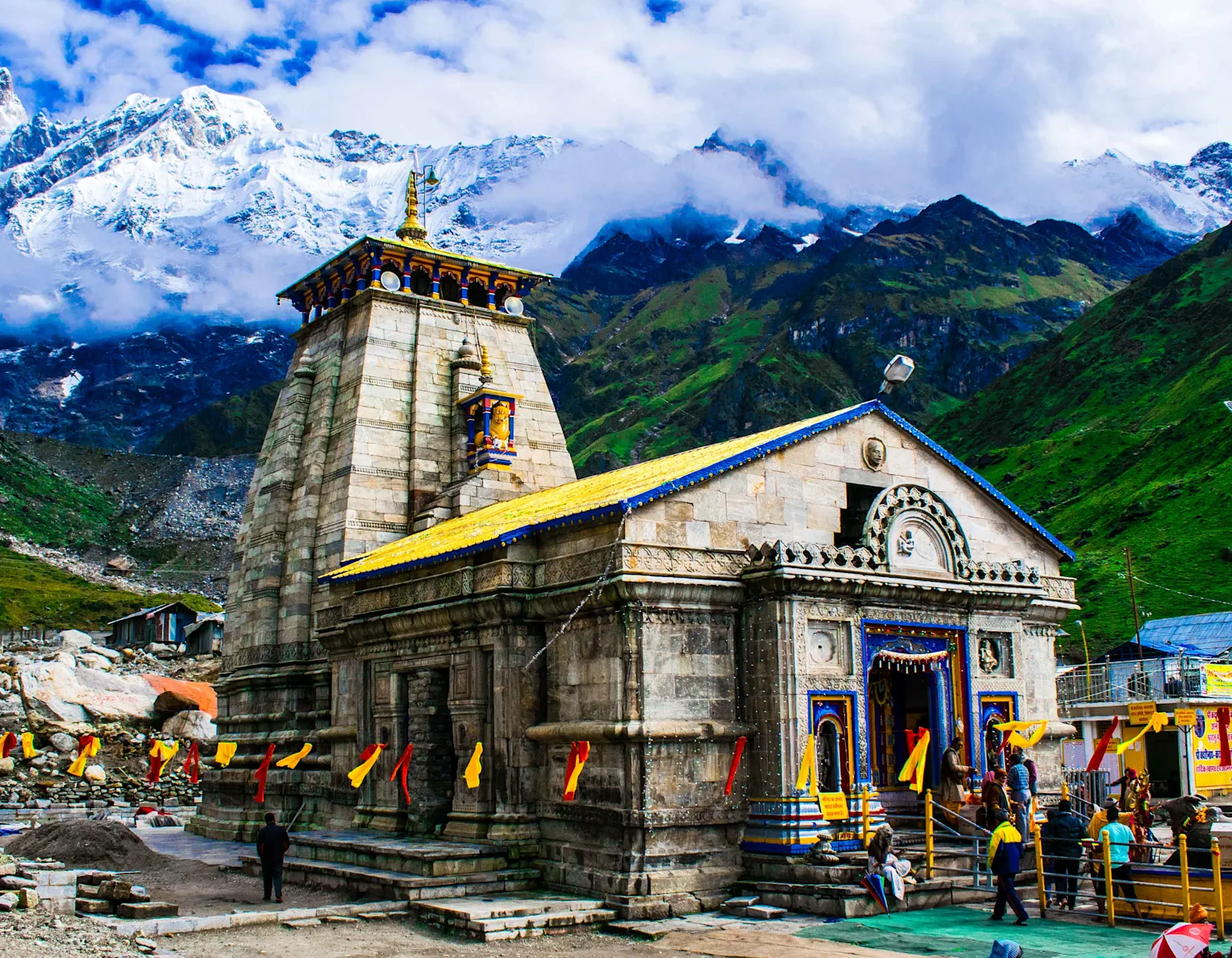
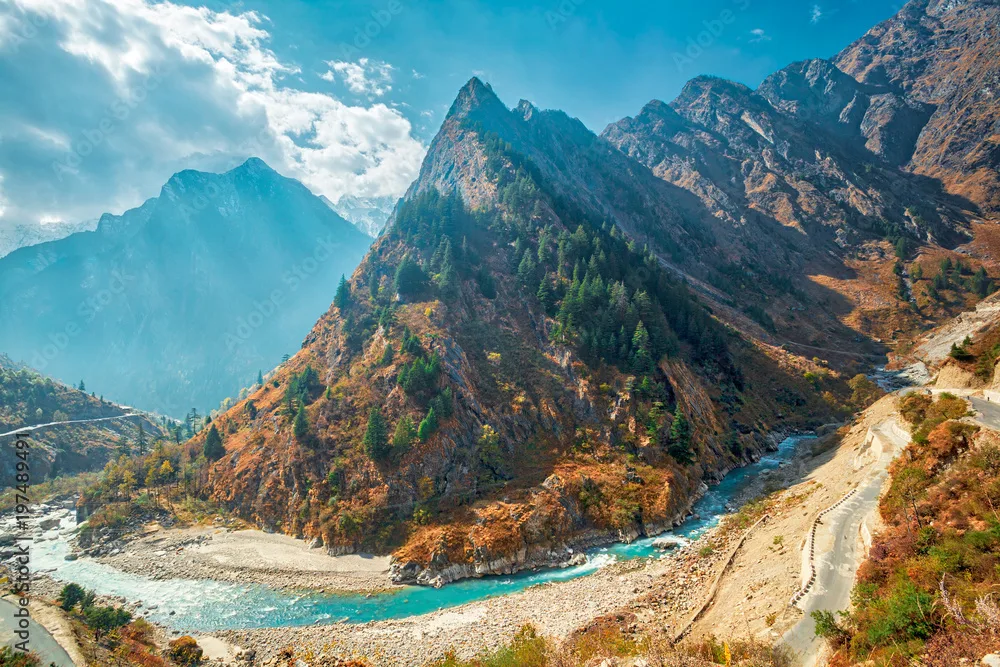
To understand Uttarakhand is to understand the deep spiritual connection its people have with their land. Known as Dev Bhoomi the Land of Gods Uttarakhand is not just a geographical entity but a living, breathing spiritual experience. The Char Dham—Yamunotri, Gangotri, Kedarnath, and Badrinath are not just pilgrimage sites; they are the very soul of Uttarakhand. These sacred shrines, nestled high in the Himalayas where rivers are born and gods are believed to dwell, draw millions of pilgrims every year. In 2025 alone, over 50 lakh pilgrims undertook the Char Dham Yatra, bringing in over Rs 7,500 crore annually to the state’s economy. But the spiritual significance goes beyond economics. For Uttarakhandis, these mountains are not just beautiful they are sacred. Every rock, every river, every peak has a story, a legend, a divine connection. Local deities like Narsingh Devta, Bhagvati Devi, and Nag Devta are woven into daily life, offering not just religious comfort but psychological security and community identity. President Droupadi Murmu, during her address at the Silver Jubilee celebrations, beautifully captured this essence: “From the sacred land of Uttarakhand, the traditions of spirituality and valour have been continuously flowing. This holy land has been the abode of many sages and seers”. The land has given India brave soldiers through the legendary Kumaon and Garhwal Regiments, and spiritual wisdom through countless sages and saints.
25 Years of Progress: Building the Dream
The past twenty-five years haven’t just been about existence they’ve been about excellence. Uttarakhand has transformed from a newly carved state struggling to find its footing into a dynamic, progressive state leading the nation in several areas.
Infrastructure Revolution
Under the current leadership of Chief Minister Pushkar Singh Dhami, Uttarakhand is witnessing unprecedented infrastructure development. Development projects worth over Rs 2 lakh crore are currently underway in the state with support from the central government. Once completed, these projects will position Uttarakhand among the country’s leading states and play a key role in realizing the dream of ‘Viksit Bharat’. The much-awaited Delhi-Dehradun Expressway, set to open soon, will reduce travel time from 6.5 hours to just 2.5 hours. This 210-kilometer engineering marvel will revolutionize connectivity, boost tourism, and transform Dehradun into a major investment hub. The expressway features wildlife corridors, smart traffic management, and eco-friendly designs that balance development with environmental conservation.
The Rishikesh-Karnprayag rail project has already completed 70 percent of its work, bringing rail connectivity to previously isolated hill districts. This will not only improve access to pilgrimage sites but also open up economic opportunities for remote communities.
The Char Dham All-Weather Road Project ensures year-round access to pilgrimage sites, catalyzing economic activity in remote regions. Ropeway projects to Kedarnath (costing Rs 4,000 crore) and Hemkund Sahib (Rs 2,700 crore) are about to commence, making these sacred shrines more accessible to elderly pilgrims and differently-abled devotees.
Legislative Milestones and Good Governance
Uttarakhand has become a pioneer in progressive legislation. The state became the first in independent India to implement the Uniform Civil Code (UCC) on January 27, 2025. This historic reform, promised during the 2022 assembly elections, ensures uniform personal laws for all citizens regardless of religion, gender, or caste (excluding Scheduled Tribes).
“The Uniform Civil Code will bring uniformity in society and ensure equal rights and responsibilities for all citizens,” Chief Minister Dhami announced. This landmark legislation, based on Article 44 of the Constitution, covers marriage, divorce, succession, and inheritance laws. The government has also implemented stringent laws including anti-conversion laws, anti-riot laws, stricter anti-cheating laws (particularly for examinations), and measures against land encroachment. “The government has curbed corruption and taken strict action against land jihad, claiming that 9,000 acres of land has been freed from encroachment,” Chief Minister stated.
In four years, the state has formulated 30 new policies across various sectors including energy, tourism, infrastructure, and AYUSH. These policies have created an enabling environment that has attracted unprecedented investments.
Economic Transformation and Investment Boom
The numbers tell a remarkable story. During the 2023 Global Investors Summit, Uttarakhand received MoUs worth Rs 3.56 lakh crore. Many dismissed this as mere paperwork, but today, investments worth over Rs 1 lakh crore have materialised, creating more than 81,000 direct jobs with ancillary industries expected to generate another 2.5 lakh employment opportunities. Union Home Minister Amit Shah praised this achievement: “Bringing investments to landlocked and hilly regions is as challenging as climbing a mountain. However, Chief Minister Dhami has successfully brought in investments exceeding Rs 1 lakh crore while maintaining a balance with environmental sustainability”. The state’s economy is projected to reach Rs 3.78 lakh crore in 2024-25, with per capita income increasing from Rs 2.4 lakh to Rs 2.7 lakh. Tourism has been a major driver, with over 23 crore tourists and pilgrims visiting in the last three years, directly supporting livelihoods of homestay operators, hotels, transport businesses, and women’s self-help groups.
Employment and Youth Empowerment
In just four years, the Dhami government has created 26,000 government jobs, with the number expected to reach 36,000 by next year. This addresses one of the core grievances that fueled the statehood movement lack of employment opportunities for hill youth.
Beyond government jobs, the state has focused on entrepreneurship and skill development. The Mukhyamantri Udan Khatola Yojana introduced air services in remote regions. Border area development councils have been formed to improve facilities in regions that have long felt neglected.
Women’s Empowerment: Lakhpati Didis Leading Change
One of the most heartwarming success stories has been the Lakhpati Didi Yojana. Through this initiative under the National Rural Livelihood Mission, 1.65 lakh women have achieved self-reliance by earning annual incomes exceeding Rs 1 lakh.
Women like Birma Devi from Khatima, who learned LED bulb manufacturing and now earns Rs 15,000-20,000 per month, represent the transformation happening across the state. Omvati Devi from Kashipur ventured into flower pot manufacturing and now saves Rs 10,000-15,000 monthly. These women are not just earning income—they’re becoming entrepreneurs, role models, and agents of change in their communities.
“NRLM has ushered in a new era for women in remote villages. It is not just about financial gains, it is about empowerment and self-reliance,” said a district official. The success is particularly remarkable in Udham Singh Nagar district, which has created 25,918 Lakhpati Didis against a target of 27,285.
Environmental Leadership and Green Energy
Uttarakhand is leading India’s transition to renewable energy. Under the Uttarakhand Solar Energy Policy 2023, the state has set an ambitious target of producing 2,500 megawatts of solar energy. So far, 575 megawatts of solar projects have been approved, with 235 megawatts currently in progress. The Mukhyamantri Solar Swarojgar Yojana creates employment opportunities for rural youth while promoting solar energy. The PM Suryodaya Yojana provides subsidies up to Rs 51,000 for installing solar plants, helping families reduce electricity bills to almost zero.
“Over 23 megawatts of energy capacity has been successfully installed in Uttarakhand in the last seven months. We are taking several measures to promote solar energy, and this will undoubtedly be a game-changer for our state,” Chief Minister Dhami announced.
The state has also approved the Geo-Thermal Energy Policy 2025, promoting research to explore and develop geothermal resources for power generation, heating, cooling, and community development. With 41 hydropower projects successfully operating and producing 14.65 megawatts, Uttarakhand is moving decisively toward energy self-reliance.
The Pushkar Singh Dhami Era: Development with Heart
Chief Minister Pushkar Singh Dhami has emerged as a leader who understands both the aspirations and anxieties of Uttarakhandis. Having completed four years in office, his tenure has been marked by a clear vision: balanced development that respects Uttarakhand’s environmental fragility while driving economic growth. His government’s approach has been holistic. Beyond infrastructure and economics, it has focused on honoring the sacrifices of statehood activists. The pensions for those jailed or injured during the movement have been increased from Rs 6,000 to Rs 7,000 monthly, while pensions for disabled activists have been raised from Rs 20,000 to Rs 30,000. Infrastructure facilities in home villages of martyrs are being named after them, ensuring their sacrifices are never forgotten.
“The state government is firmly resolved to build Uttarakhand into a strong, prosperous, and self-reliant state. Guided by the wisdom of the President and the Prime Minister, we are confident in achieving this resolution,” Dhami declared during the Silver Jubilee celebrations. His government has also demonstrated sensitivity to local concerns. The 30 percent horizontal reservation for women in government jobs recognizes their pivotal role in the statehood movement. The focus on preserving dialects like Garhwali, Kumaoni, and Jaunsari reflects an understanding that development must not come at the cost of cultural identity.
The People’s Pride: How Uttarakhandis Feel About Their State
Ask any Uttarakhandi how they feel about their state, and you’ll see their eyes light up. There’s a pride that runs deeper than words can express a pride rooted in sacrifice, watered by struggle, and blossoming in progress. For many, especially those who lived through the statehood movement, the memories are still raw. “Even today, the memories of the brutal firing and the inhuman atrocities committed against women send shivers down the spine of every Uttarakhandi,” Chief Minister Dhami said, voicing what countless people feel. But alongside the pain is immense pride. Pride in the martyrs who gave their lives. Pride in the women who stood strong when it mattered most. Pride in the peaceful manner in which the state was formed. And pride in the progress of the past 25 years. The younger generation, born after statehood, carries forward this legacy. They understand that the opportunities they have today the schools, the roads, the jobs, the hospitals all came because someone dared to dream and fought to make that dream real.
For those living abroad, Uttarakhand remains a cultural anchor a piece of home they carry in their hearts. The local deities, the festivals, the dialects, the mountains—these aren’t just memories; they’re the very essence of identity. Even in distant lands, when Uttarakhandis meet, they share stories of their hills, their temples, their rivers, binding them together across continents.
Vision for the Future: The Next 25 Years
As Uttarakhand enters its second quarter-century, the vision is clear. Prime Minister Narendra Modi once said, “The third decade of the 21st century belongs to Uttarakhand”. This isn’t just political rhetoric it’s a roadmap being actively pursued. The state aims to become a model in spirituality, education, health, tourism, organic farming, and green energy by 2050. The focus is on development that doesn’t destroy the mountains, progress that preserves traditions, and growth that remains grounded in Uttarakhand’s unique identity.
President Murmu, during her Silver Jubilee address, outlined the path forward: continued focus on human development indicators, increasing women’s representation in the assembly, maintaining transparent and moral governance, and contributing significantly to the vision of ‘Viksit Bharat 2047’. “Let us all take a collective pledge—to make Uttarakhand the best state in India in the coming years, where development and nature, science and culture, modernity and tradition, technology and humanity all advance together in harmony,” Governor Gurmit Singh said.
Gratitude and Remembrance
As the Silver Jubilee celebrations unfolded across the state from November 1-11, 2025, with cultural events, policy discussions, and public gatherings, one theme resonated everywhere: gratitude. Gratitude to the martyrs, gratitude to the activists, gratitude to the leaders who made statehood possible, and gratitude to the divine forces that Uttarakhandis believe have always protected their land. Chief Minister Pushkar Singh Dhami’s appeal resonated with millions: he asked every resident to light five lamps in their homes on Statehood Day in memory of the agitators. It was a simple gesture, but profoundly meaningful a state pausing to remember those who made its existence possible.
The special session of the Uttarakhand Legislative Assembly on November 3-4, 2025, wasn’t just about reviewing achievements it was about honoring heroes and charting the course for the next 25 years. Legislators from across the political spectrum came together, momentarily setting aside differences to celebrate what unites them: love for Uttarakhand.
Conclusion: A Living Testament to People’s Power
Uttarakhand’s Silver Jubilee is more than a milestone it’s a living testament to what people can achieve when they dare to dream and fight for those dreams. It’s a reminder that democracy works, that peaceful struggle can triumph, and that sacrifice is never in vain. The past 25 years represent a story of continuous effort, hard work, and progress a journey from struggle to creation, from challenge to opportunity, from dream to reality. But this is not the end of the story; it’s merely the end of the first chapter. As the mountains stand tall, as the rivers flow eternal, as the temples welcome millions of devotees, Uttarakhand moves forward carrying the legacy of those who fought for it, living the dreams of those who died for it, and building a future worthy of the sacrifices that created it. This is Uttarakhand at 25—a state born from sacrifice, nurtured by determination, and soaring on the wings of progress. A state where every rock whispers stories of courage, every river carries prayers of the faithful, and every heart beats with pride for the mountains they call home. The journey continues. The mountains are calling. And Uttarakhand answers stronger, prouder, and more determined than ever to fulfill the dreams of those who gave everything so that this land could be free.
Jai Uttarakhand! Jai Hind!













Comments