





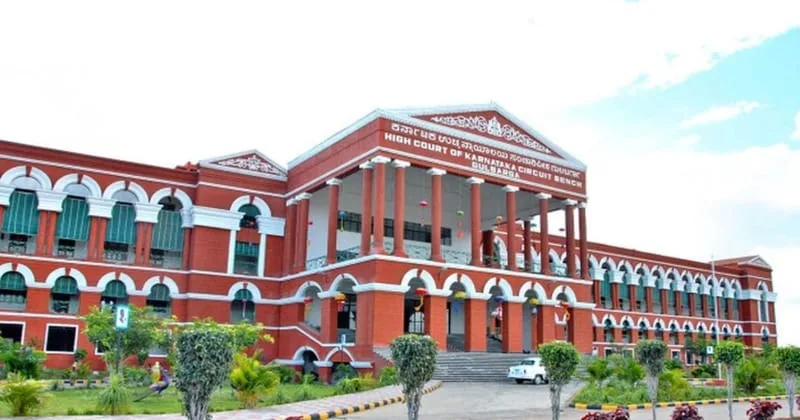
In a significant setback to the Siddaramaiah-led Congress government, the Karnataka High Court on Thursday dismissed the state’s appeal against a single judge’s interim order that stayed a controversial Government Order (GO) mandating prior permission for private organisations to hold activities in government-owned spaces.
A division bench comprising Justices S.G. Pandit and Geetha K.B. directed the government to approach the single judge for vacating the stay instead of pursuing an appeal. The single judge had earlier issued an interim stay on October 28, following petitions filed by Punashchetana Seva Samsthe and We Care Foundation.
The GO, issued on October 18, required all private organisations, trusts, clubs, and associations—registered or unregistered—to seek permission three days in advance for conducting any event, rally, or procession on government premises. Any violation, it said, would be treated as an “unlawful assembly” under the Bharatiya Nyaya Samhita (BNS) Act. However, it exempted weddings and funeral gatherings.
Although the order did not specifically mention the Rashtriya Swayamsevak Sangh (RSS), opposition parties and several civil groups claimed it was aimed at curbing RSS route marches and Hindu right-wing processions. The order followed a letter from Minister Priyank Kharge to Chief Minister Siddaramaiah, seeking to prevent RSS activities in public places — a move that has triggered political uproar.
During Thursday’s hearing, the division bench raised serious questions about the government’s interpretation of “unlawful assembly.” “If ten or more people wish to walk together, can that be called unlawful?” the bench asked, hinting that the order’s broad scope might infringe upon citizens’ fundamental rights. The court advised the government to seek clarification from the single judge instead of filing an appeal.
Advocate General Shashi Kiran Shetty, appearing for the state, argued that the GO only targeted organised events such as rallies and processions and was meant to “safeguard public property and the larger public interest.” He emphasised that the order was an “enabling provision” to regulate events in public spaces, not a blanket restriction.
However, senior advocate Ashok Haranahalli, representing the petitioners, countered that the government’s appeal was not maintainable and violated Article 19(1)(b) of the Constitution, which guarantees the right to peaceful assembly. “The right to assemble can be restricted only in the interest of public order, not by administrative overreach,” he argued, adding that even a casual gathering, like a group playing cricket, could require daily permission under this order.
After hearing both sides, the division bench dismissed the government’s appeal, upholding the single judge’s interim stay. The main petition challenging the validity of the GO will come up for final hearing on November 17.
Meanwhile, the Kalaburagi Division Bench of the High Court adjourned the hearing on a related matter—permission for an RSS procession in Chittapur—to November 13. The court recorded statements from both sides during a peace meeting held at the Advocate General’s office on November 5.
Senior advocate Arun Shyam, appearing for the petitioners, said that all proposals for the procession had been duly submitted to the district administration. The Advocate General informed the court that 11 applications had been filed and were being considered, possibly allowing each procession on separate dates. The petitioner has requested permission to hold the RSS march on November 13 or 16, with 850 uniformed volunteers participating in a 3.1 km parade from 3 pm to 6.30 pm.
The controversy over the GO has deepened political divisions in the state. While the Congress government insists that it is acting in the interest of maintaining order and protecting public property, the BJP has accused it of “targeting Hindu organisations” and misusing administrative powers for political purposes. With the High Court’s dismissal of the government’s appeal, the Congress administration faces growing pressure to justify its restrictive order in the upcoming full hearing.















Comments