





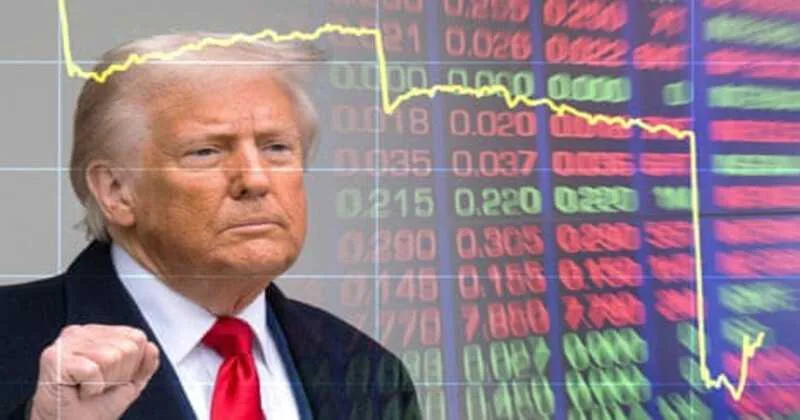
Global stock markets were battered once again as heavy selling resumed in shares of artificial intelligence (AI), based companies, reversing the mild recovery seen after the previous day’s decline. What began as a storm in the United States quickly spread across Asia and Europe, wiping out billions of dollars in investor wealth and signalling deep concern about near-term growth in the global tech sector.
In the United States, benchmark indices closed sharply lower. The S&P 500 fell 1.12 per cent, the Nasdaq tumbled 1.90 per cent, and the Dow Jones shed 0.84 per cent. Massive profit-booking in the AI segment pushed down the prices of major technology companies that had rallied aggressively in recent weeks. The extraordinary rise in AI-linked stocks had raised worries about overvaluation, prompting investors to cash out while prices remained high. With speculation growing that a broader correction may be imminent, investors moved quickly to exit positions.
Some of the biggest names in the AI and semiconductor race, Nvidia, Microsoft, Palantir, Broadcom, AMD, Qualcomm, Oracle and Meta Platforms, led the fall, declining up to 7 per cent in a single session. The sell-off was further intensified by grim labour market signals. Data from the US indicated that American companies laid off 1.53 lakh employees in October alone, three times higher than in September and 175 per cent more than in October 2024. It is also the largest single-month mass layoff since 2009, fuelling fears that corporate America is under financial strain despite strong earnings reported by sectors earlier this year.
Asia feels the heat; Eyes on Indian markets
The shockwaves from Wall Street reached Asian capitals as well. Japan’s Nikkei fell 2.16 per cent, with SoftBank, one of the world’s biggest AI backers, crashing 8 per cent. In a single day, SoftBank lost nearly USD 53 billion (about Rs 4.7 lakh crore) in market capitalisation. Leading chip-related players such as Advantest, Tokyo Electron and Renesas Electronics also saw steep declines of up to 7 per cent. South Korea’s KOSPI dropped 1.47 per cent, Hong Kong’s Hang Seng fell 0.67 per cent, and China’s Shanghai Composite slipped 0.05 per cent. Europe too opened in the red, with Germany’s DAX losing 1.31 per cent, the UK’s FTSE down 0.42 per cent, and Australia’s ASX200 falling 0.41 per cent.
In India, early morning trade in the Gift Nifty signalled a weak start, slipping about 50 points. This indicates both Sensex and Nifty were likely to open lower, tracking the global cues. However, Indian markets continue to demonstrate notable resilience compared to several global peers. Positive political and diplomatic signals also provide comfort to investors. US President Donald Trump’s recent statement that discussions with Prime Minister Narendra Modi are progressing well, and that a trade agreement between the two nations is possible soon, has lifted sentiment. Trump has further indicated that he may visit India in the near future, adding to optimism that economic ties between the world’s two largest democracies will deepen.
#BREAKING — President Trump says he will go to India next year. Calls PM Modi a great friend and leader. Question asked by @lalitkjha in the Oval today. pic.twitter.com/oCLz2Ppnk6
— Rohit Sharma 🇺🇸🇮🇳 (@DcWalaDesi) November 6, 2025
Tariffs, courts and clarity from New Delhi
The global economic community is now focused on the US Supreme Court’s ruling on tariffs imposed under the Trump administration. Some justices have expressed doubts over the legality of those tariff measures. However, experts say certain provisions may still allow Trump to override court objections and keep the tariffs in place. The uncertainty has kept investors anxious across global markets.
In India, Finance Minister Nirmala Sitharaman offered much-needed clarity by asserting that the Centre has no intention of tightening controls on the derivatives segment, particularly futures and options trading. The government’s objective, she clarified, is to make risks more transparent, strengthen supervision, and ensure that retail investors are protected. The reassurance was welcomed by traders who feared stricter intervention.
Indian corporates delivered positive surprises even amid global turbulence. Apollo Hospitals posted second-quarter results showing a strong 24.8 per cent jump in profit. Aster DM Healthcare also reported healthy performance, with profit rising 13.6 per cent and revenue up 10.2 per cent. In addition, Infosys has announced November 14 as the record date for its Rs 18,000-crore buyback programme, signalling confidence in long-term growth.
















Comments