





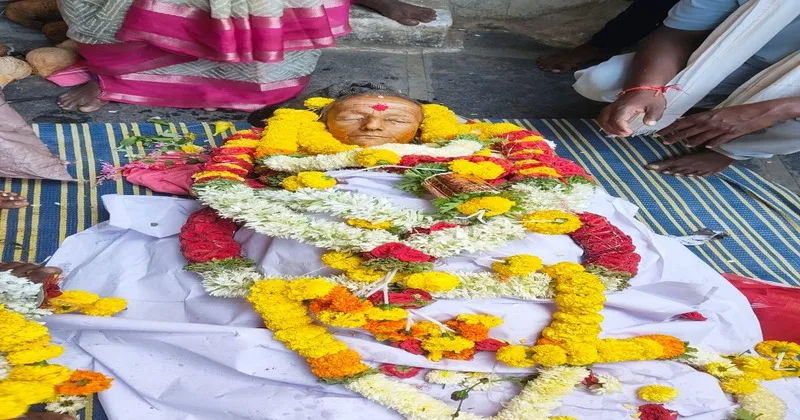
Gangavathi: In a moving tribute to faith, devotion, and cultural unity, a Belgian woman who had embraced Hinduism and lived in the Gangavathi region for more than four decades was cremated according to Hindu rites on November 6.
The woman, Chiarelle Michel Antonia (70), fondly known to locals as Meeramma, passed away late on the night of November 5 at her hermitage near Hanumanahalli village. Deeply devoted to Lord Shiva and Goddess Kalika Devi, she had expressed her wish to be laid to rest beside the tomb of her guru, Swami Subrahmanya, on the banks of the Tungabhadra river — a wish the local villagers honored with reverence and affection.
Embraced Sanatan Dharma and lived as a devotee
Antonia’s spiritual journey began five decades ago when, as a 20-year-old traveler from Belgium, she visited India. What started as a casual trip turned into a life-altering spiritual calling. Enchanted by the Sanatan Dharma and the ascetic traditions of Tamil Nadu, she took monastic initiation under Guru Subrahmanya, adopting the Hindu way of life and renouncing her past identity.
Locals recall how Meeramma lived simply at the Rishimukha hill, tending to cows, trees, and stray dogs, while leading a life immersed in prayer and service. Her cottage, surrounded by wild trees and the hum of nature, became a place of quiet meditation and devotion.
“She lived like a saint,” said a local from Hanumanahalli. “She would wake before dawn, light the lamp for Shiva, chant mantras in Kannada, and feed the animals around her hut. She treated every creature as divine.”
Loved nature, animals, and the Kannada language
Despite her foreign origin, Antonia seamlessly became a part of local life. She learned and spoke fluent Kannada, refusing to communicate in any other language. Her simple living, vegetarian diet, and compassion for animals made her a beloved figure among the people of Hanumanahalli and Anegundi.
“She never saw herself as a foreigner,” recalled another villager. “She was our Meeramma. The children, cows, and even the dogs followed her around. Her heart was Indian — truly Sanatani.”
Antonia was particularly fond of stray dogs, caring for them even when she fell ill. Villagers noted that after her passing, one of her loyal dogs stayed beside her body throughout the night, refusing to move — a scene that deeply moved all who witnessed it.
Rites performed as per Hindu tradition
Because Antonia was of Belgian nationality, official consent was required from her family before performing the last rites. Her sister’s children, who live in Switzerland, were informed of her death. Following communication between the Belgian Embassy in Delhi and the Koppal District Commissioner’s office, written consent was received from the family on Thursday morning.
Subsequently, in the presence of officials from the Health, Police, and Revenue Departments, her final rites were conducted according to Hindu Vedic rituals near her guru’s samadhi. Photographs of the ceremony were sent to her family in Europe as confirmation.
The cremation was attended by locals, monks, and villagers who regarded her as a saintly figure. The rites were marked by chanting of Shiva mantras and lighting of the sacred fire, with flowers and sandalwood offered as per her wishes.
Symbol of India’s spiritual embrace
Antonia’s story is a reminder of how Hinduism’s universal philosophy continues to inspire spiritual seekers across the world. Her life from a European traveler to a saffron-clad devotee on the banks of the Tungabhadra reflects the essence of the Sanatan tradition’s inclusivity, where devotion transcends geography and identity.
Although she hailed from Belgium, in the hearts of the people of Hanumanahalli she will always remain Meeramma, the woman who found peace in the shade of Shiva and merged into the very soil she adopted as her own.















Comments