





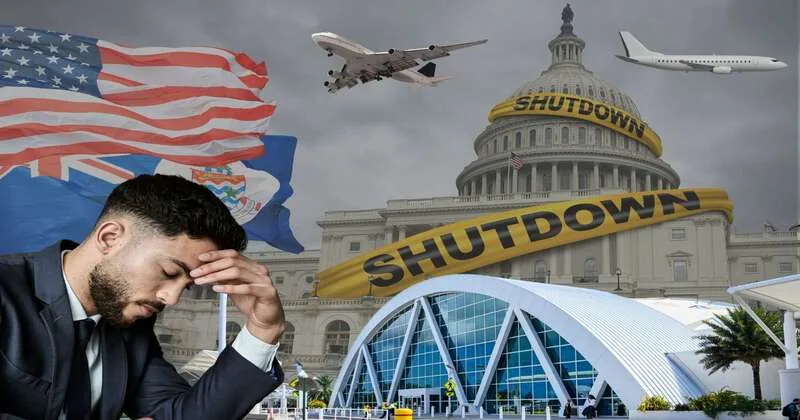
The United States federal government has now been shut down for 37 days, marking the longest closure in American history. The impasse, which began on 1 October, stems from lawmakers’ failure to agree on a new spending bill. The prolonged crisis has resulted in hundreds of thousands of government employees working without pay and has suspended a range of essential public services relied upon by millions.
Despite weeks of negotiations, Democrats and Republicans remain entrenched in their positions, showing little willingness to compromise. However, faint signs of progress are emerging in Washington. Senate Majority Leader John Thune, the most senior Republican in the chamber, has suggested that a potential solution might be drawing closer. According to his remarks, his assessment, based on experience with similar situations, is that Congress may soon find a way out of the stalemate. Until now, the longest government shutdown on record occurred in 2018-19 during Donald Trump’s presidency, lasting 35 days before a temporary funding arrangement was reached. The current closure has already surpassed that timeline, with consequences mounting steadily for ordinary citizens. Many federal workers have gone more than a month without salaries, forcing some to rely on loans or emergency relief. Travel disruptions are also expected to worsen if the shutdown continues.
Transportation Secretary Sean Duffy, speaking on Fox News, warned that US airspace could face partial closures if the deadlock persists. Roughly 13,000 air traffic controllers, federal employees, have remained on duty but without pay. Duffy cautioned that if the shutdown stretches another week, the aviation sector could face widespread delays and cancellations. He further indicated that the government may be forced to shut sections of airspace because staffing shortages would make it impossible to ensure safe and continuous operations.
🚨 BREAKING: JD Vance just said it PERFECTLY on the federal shutdown
"This is how a CHILD BEHAVES!"
"They are trying to take a hostage. IF WE DO THAT – give them everything they want? In 3 MONTHS, they are gonna shut down the aviation industry and deny SNAP unless you give us… pic.twitter.com/D4hifke4to
— Eric Daugherty (@EricLDaugh) October 30, 2025
The crisis has also hit vulnerable families who depend on government programmes. One in eight Americans relies on the Supplemental Nutrition Assistance Program (SNAP) for food support, but only limited benefits have been disbursed this month due to a lapse in federal funding. The administration had initially announced that no SNAP payments would be issued in November, but a US court ordered the government to release emergency funds to assist low-income households. Despite the ruling, President Trump wrote on social media that benefits would only be restored once Democrats agreed to reopen the government. The White House later clarified that federal agencies would comply with the court order.
Meanwhile, the Republican-controlled Senate has repeatedly attempted to push forward a short-term funding bill to reopen federal operations. On Tuesday, senators voted on the same proposal for the fourteenth time, again without success. The measure received 54 votes to 44, failing to bring any additional Democratic support. The bill had earlier passed the House of Representatives in September. Democrats insist they will not back a temporary funding package unless Republicans agree to extend healthcare subsidies for low-income Americans. Republican leaders accuse Democrats of using the shutdown to extract unrelated policy concessions. Even if a compromise is reached, both chambers of Congress would need to approve updated legislation. The original House-approved measure would only fund government functions until November 21, an expiration date that lawmakers now say is outdated, given that it is just days away. Senator Thune has told reporters that if tangible movement is not seen by mid-week, it is unlikely that Congress can pass a final agreement before the weekend. He added that the goal for Senate Republicans is to craft a revised bill that could be returned to the House with enough support to restart federal services.
Over the past few days, signals of potential agreement have emerged. A number of moderate Democrats and Republicans have indicated that they are prepared to negotiate more actively, hoping to prevent the shutdown from colliding with the Thanksgiving holiday on November 27. Lawmakers from both parties have voiced concern that extending the crisis could further disrupt travel, delay food assistance, slow tax refunds, and deepen public frustration with Washington. For millions of Americans, the closure has transformed from a political standoff into a tangible, daily disruption. Federal employees across departments, from national parks to customs services, are continuing to work without compensation or have been placed on unpaid leave.
Aviation unions warn that burnout and understaffing will soon compromise passenger safety. Social workers caution that vulnerable families risk running out of food or housing aid. Whether Congress will reach an agreement before Thanksgiving remains uncertain. However, with political pressure mounting and public patience thinning, both parties face growing demands to end the deadlock and restore government operations.














Comments