





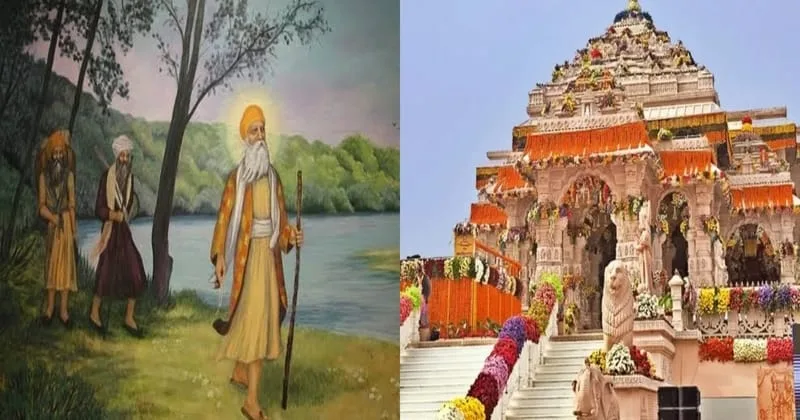
The Supreme Court verdict on the Ayodhya dispute, delivered on November 1, contains a fascinating historical detail that many may have overlooked: a Sikh connection in what is widely seen as a Hindu-Muslim conflict.
The Babri Masjid itself was built only after the 1526 Battle of Panipat. However, more than three centuries later, in 1857, a Nihang Sikh occupied the mosque for a considerable period. With 25 Sikhs guarding the site, he placed an murti of Bhagwan Ram on a platform, lit a fire, and began performing puja, marking the first documented instance of tension between Hindus and Muslims over the structure. Police records noted that he even scrawled “Ram” on the mosque walls.
Guru Nanak Dev visited Ram Janmabhoomi in 1510-11. In 1857, a Nihang Sikh barged inside Babari mosque and occupied it, even setting up a platform on which an idol of Lord Ram was placed. With a posse of 25 Sikhs standing guard outside, he started arrangements for puja….He… pic.twitter.com/iKd2YREPPc
— Anuj Dhar (@anujdhar) November 5, 2025
The judgment also references the Janam Sakhis, texts that chronicle the life of Guru Nanak Dev. While the Supreme Court acknowledges there is no definitive evidence identifying the exact location of Ram Janmabhoomi, it recognises that Guru Nanak Dev visited Ayodhya, indicating that pilgrims frequented the site even before 1528 AD. The court noted, “In the period prior to 1528 AD, there were sufficient religious texts which led Hindus to believe the present site of Ram Janmabhoomi as the birthplace of Bhagwan Ram.”
One witness in the Allahabad High Court case submitted references from Sikh texts, stating that Guru Nanak Dev had sought darshan at the Shri Ram Janmabhoomi Mandir. Various Janam Sakhis were submitted as evidence documenting his visit.
The verdict also recounts the broader context of 1857, when complaints were filed with the Oudh administration about Sikhs occupying the mosque. A report to the deputy commissioner in 1860 noted that local Muslims were struggling to perform namaz, as the Azaan was interrupted by the blowing of conch shells by Hindus. The Nihang Sikh was eventually evicted, with records maintained by the administration, confirming that namaz was being performed at that stage.
This episode led to the construction of a railing separating the inner mosque courtyard from the outer courtyard. The outer courtyard saw the building of a platform, the Ramchabutra, which became a place of Hindu worship, laying the groundwork for the later division of the complex. In short, the verdict highlights that Guru Nanak Dev’s visit, centuries before the mosque’s construction, forms part of the historical and religious tapestry considered in the Supreme Court’s judgment.














Comments