





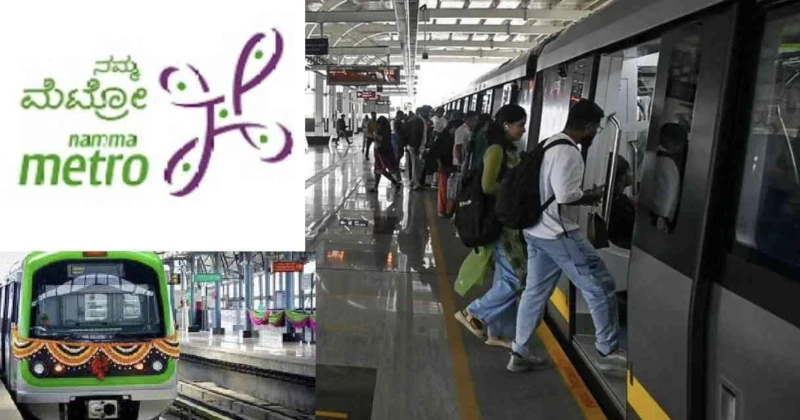
Commuters in the tech capital are bracing for another financial jolt, as the Bangalore Metro Rail Corporation Limited (BMRCL) plans to hike Namma Metro fares yet again just three months from now. With the new proposal recommending an annual 5 per cent fare increase every February, Bengaluru’s metro is all set to retain its dubious distinction as the most expensive metro network in India.
According to the fare fixation committee’s recent recommendation, the new fare structure will come into effect from February 2026, imposing an additional burden on passengers who are already grappling with one of the steepest public transport fares in the country.
The BMRCL’s decision comes less than a year after its controversial fare hike earlier in February 2025, when the corporation increased metro ticket prices by a staggering 105.5 per cent. Following intense backlash from daily commuters and political leaders, the hike was partially rolled back, bringing the overall increase down to 71.5 per cent. However, passengers and civic activists argue that even this rate remains unreasonably high and is based on flawed calculations.
“Before increasing fares again, the authorities should first correct their earlier mistakes. The fare was increased due to an internal miscalculation, and passengers continue to bear the cost of that blunder,” said a regular commuter at Majestic station.
Many passengers now fear that annual increments will make metro travel unaffordable for middle-class commuters, defeating the very purpose of mass urban transit. “If this trend continues, people will start returning to private vehicles. What’s the use of a metro if the public can’t afford it?” questioned another passenger from Yeshwanthpur.
Highlighting the growing discontent, Bengaluru South MP Tejasvi Surya has criticised BMRCL for what he called a “mathematical and managerial blunder.” Addressing reporters after a meeting with BMRCL officials, Surya revealed shocking discrepancies in fare comparisons between Bengaluru and other major Indian cities.
“Bengaluru’s metro fares are 25 to 50 per cent higher than those in Delhi, Mumbai, Nagpur and Chennai. While other cities are providing affordable and efficient urban mobility, our metro is fast becoming a luxury service for the privileged,” he said.
Surya, who led a BJP delegation to meet BMRCL officials, has urged the corporation to adopt a fare structure similar to Delhi Metro’s, which balances operational sustainability with commuter affordability. “BMRCL must take corrective action immediately and stop burdening the common man with illogical fare structures,” he added.
Earlier this year, BMRCL’s fare revision drew nationwide criticism after commuters discovered significant discrepancies between the advertised and actual fare slabs. Sources within the metro administration later admitted to “calculation errors” during the fare revision exercise. However, despite promises of rectification, fares were only partially reduced.
The current fare rates make Bengaluru’s metro travel costlier than Delhi Metro, even though Delhi operates one of the largest and most advanced metro systems in Asia. A passenger travelling 20 km in Delhi pays around Rs 40– Rs 50, whereas a similar ride in Bengaluru costs between Rs 60 and Rs 75.
Urban mobility experts have also raised concerns that steep fares could reduce ridership, leading to increased traffic congestion and pollution as more people opt for personal vehicles. “Public transport works only when it’s affordable. Bengaluru Metro’s pricing structure is alienating daily commuters the very group it was built to serve,” said a transport policy analyst.
The proposed annual 5 per cent increase has sparked fresh outrage among citizens, especially since wages have not kept pace with rising living costs in the city. Office-goers and students who rely on metro connectivity to Electronic City, Whitefield and Peenya Industrial Area say the cost hike could make daily commuting unsustainable.
“We were happy when the metro extensions opened, thinking it would save time and money. But now it feels like punishment for choosing public transport,” said a software engineer travelling from Nagasandra to MG Road.












Comments