






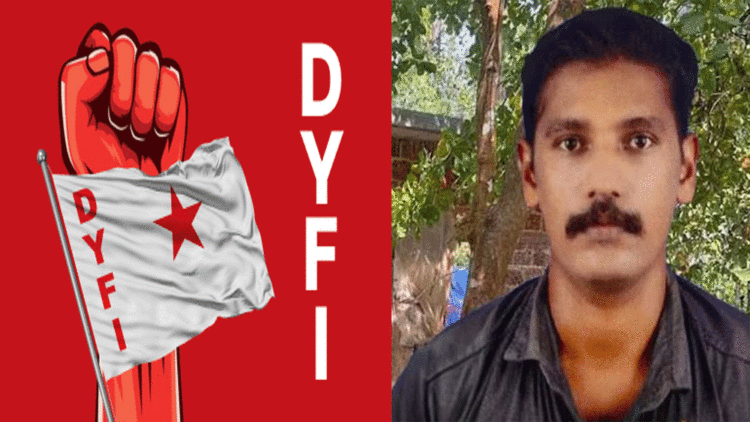
When DYFI leader Sheril died on April 5, 2024 in a blast during “bomb-making”, the CPM immediately advanced an unusual defence, that the police had allegedly slapped false cases on “innocent youths” who had merely rushed to the scene. The incident took place in a CPM-dominated village in Panoor, Thalassery taluk, Kannur district, a region long recognised as the party’s ideological fortress and notorious for political violence.
At that time, state party secretary M. V. Govindan bluntly claimed Sheril had “no association” with either the CPM or DYFI. DYFI leaders echoed that denial. Yet, the very same CPM and DYFI leadership reportedly attended Sheril’s funeral, prompting public ridicule and exposing the contradiction in their claims. The incident drew significant media attention then.
Now, in a dramatic U-turn, the DYFI’s Kunnoth Zonal committee has declared Sheril a “martyr”. What makes this volte-face even more striking is that DYFI cadres themselves were the accused in the blast-related cases. The party’s narrative has gone from disowning the deceased to celebrating him as a fallen comrade, raising uncomfortable questions about honesty, accountability, and the culture of political violence within the CPM.
With Malayalam news channels re-telecasting the 2024 clips in which CPM and DYFI leaders vehemently denied links to Sheril, the party finds itself in an embarrassing and contradictory position.
This pattern is not new. In Panoor in 2015, two youths, widely believed to be CPM workers, were killed in a similar incident. Then too, party leaders denied any connection. Yet, in due course, martyr columns were erected in their memory, inaugurated by then district secretary M. V. Jayarajan, a close loyalist and long-time defender of Chief Minister and party supremo Pinarayi Vijayan. The ceremony featured full party spectacle, including disciplined red-volunteer marches and band music.
The recurring script is unmistakable: disown responsibility the moment a bomb blast occurs, distance the party from the deceased, paint the accused as innocent, and then, once public scrutiny fades, sanctify the dead as martyrs. The Sheril episode is only the latest example of this cynical political choreography.
And once again, Kannur, infamous for its entrenched culture of Communist-linked violence, remains the stage on which the CPM performs its familiar drama of denial, evasion, and eventual glorification.










Comments