





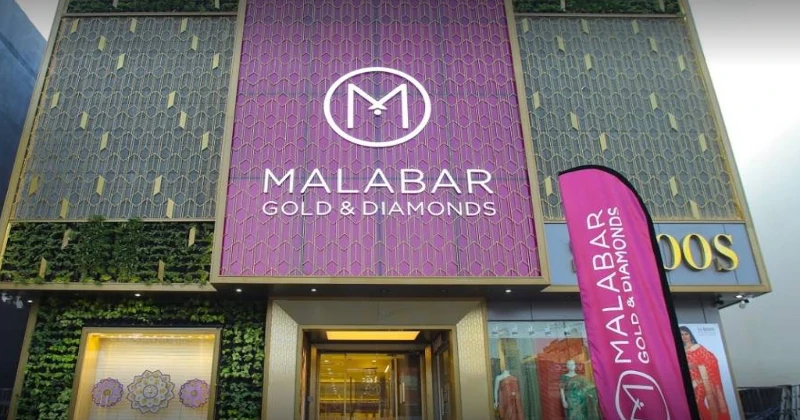
The glitter of Malabar Gold & Diamonds, one of India’s largest jewellery retail chains, has dulled sharply this festive season as the company faces a massive 30–40 per cent drop in sales following an unprecedented wave of public outrage. The boycott, now trending across social media, was triggered after revelations that the company had engaged a Pakistani influencer known for anti-India remarks in its marketing campaign a move widely seen as a betrayal of national sentiment during the festive season of Deepawali and Dhanteras.
Congratulations Hindus.
In first attempt itself we succeeded with a dent of 30%-40%.
Don’t fall for their upcoming schemes to lure Hindus. Let’s keep this pressure on to take this dent to 90%.
Let’s Bring @vijaygajera ‘s account back.#BoycottMalabarGold #ISupportVijayPatel… https://t.co/P8Wt2m3DVj pic.twitter.com/VA8JmKEruv
— Tathvam-asi (@ssaratht) November 2, 2025
The controversy has spiralled beyond corporate damage control, as activists, influencers, and citizens across India rally behind journalist and researcher Vijay Gajera, whose account was suspended following a legal action initiated by Malabar Gold. Gajera, a vocal critic of the company’s marketing choices, has become a symbol of digital resistance against what many see as corporate intimidation of patriotic voices.
In a strongly worded statement on X, Vijay Gajera accused Malabar Gold of deploying paid PR articles and hinted at a coordinated campaign to tarnish his image.
“Recently, Malabar Gold has published paid articles in the media as part of its PR exercise. In the near future, there may be an attempt to target me through a character assassination via some Pakistani X accounts which are working for a political alliance in India,” Gajera said.
#IamwithVijayPatel
Malabar Gold has crossed all limits — from paid PR to dirty character killing of @vijaygajeraThis is deliberate revenge.
🔴 No more excuses
🔴 No more temporary outrageHit where it hurts – their business
Boycott till they collapse#BoycottMalabarGold pic.twitter.com/XkSdUS2PeG— Subramaniam (@Subramania42478) November 2, 2025
He further alleged that the company’s Gulf-based investors could influence such actions, adding, “Some people have expressed concern for my safety, as Malabar Gold has investors from Gulf countries. But my stand is clear I won’t bow down to a company that hires a cowardly Pakistani influencer and uses their money power to silence patriotic Indians.”
Gajera demanded that Malabar Gold withdraw its court cases against all social media users who criticised the brand for its collaboration, stating that “the company must apologise publicly for using the court against Indians.” “I will be back soon and will continue to expose anti-India cartels. Jai Hind,” he concluded.
The backlash against Malabar Gold has been swift and sweeping. Thousands of users across social platforms called for a nationwide boycott, arguing that an Indian brand with a strong domestic customer base had no moral justification for promoting a figure who had made derogatory remarks about India and its armed forces.
Consumer anger has translated into a measurable economic impact. According to trade sources, Malabar Gold’s sales have reportedly fallen by 30–40 per cent, a severe blow during what is typically the busiest time of the year for the jewellery sector.
The controversy has also hit the company’s image in small towns and tier-2 markets, where nationalist sentiment drives consumer behaviour. Industry observers note that the fallout has raised serious questions about brand accountability, patriotism, and the limits of influencer marketing in India.
Following a slew of social media posts criticising its marketing decisions, Malabar Gold approached the Bombay High Court, seeking to restrain individuals and media outlets from sharing what it described as “defamatory and misleading” content.
The High Court granted ad-interim relief to the company and directed the deletion of social media posts and stories related to the issue. The move, however, further inflamed public opinion, with critics calling it an attempt to silence dissent and stifle free expression under the garb of legal propriety.
In a mass email sent to its 27,500 employees, Malabar Gold attempted to downplay the controversy, framing it as a “misunderstanding” born of incomplete information.
“Recent discussions on social media have evoked strong sentiments, which we deeply understand and respect. However, certain online narratives have circulated incomplete or misleading interpretations about the intent and context of a past marketing engagement,” the company said.
The email further claimed that a third-party vendor was responsible for engaging the Pakistani influencer and that the company had immediately discontinued the association upon realising it “did not align with the brand’s values.”
The communication, signed by Chairman M. P. Ahammed, emphasised the brand’s “Indian ethos” and “respect for diversity,” while urging employees to uphold “trust and responsibility” amid the ongoing storm. “Our decisions are guided by principles, never by prejudice, and we deeply respect the varied perspectives expressed by our stakeholders,” Ahammed wrote.













Comments