





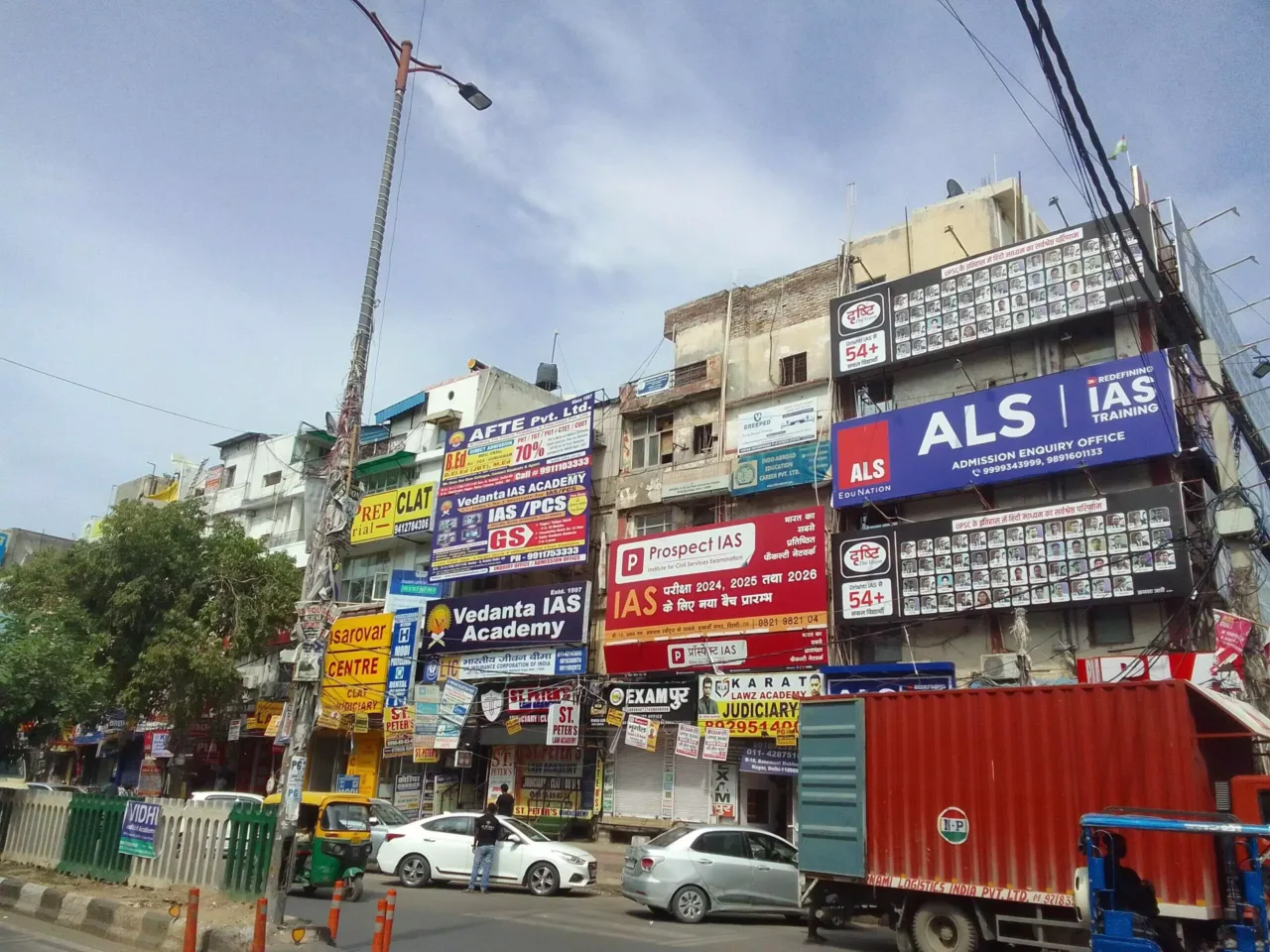
In order to safeguard the interests of millions of UPSC aspirants, the Central Consumer Protection Authority (CCPA) has taken decisive action against two prominent civil services coaching institutes, Dikshant IAS and Abhimanu IAS, for publishing misleading advertisements and engaging in unfair trade practices.
The CCPA, led by Chief Commissioner Nidhi Khare and Commissioner Anupam Mishra, imposed a penalty of Rs 8 lakh each on the two institutions. Both were found guilty of falsely claiming credit for UPSC results, misusing candidates’ photographs without consent, and concealing critical information that could mislead aspirants about their courses and success rates.
The action, announced by the Ministry of Consumer Affairs on Saturday (November 1), marks part of a broader crackdown on deceptive practices within India’s booming coaching industry. The CCPA noted that the misleading promotions not only violated Sections 2(28) and 2(47) of the Consumer Protection Act, 2019, but also undermined the right of students to be informed, a cornerstone of consumer protection.
Complaint that sparked the action
The CCPA’s action began when UPSC toppers themselves raised objections to their unauthorised appearance in coaching advertisements.
In the case of Dikshant IAS, the Authority received a representation from Mini Shukla (AIR 96, UPSC CSE 2021). Shukla alleged that her name and photograph were used without permission in the institute’s promotional materials claiming “200+ Results in UPSC CSE 2021.”
She clarified that she was never a student of Dikshant IAS and had only attended a mock interview session at Chahal Academy, which she later learned had been jointly conducted with Dikshant IAS.
Despite repeated notices from CCPA, Dikshant IAS failed to provide satisfactory evidence to justify its claims or to produce consent from the candidates featured in its advertisements.
Dikshant IAS: Inflated claims
The investigation revealed that Dikshant IAS’s claims were grossly inflated and misleading. The institute had boasted of “200+ results in UPSC 2021” but could furnish only 116 enrollment records. Moreover, it failed to present any documentary agreement showing that the mock interviews were indeed a joint effort with Chahal Academy.
The CCPA concluded that the institute had concealed key facts, leading potential students to believe that it had trained those successful candidates throughout the UPSC stages, Prelims, Mains, and Interview, when, in reality, its role was limited to a brief interview guidance session.
“The advertisements deliberately concealed crucial details about the courses undertaken by successful candidates,” the CCPA order stated. “This omission created a false impression of contribution to their success, misleading aspirants who invest years of effort and lakhs of rupees in coaching.”
The ministry emphasised that misleading advertisements in education strike at the core of consumer rights, as aspirants make critical decisions about their future based on such claims.
Consumer rights violated
Under the Consumer Protection Act, 2019, every consumer has the right to be informed, that is, the right to truthful and accurate information about goods and services.
When institutions exaggerate their results or use false endorsements, they violate Sections 2(28) and 2(47), which define misleading advertisements and unfair trade practices, respectively.
The CCPA found that Dikshant IAS had not only misrepresented facts but also deliberately concealed material information, thereby misleading thousands of UPSC aspirants. The fine of ₹8 lakh was imposed both as a penal and deterrent measure to discourage similar malpractices in the education sector.
Abhimanu IAS: Misusing candidate photos
In a parallel case, Abhimanu IAS, another reputed UPSC coaching institute, was found guilty of using a candidate’s photo without consent and making unsubstantiated success claims.
The case came to light when Natasha Goyal (AIR 175, UPSC CSE 2022) complained that the institute had falsely claimed her as its student. The CCPA’s investigation revealed that while the institute had shared a mock interview question bank with her based on her DAF (Detailed Application Form), the interview itself never took place.
Despite this, Abhimanu IAS used her name and photograph in advertisements and social media posts, creating the impression that she was a successful alumnus.
False numbers, old records, and deceptive promotions
Further scrutiny exposed that Abhimanu IAS had made unverified claims such as:
“2200+ Selections since Inception”
“10+ Selections in IAS Top 10”
“1st Rank in HCS/PCS/HAS”
However, upon cross-verification, CCPA found glaring inconsistencies. The so-called “Top 10” results were mostly from 2001-2012, with only two recent instances from 2018, and even those candidates had attended only interview sessions.
The omission of the phrase “since 1999” was a material concealment, misleading aspirants into believing that the institute had recent, recurring top ranks.
Similarly, the claim of “2200+ selections since inception” lacked clarity on which examinations these results belonged to, UPSC, HCS, RBI Grade-B, or NABARD Grade-A, creating a false impression that all were UPSC results.
The CCPA noted that no documentary proof was provided despite several notices. “Such exaggerated claims not only inflate credibility artificially but also distort aspirants’ judgment while selecting coaching institutes,” the Authority said.
Violation of students’ rights
The CCPA emphasised that such misrepresentation interferes with aspirants’ ability to make informed choices, especially in an industry where students spend substantial time, money, and effort.
Under Section 2(9) of the Consumer Protection Act, 2019, education services fall under the purview of consumer protection, ensuring that institutes remain transparent about their results, teaching methodologies, and affiliations.
The Authority ruled that Abhimanu IAS’s conduct amounted to an unfair trade practice, as it not only exaggerated its success rate but also misused students’ identities, a serious ethical and legal violation.
The crackdown on Dikshant IAS and Abhimanu IAS reflects a wider problem in India’s Rs 58,000-crore coaching industry, where success marketing often overrides integrity.
From Delhi’s Rajinder Nagar to Hyderabad’s Ashok Nagar and Kota’s Talwandi, hundreds of coaching centres have been accused of claiming credit for toppers who never attended their classes or had minimal engagement.
Such practices, the CCPA noted, create a distorted market, where smaller or newer institutes find it difficult to compete, and students are manipulated by inflated promises.
The ministry further revealed that, to date, the CCPA has issued 57 notices to various coaching centres and imposed penalties exceeding Rs 98.6 lakh on 27 institutes for similar violations.
Upholding consumer integrity
Chief Commissioner Nidhi Khare stated that the authority’s mission is not merely punitive but reformative. “Educational institutions hold immense trust among young aspirants. Misleading them with false success stories not only breaks that trust but also violates the law,” she said.
Commissioner Anupam Mishra added that such actions will continue until the industry adopts transparent practices and stops exploiting aspirants’ ambitions for commercial gain.
The Ministry of Consumer Affairs also appealed to successful candidates to come forward and report any instance of their unauthorised name or photo usage in advertisements or promotional materials.
The CCPA’s sustained campaign against deceptive advertisements began in 2022, targeting sectors like healthcare, education, e-commerce, and fintech. However, this recent focus on coaching institutes signals a major shift, recognising education as a consumer service requiring transparency and accountability.
The Authority has directed all coaching centres to:
1. Disclose factual data regarding student results and affiliations.
2. Obtain written consent before using any candidate’s photo or testimonial.
3. Avoid vague numerical claims like “1000+ selections” without evidence.
4. Cease all misleading digital and print campaigns until verified by authorities.
Notably, this move could reshape the ethics of the coaching industry, compelling institutes to maintain verifiable records and transparent advertising.
The penalties against Dikshant IAS and Abhimanu IAS serve as a wake-up call for India’s coaching industry, a sector often accused of commercialising education and exploiting youth aspirations.
By holding institutes accountable for their claims, the CCPA has reaffirmed the government’s commitment to protecting the rights of consumers, including students.
The message is clear: Misleading ads will no longer go unpunished, and every aspirant deserves truth, transparency, and fairness in their pursuit of success.














Comments